CFTC Opens Door to Bitcoin, Ether and Stablecoins as Operating Reserves
 BTC
 ETH
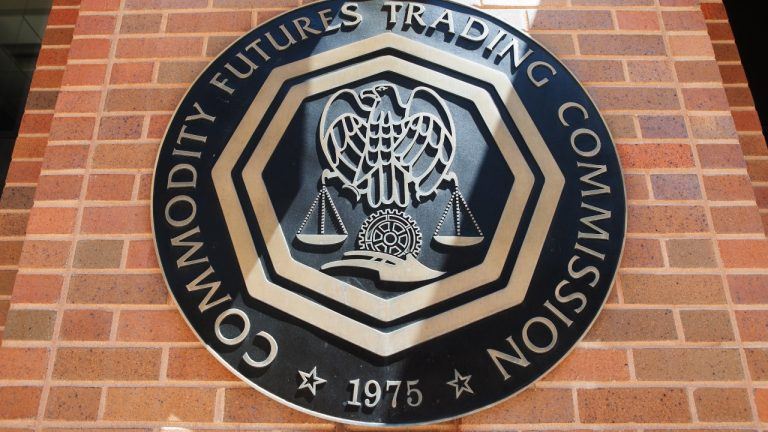
CFTC staff issued an advisory allowing exchanges and clearinghouses to count bitcoin, ether, and payment stablecoins toward 12-month operating reserve requirements.
Key Takeaways
- CFTC staff clarified that bitcoin, ether, and payment stablecoins can count toward 12-month operating reserves.
- Crypto assets remain excluded from cash liquidity buffers because GAAP does not classify them as cash equivalents.
- Industry observers note the 20% and 2% haircuts give firms balance-sheet flexibility while pricing in market risk.
Solvency Buffer vs. Liquidity Carve-Out
Staff at the Commodity Futures Trading Commission (CFTC) issued an advisory on Nov. 23 clarifying that regulated derivatives venues and clearinghouses may count bitcoin (BTC), ether (ETH), and payment stablecoins toward their 12-month operating-cost financial resource requirements, subject to valuation haircuts.
The joint advisory from the Division of Market Oversight and the Division of Clearing and Risk addresses how swap execution facilities (SEFs), designated contract markets (DCMs), and derivatives clearing organizations (DCOs) satisfy capital obligations under CFTC regulations 37.1301, 38.1101(a), and 39.11(a)(2). Under those rules, registered entities must maintain sufficient financial resources to cover at least 12 months of rolling operating expenses.
While staff confirmed that qualifying digital assets can help satisfy that one-year solvency cushion, the guidance drew a strict boundary around immediate cash liquidity. Because Generally Accepted Accounting Principles (GAAP) do not classify cryptocurrencies or stablecoins as “cash” or “highly liquid securities,” firms cannot use digital assets to meet the separate liquidity requirement, typically three months of operating costs for SEFs and six months for DCMs and DCOs.
Soham Jethani, managing partner at Septten Advisors, said the distinction between holding balance-sheet assets and holding cash ready to pay immediate bills is critical for market infrastructure operators.
“That is sensible: a business exposed to crypto markets could see its income and the value of its reserves fall overnight if they have the wrong portfolio,” Jethani noted, adding that the framework gives venues greater flexibility to utilize invested assets that previously received no regulatory recognition.
Valuation Haircuts and Market Depth
To account for price volatility and market risk, the staff guidance subjects eligible holdings to minimum valuation discounts, at least 20% for bitcoin and ether and 2% for payment stablecoins, while assigning a 100% haircut to non-readily marketable tokens. Under the 20% threshold, $1 million in bitcoin counts for no more than $800,000 toward operating reserves.
Jethani pointed out that focusing on bitcoin and ether reflects both regulatory precedent—drawing on existing staff treatment of futures brokers’ proprietary crypto holdings—and market liquidity.
“Bitcoin and ether are natural starting points because they already have established trading markets, price benchmarks, and regulated derivatives,” Jethani explained. “In my view, that makes them more workable assets to value, hedge, and sell than a thinly traded token whose quoted price may disappear when somebody needs to sell a meaningful holding.”
How Digital Assets Measure Up Under CFTC Capital Requirements
Asset | Minimum Valuation Haircut | Recognized Value per $1M Held | 12-Month Operating Reserves | Cash Liquidity Buffer
Bitcoin (BTC) | 20% | $800,000 | Eligible | Ineligible
Ether (ETH) | 20% | $800,000 | Eligible | Ineligible
Payment stablecoins | 2% | $980,000 | Eligible | Ineligible
Non-readily marketable tokens | 100% | $0 | Ineligible | Ineligible
Source: CFTC staff advisory, Nov. 23, 2026. Recognized values are illustrative and reflect the minimum prescribed valuation haircuts. The advisory applies to proprietary operating reserves, not customer margin or clearinghouse default funds.
The advisory applies strictly to an entity’s own operating reserves rather than customer margin or clearinghouse default funds. In releasing the guidance, the agency also underscored its legal limits:
“The advisory represents the views of staff only. It does not create new rules or enforceable rights, nor is it a no-action position and does not necessarily reflect the views of the Commission.”
Following the release, CFTC Chairman Michael S. Selig welcomed the staff’s effort to provide greater clarity for digital assets in U.S. derivatives markets. Despite its non-binding status, Jethani described the guidance as “a meaningful step towards treating crypto as part of the financial resources of market infrastructure, with an explicit price attached to its risks.”
Read the original at Bitcoin.com
More News