Because Ethereum (ETH) ranks as the second-largest cryptocurrency behind Bitcoin, you can purchase it or trade ETH pairs on almost every major crypto exchange. Key platforms include:
Common trading pairs are ETH/USD, ETH/GBP, ETH/AUD, and ETH/JPY.
Ethereum London Hard ForkHigh demand often causes transaction fees on the Ethereum network to spike. In May 2021, the average fee reached a peak of $71.72. Along with these costs, the leading altcoin faces scalability challenges.
To improve scalability and introduce new features, the team plans to shift to a proof-of-stake algorithm. The transition to ETH 2.0 has begun, with upgrades like the London hard fork implemented along the way. This upgrade launched in August 2021 and included five Ethereum Improvement Proposals (EIPs): EIP-3529, EIP-3198, EIP-3541, EIP-3554, and the notable EIP-1559. EIP-1559 is considered the most popular of these changes.
Ethereum 2.0The roadmap includes switching to proof-of-stake via the Ethereum 2.0 update in 2022. This change aims to introduce sharding for scaling and a new consensus mechanism. The existing chain would become the Beacon Chain, acting as a settlement layer for smart contracts on other chains.
In late 2021, the Arrow Glacier update was pushed back to June 2022. Until that time, Vitalik Buterin anticipated that optimistic rollups and Zk-rollups would shape the path toward the network's endgame.
In January 2022, the Ethereum Foundation decided to drop the “Ethereum 2.0” label to prevent user confusion. They stated that “Ethereum 1.0” would be known as the “execution layer,” and “Ethereum 2.0” would be called the “consensus layer” to better reflect the roadmap.
On April 13, 2022, developer Tim Beiko tweeted that Ethereum was in the “final chapter of PoW.” He noted the Merge might happen a few months after June, though no specific date was given. This followed a successful mainnet shadow fork test on April 11, 2022.
The Ethereum MergeIn 2022, the transition from proof-of-work to proof-of-stake was renamed from Ethereum 2.0 to The Merge. It went live on Sept. 15, 2022, after the Goerli testnet merge finished on Aug. 11, 2022.
The Merge brings critical changes. First, it combines the PoW mainnet with the PoS Beacon Chain. Together, they form the new proof-of-stake Ethereum, comprising a consensus layer for synchronizing chain state and an execution layer for transactions and block production.
Second, the Merge cuts ETH issuance by 90%, a change referred to as the "triple halving." With over 14M ETH already staked, ETH could become deflationary. Projections suggest stakers may earn between 8% and 12% APR. However, staked ETH withdrawals will not be possible until the Shanghai upgrade, estimated to arrive 6 to 12 months later.
The Merge does not boost transaction throughput or lower gas fees, as the block production rate remains near 12 seconds (currently 13 seconds). It also does not enable on-chain governance; protocol changes remain decided off-chain by stakeholders.
The shift to PoS is expected to slash annual energy use from 112 TWh/yr to 0.01 TWh/yr, a 99.9% decrease. This drop led investors to anticipate more institutional interest in a "greener" Ethereum. Conversely, miners in the $19 billion industry may support ETHPoW, a potential proof-of-work hard fork.
Ethereum Shanghai UpgradeThe Shanghai Upgrade is the most significant update since The Merge. It allows stakers to withdraw ETH and rewards from the Beacon Chain. During The Merge, validators began staking 32 ETH to secure the network instead of mining, but they could not unstake until this upgrade.
Known as Shanghai on the execution layer and Capella on the consensus layer (“Shapella”), this hard fork implements five EIPs, with EIP-4895 being the most anticipated for enabling withdrawals.
Withdrawals were enabled on the Zhejiang testnet on Feb. 7, 2023. The Sepolia testnet successfully executed the upgrade on Feb. 28, and the Goerli testnet followed on March 15, 2023. The mainnet upgrade was expected sometime in March 2023, making over 17.5 million ETH available for withdrawal.





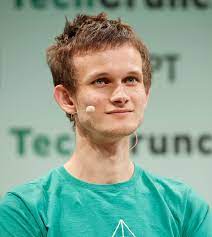 Vitalik Buterin
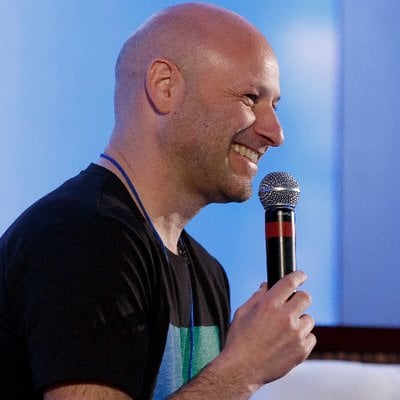 Joseph Lubin
 Amir Chetrit
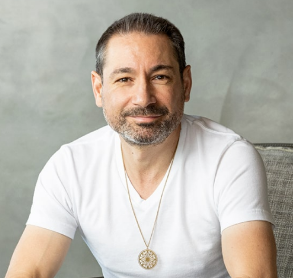 Anthony Di Iorio
 Mihai Alisie
 Charles Hoskinson