
Fed’s preferred inflation gauge lands with a December rate increase already priced in
 BTC
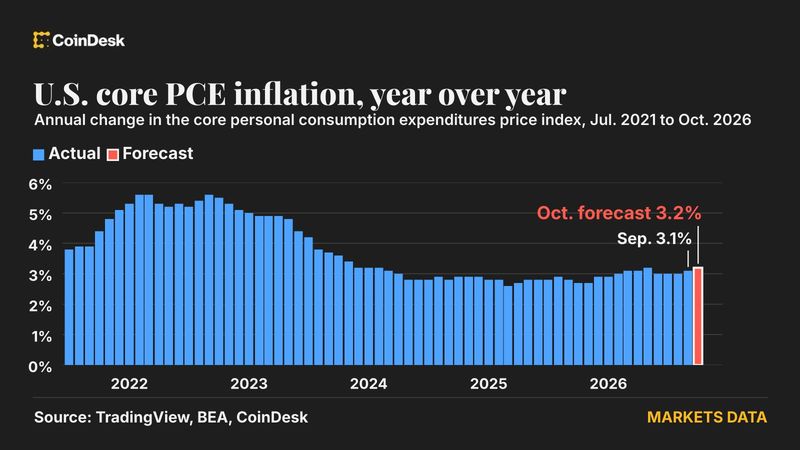
Wednesday's U.S. core personal consumption expenditures price index report for October arrives with a December Fed interest-rate increase already priced in, leaving bitcoin and other battered markets with little to be concerned about.
Core PCE, which strips out food and energy prices, is the Fed's preferred inflation gauge. Forecasts tracked by WSJ point to the annual rate rising to 3.2% in October from 3.1% in September. The headline inflation is forecast to have accelerated to 3.8% on the year in October, up from 3.6% in September.
The report is due at 8:30 a.m. ET.
Markets have already priced in a quarter-point increase in December. That would lift the Fed’s benchmark borrowing cost to the 4%-4.25% range. A further raise in January is priced at roughly 60%. JPMorgan expects another one in March.
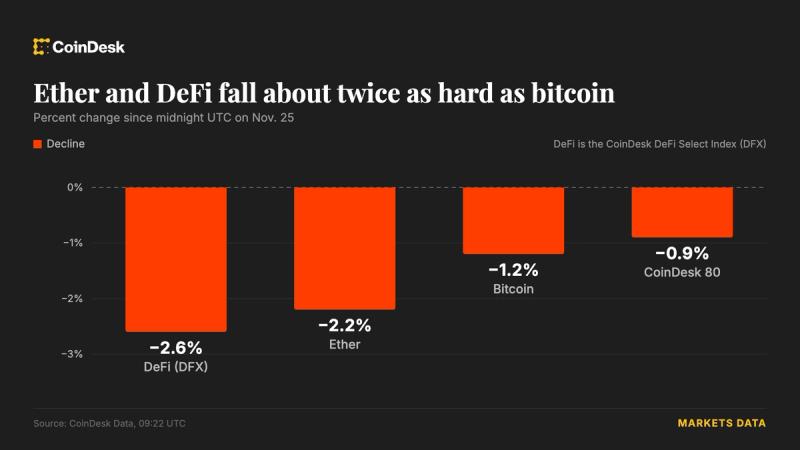
These projections have already caused damage to risk assets. Bitcoin slid to near $55,000 over the weekend and now trades below $60,000, a decline of about 24% this month and 29% this quarter. Nasdaq has dropped over 7% this month and 13% for the quarter.
That is why the bar for a hawkish surprise looks high. With that many rate hikes already in the price, it is hard to say how much further the market could fall on this report, unless core PCE comes in well above expectations.
If the number is in line with forecasts or softer, the market may barely move, or it could see an oversold bounce.
Here is how some analysts are reading the data.
Dick Lo, founder of quant trading firm TDX Strategies, said the print alone is unlikely to change the Fed's course.
The "core PCE print is unlikely on its own to force a dovish Fed pivot, though an in-line reading could offer much-needed relief. If credit conditions deteriorate across the capex-heavy AI sector and broader markets, the decisive catalyst could arrive at the December FOMC meeting should the Fed shift focus from rear-view inflation to forward credit risk,” he noted.
Neil Steinhardt, head of Nexo U.S., on Tuesday pointed to the levels traders are watching.
"The dollar, rate expectations and fund flows are unchanged, and tomorrow's core PCE reading bears on the first two. The area between $62,000 and $64,000 is the zone buyers would need to reclaim, and the weekend low near $55,000 is the reference point on the downside,” he said. Stay alert!
What’s trending
- Just 10 accounts drove all of the XRP Ledger's trading growth last quarter (CoinDesk): Trading volume on the XRP Ledger's exchange rose 26% to a daily average of 4.51 million XRP. Ten accounts made up 65% of the volume, up from 48% in the second quarter and 33% a year earlier.
- World stocks fall as new US tariffs loom, AI rebound fizzles(Reuters): World equity markets stumbled, weighed down by reports of fresh U.S. tariff threats and a tech-led rally running out of steam, while the dollar gained ground ahead of U.S. inflation data.
- Treasury yields fall as investors await key inflation signal (CNBC): U.S. Treasury yields edged lower as investors looked ahead to fresh inflation and spending data in a holiday-shortened trading week.
- EU plans €50bn tech fund to close gap with US and China (Financial Times): The European Commission outlined the $54.7 billion AI and quantum fund in its Quantum Act proposal as it seeks to reduce the bloc’s reliance on U.S. and Chinese technology. It plans to buy stakes in European AI and quantum computing companies.
Today’s signal
XRP's daily price swings. (TradingView)
The chart shows XRP’s daily price swings in candlestick format since May. Overlaid on the chart are the 50- and 200-day simple moving averages.
The 50-day line, in light blue, is falling, having crossed below the 200-day line over the weekend. That shift lower, a “death cross” in technical analysis, is a sign that the near-term trend is now underperforming the broader trajectory and could translate into a deeper bear market.
Bitcoin’s 50-day average is also falling fast, but has yet to cross below the 200-day average.
More News