


Another U.S. appellate court goes against Kalshi, building the industry's legal headwinds
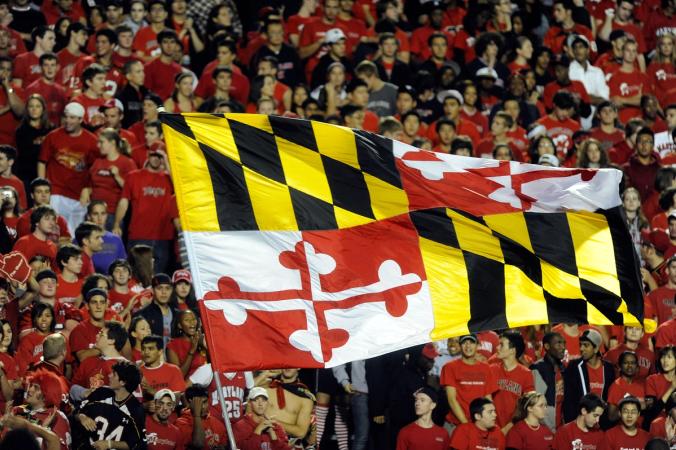
High-profile legal decisions keep going against the U.S. prediction markets, with another federal appellate court declaring that the state of Maryland has a right to police Kalshi's business there, making three of four appellate decisions that have ruled in favor of state oversight.
At the same time, the clock is winding down on a 30-day demand from the U.S. Commodity Futures Trading Commission that its regulated exchanges, such as Kalshi, Polymarket, Coinbase and other prediction markets operators, return to offering their contracts in all 50 states, instead of applying individual geographical restrictions as many states order them to halt. If they comply, the companies will be defying federal court orders, and if they don't, they may run afoul of their federal regulator.
The U.S. Court of Appeals for the Fourth Circuit, in the latest prediction markets ruling on Wednesday, agreed with lower-court decisions that Maryland has a right to regulate the space under its sports-wagering laws.
In the 2-1 decision, one of the three judges — Roger Gregory — wrote in his opinion, "Because the regulation of gambling has long been a matter of traditional state police power, I would not infer that Congress displaced Maryland’s concurrent authority absent a clear expression of its intent to do so."
Maryland Attorney General Anthony Brown said in a Wednesday statement means that "Kalshi must meet the same consumer protection standards as every other sportsbook serving Maryland residents."
"Under our licensing laws, sportsbooks must safeguard customer data, refrain from deceptive advertising, and stop marketing to people who are barred from betting or at risk of gambling harm," Brown said. "Federal commodities rules were never designed to provide those safeguards."
The company is claiming all the recent legal conclusions are a jumbled mess in which federal courts are contradicting each other
"Judges can’t agree with each other on why we’re wrong," a Kalshi spokeswoman said. "This splintered decision, including three separate contradictory opinions, demonstrates there is no unified coherent legal argument against prediction markets."
Though the decisions are inconsistent, there's a growing consistency in the strong majority of judges deciding that the industry is in the wrong. But until the U.S. Supreme Court overrides the rulings, the different views will muddy the regulatory waters.
The company didn't respond to a question about what it intends to do in response to the CFTC's directive that exchanges go nationwide. And spokespeople for the CFTC didn't immediately respond to a question about whether it'll enforce its stance in direct opposition to federal court rulings.
Prediction markets are banned in a growing number of states after court orders sided with local authorities, including in places like Utah that constitutionally outlaw gambling.
Democratic U.S. senators (who will soon have a majority that controls Congress' oversight powers) directed the CFTC this week to back offof its recent ultimatum on prediction platforms returning to nationwide service.
Meanwhile, both the industry and the CFTC's chairman, Mike Selig, continue to push the argument that these event contracts are swaps, and they trade on regulated derivatives exchanges, so the states' authorities are preempted.
Selig — as the lone member of what's meant to be five-commissioner CFTC — is pursuing a number of prediction markets policies, including moves that explicitly intend to define their contracts in such a way that the federal regulator should be in the driver's seat.
 AAVE

 BTC
 USDC
