

Crypto Long & Short: Crypto exchanges shouldn’t double as the vault
Happy Wednesday,
This is your institutional newsletter, Crypto Long & Short. This week:
- Darren Jordan of Komainu on the questions every institution should ask about where its assets are held
- Top headlines institutions should pay attention to by Helene Braun
- “Chip stocks drive a 24.1% jump in RWA perpetual futures volume” in Chart of the Week
…CoinDesk Research just released its Exchange Review. This report captures the key developments within the cryptocurrency exchange market. “Spot volumes fell 9.7% to $1.02 trillion in October, while RWA perps rose 24.1% to $611 billion and derivatives’ share of CEX volume climbed to 79.1%.” read more. Thanks for joining us!
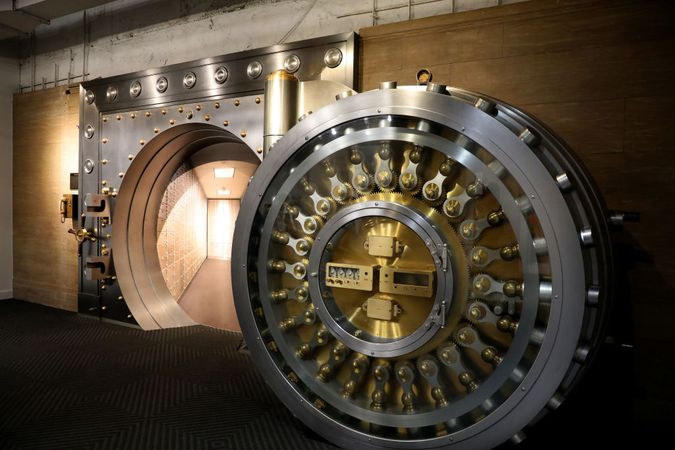
Why institutions should keep their crypto off the exchange
*by Darren Jordan, chief commercial officer, Komainu*
On Oct. 29, around $6.3 billion in digital assets left Binance’s hot wallets across 10 blockchains in just 20 minutes. It is the largest theft the industry has ever recorded. Binance responded quickly to the incident, pausing withdrawals, committing company funds to cover client losses and restoring services within days.
For institutional investors, the incident exposed a larger issue. When large volumes of client assets sit in exchange-controlled omnibus hot wallets, a single breach can reach billions of dollars in minutes. That is a question about market structure, and one the whole industry has an interest in resolving.
As a core part of market infrastructure, exchanges bring buyers and sellers together, provide deep liquidity and make efficient price discovery possible. Institutions need them, and the market is stronger because of them. However, the safekeeping of large pools of client assets is a separate discipline. It has its own requirements around segregation, governance, key management and legal protection if a counterparty fails.
Traditional markets solved this decades ago. An equities investor trades on an exchange, but their shares are held by a custodian and settled through a central securities depository. Nobody expects the trading venue to double as the vault. This separation is one of the key reasons institutions trust the system, and it has let exchanges focus on what they do best.
Digital assets developed differently. In the early years of adoption, it made sense for exchanges to hold the assets. There were few alternatives, and most users were retail traders who prioritized speed. The market has evolved since then. Pension funds, asset managers, banks and corporate treasuries are all now allocating to digital assets. These institutional investors come with fiduciary responsibilities, risk committees and regulators who want to know where assets are held and who controls them.
Off-exchange settlement already makes this separation possible, allowing institutions to trade on an exchange while their assets stay segregated with a regulated custodian. It has now become the standard model for institutional access to centralized exchanges. The exchange can see the collateral and extend trading lines against it, but assets move only when trades settle. This means clients keep access to the liquidity they need, and exchanges gain institutional flow that might otherwise stay on the sidelines.
Exchanges stand to gain from this shift too, because separating trading from custody lets them concentrate on deepening liquidity, broadening market access and improving execution. It also opens the door to institutional allocators who need their assets held with a regulated custodian before they can trade. Leading exchanges have adopted off-exchange settlement for exactly this reason, and the venues that embrace it are well placed to capture the next wave of institutional capital.
For institutions reviewing their setup after the recent events, the starting questions are simple. Where exactly are my assets held, and in whose name? Are they segregated or pooled with other clients’ holdings? What happens to them if my counterparty fails? Who can authorize a withdrawal, and what controls sit around that process? Can I trade without moving assets onto the venue at all?
Traditional finance and digital assets are converging quickly, with tokenized funds launching on public blockchains, banks building digital asset services into their core systems and regulators in major jurisdictions setting clearer rules. For that progress to continue, market structure needs to look familiar to the institutions now arriving. Separating trading from custody is one of the clearest steps the industry can take. Not only does it allow each part of the market to play to its strengths, but it also gives institutions the confidence to commit capital at scale.
Headlines of the week
By Helene Braun
Bitcoin’s slide toward $65,000, a clash between Senate Democrats and the CFTC over prediction markets, a $260 billion lawsuit tied to a Satoshi-era wallet and a former Robinhood engineer’s guilty plea in a Hyperliquid trading scheme were among the biggest crypto stories in recent days.
- Bitcoin slides toward $65,000, entering ‘deep value zone’: Analyst James Check said investors are selling bitcoin at prices they wished they could buy at just three months ago, as the cryptocurrency’s decline continues.
- Senate Democrats push back against CFTC over prediction market bans: Lawmakers urged the regulator to reverse its direction to platforms such as Kalshi to defy state bans, citing existing court orders.
- Satoshi-era bitcoin wallet tied to $260 billion lawsuit moves 75 BTC: A wallet holding bitcoin since 2011 transferred roughly $5 million worth of BTC, including the small payment used to serve it with a court notice in May.
- Former Robinhood engineer pleads guilty in Hyperliquid trading scheme: Huaisong Xiang admitted using confidential information about upcoming Robinhood crypto listings to make $125,523 trading perpetual futures on Hyperliquid.
Chip stocks drive a 24.1% jump in RWA perpetual futures volume
Real-world asset (RWA) perpetual futures volume across major centralized exchanges rose 24.1% to $611 billion in October, recovering from September’s decline. Activity remained highly concentrated: Binance (73.1%), OKX (13.5%) and Gate (7.0%) together accounted for 93.5% of the total. Semiconductor exposure drove much of the increase. Volume in SOXL, a 3x-leveraged semiconductor ETF, more than doubled to $89.1 billion, making it the fifth-largest asset by derivatives volume after BTC, ETH, SOL and ZEC.
For more charts and trading information, view our recently released Exchange Review report: https://www.coindesk.com/research/exchange-review-october-2026
Looking for more? Receive the latest crypto news on coindesk.com and explore our robust API and data offerings on coindesk.com/institutions.
More News


 BTC

 BP