Bitcoin miners pay Paraguay $350 million a year, but AI is pushing them out
 BTC
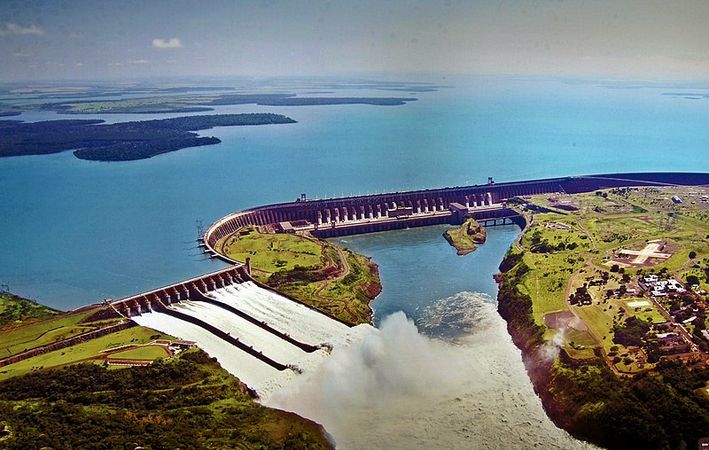
For years, the rhythmic hum of industrial cooling fans has echoed across this subtropical stretch of eastern Paraguay, where rows of specialized computers churn out Bitcoin using some of the cheapest electricity on earth.
Drawn by surplus hydropower from the 14,000-megawatt Itaipu Dam on the Brazilian border, foreign crypto companies struck lucrative deals with Paraguay’s state utility, turning excess energy into roughly $350 million in annual public revenue and making the country the world’s fourth-largest Bitcoin mining hub.
But that bargain is now unraveling. Paraguay’s national power company, ANDE, plans to let every special crypto contract expire on Dec. 31, 2027, a deadline officials have declared nonnegotiable, as domestic electricity demand surges and a new, even hungrier competitor arrives: Artificial intelligence.
Adding to that, the once-surplus electricity supplied nearly 88% of the country's power in 2025, and more will soon be needed at home. ANDE’s transmission master plan projects national demand growing nearly 8% a year through 2027 and about 5% a year after that.
Electricity is the biggest cost for miners, who are paid in new bitcoin for running specialized computers around the clock. So mining businesses have, historically, scouted for countries with cheap or excess power and a favorable climate to keep their machines cool.
Places like Iceland and Scandinavia became early hubs, but in subtropical Paraguay the power was cheap enough to cover the cost of cooling, too.
ANDE had about 944 megawatts contracted to miners as of April, roughly 13% of Paraguay’s Itaipu share, according to figures the utility’s then-president Félix Sosa gave local publication ABC Color. Four companies, Cademot, Zuns, Muiden and W3X, took 730 megawatts of that.
In return, these miners pay ANDE a flat $44 per megawatt-hour, under 5 U.S. cents a kilowatt-hour, with no annual adjustment. That adds up fast, with ANDE projecting $350 million from crypto miners in 2026, up from $295 million in 2025 and about $100 million in 2024. Miners based here - accounted for about 4% of global mining power in the second quarter, making it the fourth-largest mining jurisdiction, according to Hashrate Index.
But ANDE is now dropping the industry that pays it that much, and three groups are fighting over what replaces it.
The miner with the most at stake
HIVE Digital Technologies, the Nasdaq- and Toronto-listed miner, has the most riding on the deadline. Its annual report for the year ended March 31 says both of its Paraguay power agreements, a 200-megawatt site in Yguazú and a 100-megawatt site in Valenzuela, run to Dec. 31, 2027.
It said in its filing that “continued operation will rely on the Company’s ability to renegotiate this agreement.”
Paraguay holds most of HIVE’s mining capacity. About 297 of its 385 megawatts in use sat in the two Paraguayan sites as of April 30, roughly 77%.
Gabriel Lamas, HIVE’s president of operations in Paraguay, has publicly discussed bigger plans. He said in September the company wants its contracts extended at least 10 years,could grow from 300 to 1,000 megawatts within 18 months and expects to pay ANDE $140 million this year.
When asked about those numbers, HIVE wouldn’t discuss its talks with ANDE.
“We value that partnership, and out of respect for it, we don’t comment on ongoing commercial discussions,” Lamas told CoinDesk this week. It also wouldn’t say what it would do with the Paraguay fleet if the contracts lapse, calling that “a hypothetical.”
He pointed instead to HIVE’s already disclosed plans – a 100-megawatt expansion at Yguazú that would bring its local footprint to 400 megawatts, well short of the 1,000 megawatts he described in September.
HIVE also wouldn’t confirm the $140 million figure, saying it doesn’t break out electricity costs by country.
The stakes go beyond crypto mining. HIVE uses cash from mining to fund its own AI business, BUZZ HPC, which runs a cloud operation in the capital, Asunción.
The engineers’ price
ANDE’s own engineers want the industry shrunk and repriced. In July the Unión de Ingenieros de la ANDE, a group of the utility’s engineers, proposed capping data centers, AI and crypto mining at 700 megawatts combined from Jan. 1, 2028. That is roughly 10% of installed capacity.
Under the proposal, power would go to whoever bids highest in an auction, open to current miners and AI newcomers alike, with a floor of $56 per megawatt-hour on three to five year contracts. The floor adds $12 to today’s $44 to make up for power ANDE currently sells to Brazil.
Paraguay’s $350 million bitcoin mining bargain, by the numbers. (Shaurya Malwa/CoinDesk)
Ubaldo Fernández, one of the group’s spokesman, called a 2,000-megawatt load on a system of roughly 5,000 megawatts “una carga disruptiva,” a disruptive load. He said national electricity demand rose about 50% in three years without corresponding lift in economic growth.-
On Oct. 21 the engineers went further, asking ANDE president Miguel Báez for a sealed-bid tender. In their worked example, bids clear at $60, which on 700 megawatts would bring ANDE about $98 million a year more than miners pay now.
For HIVE, the proposal comes with a steep cost. Even at the engineers’ floor, HIVE’s $140 million bill for this year would come to about $178 million, an extra $38 million a year before the company adds a machine, per CoinDesk’s calculations.Meanwhile, HIVE’s planned 400 megawatts in Paradguay alone would take up over half of the 700-megawatt auction that would be shared among every miner and AI buyer that bids.
HIVE declined to speculate on proposals that haven’t been adopted.
“We support a transparent, durable framework for large power users that benefits Paraguay over the long term,” Lamas said.
The AI buyer with a contract
A day after the engineer's letter, Araico Corporation, the backer of a planned $12 billion AI campus called Iguazú AI City, locked in its power supply. The campus sits in Yguazú, the district that hosts HIVE’s largest site.
On Oct. 22, ANDE signed a 15-year contract to supply up to 286 megawatts to Kuntur, a Paraguayan company linked to Araico. Supply starts at 6 megawatts on Dec. 1 and jumps to 146 megawatts in April 2028, three months after the miners’ contracts end.
Most of that power costs an average $48.91 per megawatt-hour, rising each year with U.S. inflation by at least 2.5%. Araico director Alejandro Zuccolillo had told ABC Color on Sept. 30 that the company would pay $45 and that signing was “inminente.”
That final rate beats the miners’ flat $44 by about $5, sits about $7 below the engineers’ July floor and falls well short of the $70 a rival bidder, Imperium, -. Founders Fund, co-founded by Peter Thiel, anchors Araico, and U.S. AI cloud company Crusoe said last week it would run the campus’s computers.
ANDE, Araico and Zuccolillo did not respond to multiple requests for comment from CoinDesk.
Meanwhile, ANDE has publicly called the 2027 deadline “improrrogable,” meaning it cannot be extended, and Báez has reported pending requests for another 6,300 megawatts of supply, nearly the size of Paraguay’s entire Itaipu share.
Even before those AI requests arrive, the math is tight.-. Miners already hold about 944 megawatts, roughly 240 more than the engineers’ entire cap for mining and AI combined, and Kuntur’s contract adds 146 megawatts in April 2028.
If the cap is adopted and Kuntur’s power counts against it, miners would be left bidding for under 560 megawatts, less than three-fifths of what they hold today.
More News