Worldcoin aims to establish the globe's biggest identity and financial network as a public utility, ensuring universal ownership. At its core is World ID, a privacy-focused global identity system that allows users to prove they are human online ("Proof of Personhood") without compromising their privacy, utilizing zero-knowledge proofs.
To join the protocol, people must first install World App, the initial wallet supporting World ID creation. Users then visit a physical device known as the Orb to become Orb-verified. A network of independent local entities, called Orb Operators, runs most of these devices. The Orb employs multispectral sensors to confirm uniqueness and humanness, and it deletes all images on-device by default unless explicit consent for Data Custody is given.
Holders of Orb-verified World IDs can claim recurring grants of free WLD tokens (note that WLD tokens are not available in the US; refer to the Tokenomics section of the whitepaper for specifics). This distribution model could make WLD the most widely held digital currency.
Designed as a utility token with governance features, WLD gives users influence over the protocol’s future. While standard "one-token-one-vote" systems exist, World ID enables "one-person-one-vote" mechanisms, and the two can be combined for novel governance structures. Post-launch, the Worldcoin Foundation plans to gather proposals and collaborate with the community to define how World ID and WLD interact within the governance framework (see the whitepaper for further details on decentralization and governance).
Although the user community will ultimately shape the token's utility, potential use cases beyond governance include paying for actions within World App or other wallets, making general payments, or signaling support for specific causes.
WLD is an ERC-20 token on Ethereum. User grants are distributed on Optimism Mainnet, meaning most WLD transactions are expected to occur on the Optimism network.





 Alex Blania
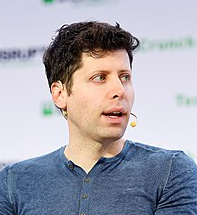 Sam Altman
 Karen Kreuzkamp
 Rich Heley
 Akarsh Sanghi
 Remco Bloemen
 Lily Gordon
 Tiago Sada