DoubleZero operates as a high-performance global network composed of independently contributed links, specifically engineered for blockchain and other distributed systems. It delivers direct, low-latency routing to boost validator performance and facilitate faster, fairer global participation. The 2Z Token grants access to this connectivity service while rewarding contributors and resource providers according to their performance and reliability. Staking mechanisms are planned for future protocol phases to further strengthen network security.
Current challenges in the blockchain sector include high latency and jitter in decentralized communication, reliance on general-purpose public internet networks for node connectivity, an absence of market mechanisms to incentivize quality bandwidth, and duplicate or spam transactions. To resolve these issues, DoubleZero employs a two-ring network architecture that leverages contributed fiber links and edge filtering hardware. This setup creates ultra-low-latency communication channels and uses 2Z tokens to provide financial incentives and coordination for contributors. By offering fast, reliable, and programmatic decentralized infrastructure, DoubleZero allows crypto protocols, validators, and users to scale services via dedicated, token-incentivized bandwidth. This supports latency-sensitive applications such as on-chain trading, block production, restaking, and real-time oracles, which are currently limited by the public internet. The native 2Z token fuels this performance layer through usage payments and contributor rewards, with staking features planned for later development.
DoubleZero was established to fill a critical void in blockchain infrastructure: the lack of dedicated, performance-optimized networking. Just as high-frequency trading firms in traditional finance depend on specialized infrastructure for a competitive advantage, DoubleZero aims to bring similar precision and reliability to crypto, representing a natural evolution for the industry. The founding team comprises experts with extensive backgrounds in performance networking and crypto protocols, including leadership roles at the Solana Foundation, NASDAQ, and global fiber network operators. They are committed to a long-term vision of constructing a high-performance backbone for decentralized systems.
Key milestones achieved include:
- Q1 2025: Completion of a permissioned testnet across 7 global locations
- Q2 2025: Completion of the public testnet launch, enabling validator participation
- Q3 2025: Completion of multicast for internal cluster messaging
- Q3 2025: Completion of the Mainnet-beta launch with token functionality
- Q2 2026: Completion of the DoubleZero Edge launch, a permissionless multicast-enabled market data distribution platform that delivers real-time Solana shreds to institutional traders via a dedicated fiber network
Planned upcoming features consist of:
- Direct routing coordination to lower latency and jitter
- A validator/delegator staking model to reward performance
- Transaction filtration and signature verification at link endpoints
- Permissionless bandwidth contribution
The 2Z Token is a utility asset native to the DoubleZero protocol, an infrastructure layer built to improve global connectivity for high-performance distributed systems. It facilitates the contribution of underutilized private fiber and network services, supporting low-latency, high-bandwidth routing across distributed networks, including blockchain ecosystems. Optimized for speed, performance, and decentralization, the protocol’s primary objective is to minimize latency and jitter in decentralized communications. Initially issued on the Solana blockchain using the Solana Program Library (SPL) token standard, 2Z ensures compatibility with wallets, decentralized applications, and validators within the Solana ecosystem.
Uses for the 2Z Token include:
- Access to Resources: Users spend 2Z Tokens to consume network resources. For convenience, payments may sometimes be made in native tokens of Solana (and potentially other blockchains in the future), which are then converted to 2Z.
- Payment for Resources: Contributors earn 2Z tokens for supplying fiber optic links and related services, with rewards aligned with the performance and usage of those resources.
- Future Staking: Staking mechanisms are planned for future protocol stages, allowing Network Contributors, Resource Providers, and token holders to enhance network security and deepen their involvement.





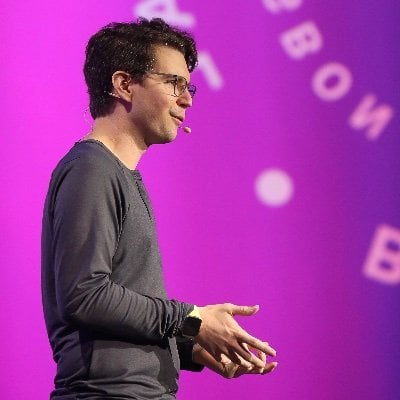 Austin Federa
 Andrew McConnell
 David McIntyre
 Nihar Shah
 Tom Warner
 Nikesh Dalal
 Mari Tomunen
 Hovin Wang