Elizabeth Warren May Finally Have the Firepower to Fuel Her Anti-Crypto Army
 WLFI
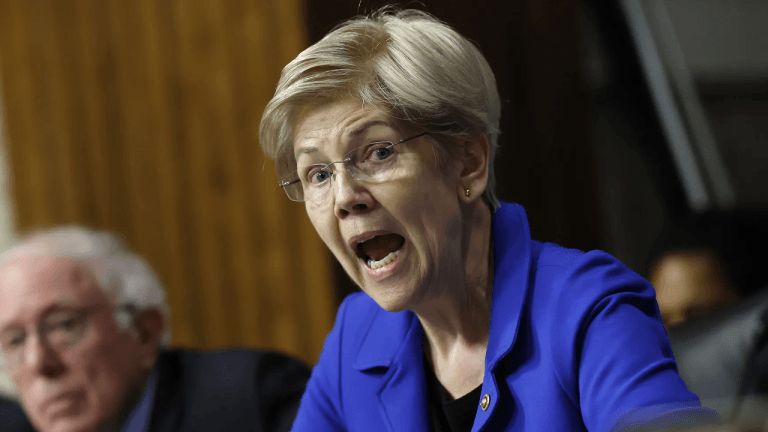
Massachusetts Senator Elizabeth Warren is preparing an aggressive congressional examination of the cryptocurrency industry, prediction markets, and President Donald Trump’s digital asset ventures following Democrats’ Nov. 3 midterm victories—with investigations, subpoenas, and regulatory confrontations potentially awaiting companies when the new Congress convenes in January.
Key Takeaways
- Warren’s prospective Senate Banking Committee leadership could bring intensified scrutiny of cryptocurrency firms and Trump family ventures.
- Several prominent Democrats are preparing separate investigations, with prediction markets and alleged financial conflicts drawing particular attention.
- Congressional oversight could complicate the industry’s regulatory ambitions, although significant obstacles remain to passing restrictive legislation.
Warren Questions Crypto’s Value as Trump Family Businesses Face Scrutiny
Elizabeth Warren, the Massachusetts Democrat expected to chair the Senate Banking Committee in January 2027, has offered little ambiguity about her skepticism toward cryptocurrency. During a Nov. 10 interview with the New York Times, Warren questioned the industry’s practical contributions, declaring:
“They’ve had 18 years now to show the positive use case for crypto.”
Her criticism extends beyond digital assets themselves. Warren also identified Trump’s cryptocurrency dealings as deserving examination, while her prospective committee leadership could place financial institutions, regulators, and cryptocurrency executives under considerably greater congressional scrutiny.
A Senate Banking Committee aide outlined the developing agenda on Nov. 9, telling Politico reporter Jasper Goodman that “Big Tech CEOs, administration officials, Trump family crypto businesses, Wall Street executives, and giant corporations should preserve their documents and prepare to answer tough questions.”
Among the potential targets is World Liberty Financial (WLFI), including its USD1 stablecoin and an August 2026 conditional national trust bank charter approval from the Office of the Comptroller of the Currency (OCC). Warren’s prospective examination could revisit the approval process, national security questions, and alleged conflicts involving Trump associates and foreign investors.
Warren and Sen. Merkley Take Aim at Prediction Markets and Insider Trading
Prediction markets represent another substantial concern. Warren’s team wants to “end the current Wild West-style lack of oversight” surrounding platforms where individuals possessing privileged information could potentially profit from political developments. That concern became particularly visible when Warren and Sen. Jeff Merkley, D-Ore., pressed White House counsel Will Scharf for answers concerning alleged prediction-market misconduct involving a former Trump aide.
The controversy centers on a former presidential teleprompter operator accused of exploiting advance knowledge of Trump’s speeches to wager through Kalshi. The Commodity Futures Trading Commission (CFTC) subsequently reached a settlement requiring $173,539 in monetary penalties and imposing a three-year trading prohibition.
“Since President Trump took office, the White House appears to have become consumed by a culture of corruption and greed that has placed personal financial interests ahead of the public interest,” the senators wrote.
Their correspondence also questioned Donald Trump Jr.’s financial and advisory relationships with prediction-market companies, requesting White House responses by Nov. 23. The administration has characterized the anticipated Democratic probes as “sham investigations,” while Republican Sen. Cynthia Lummis has defended cryptocurrency’s practical applications, including faster payroll processing and less expensive international transfers.
Boots on the Ground: Democrats Prepare Multiple Investigations Into Crypto Businesses
Warren is hardly alone. Democrats emerging from the midterm elections’ blue wave have outlined an assortment of investigative priorities involving cryptocurrency businesses, presidential financial interests, and prediction-market operators.
Rep. Robert Garcia, D-Calif., positioned to lead House Oversight, has accused Trump’s cryptocurrency enterprises of extraordinary conflicts. Gizmodo reported that during a Nov. 4 press conference, Garcia declared, “The amount of grift and corruption is unprecedented in American politics.”
Sen. Richard Blumenthal, D-Conn., has similarly intensified pressure on World Liberty Financial, Fight Fight Fight LLC, Binance, and Tether. His investigative correspondence establishes a Jan. 4, 2027, response deadline, warning that failure to cooperate could prompt additional measures.
According to reporting from The Hill, Rep. Maxine Waters, D-Calif., seeking leadership of the House Financial Services Committee, has pledged to confront what she calls the Trump family’s “crypto corruption” while pursuing tougher consumer protections and cryptocurrency regulations.
Other Democrats are directing attention toward prediction markets. While Warren and Merkley have advocated legislative intervention, Rep. Ro Khanna, D-Calif., has called for prohibiting sports-related prediction markets, arguing that such products effectively disguise gambling as financial trading.
That position, however, stands in direct opposition to the views of several Republicans and the U.S. Commodity Futures Trading Commission (CFTC), which have firmly rejected the argument.
These overlapping priorities could expose cryptocurrency companies to simultaneous inquiries from multiple congressional committees, each possessing different jurisdictional responsibilities and investigative authority.
Political uncertainty has already accompanied substantial declines in Trump-associated assets. The TRUMP, MELANIA, and WLFI tokens reached record lows following the election, while shares of Trump Media & Technology Group and American Bitcoin also retreated. Nevertheless, those price movements alone cannot establish that the threat of congressional investigations caused the selling.
The Anti-Crypto Army Is Assembled, Ammo Is Ready, but How Much Damage Can It Do?
Despite Democrats capturing both congressional chambers, their ability to fundamentally rewrite cryptocurrency policy faces meaningful constitutional and procedural limitations. Their most immediate advantage involves oversight. Beginning in January, Democratic committee leaders could demand corporate documents, summon executives, question regulators, and potentially issue subpoenas to investigate suspected misconduct.
Warren’s Banking Committee could examine OCC charter decisions and financial supervision, while other committees could interrogate Securities and Exchange Commission (SEC) and CFTC officials about enforcement practices and regulatory priorities. Senate control also provides leverage over presidential nominations, allowing Democrats to delay or reject candidates for important financial regulatory positions.
Perhaps more consequential for cryptocurrency legislation, Democratic committee chairs could simply refuse to advance industry-supported proposals. The CLARITY Act, already unsuccessful in an earlier Senate vote, would face additional political obstacles under leadership skeptical of its provisions. However, restricting the industry’s existing legal protections presents a different challenge.
Most major legislation ordinarily requires 60 Senate votes to overcome a filibuster. President Trump also retains veto authority, with overriding that veto requiring two-thirds support in both chambers. Democrats cannot independently erase the GENIUS Act, automatically revoke previously granted banking charters, or prevent federal agencies from exercising authority established under existing statutes.
Moreover, Democrats themselves disagree on certain cryptocurrency questions, including stablecoin rewards and the appropriate boundaries of financial innovation. The distinction matters enormously. Investigations can impose legal expenses, consume executive attention, and expose previously undisclosed dealings without changing a single statute. New restrictions, however, require political cooperation that the incoming majority cannot guarantee.
For cryptocurrency companies, January could therefore introduce an uncomfortable period of congressional interrogation and legislative paralysis rather than an immediate regulatory reversal. Warren and her Democratic colleagues possess formidable tools for demanding accountability, but possessing the power to investigate an industry is fundamentally different from possessing the votes to rewrite its future.
Read the original at Bitcoin.com
More News