Former NYSE president says stock issuers hold the key to tokenization as Bullish builds its platform
 BLSH
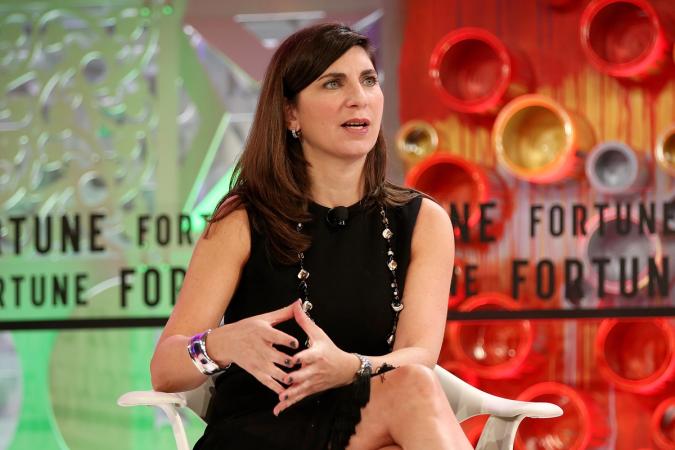
As some of America's biggest companies resist having their shares traded on new blockchain-based venues, former New York Stock Exchange President Stacey Cunningham sees a problem with the industry's approach: Stock issuers are too often left out of the conversation.
Cunningham, who joined CoinDesk's parent company and digital asset platform Bullish BLSH$22.35 as president this week, wants to change that by giving companies a more direct role in how their shares are tokenized and traded.
"There's a lot of synthetic tokenization happening. Issuers are not part of those conversations," she told CoinDeStacey Cunningham, who recently joined digital asset platform Bullish as President, sees the company’s planned Equiniti acquisition and focus on stock issuers as key to its tokenization ambitions.sk in an interview.
However, while tokenization is becoming the talk of Wall Street, there is some initial pushback from companies. By Nov. 6, 56 of the 62 companies initially selected for a planned tokenized-stock venue backed by crypto exchange OKX and NYSE parent Intercontinental Exchange had objected, according to a CoinDesk tally.
The objections, which include companies such as Apple, Amazon and Tesla, do not necessarily signal opposition to tokenization itself. But they show how difficult it can be to build a market for tokenized stocks without cooperation from the companies whose shares are being traded.
Cunningham, who led the NYSE from 2018 to 2022, believes tokenization will become part of mainstream financial markets, and as the next step for traditional financial markets, even if questions remain about how quickly it happens and which business models prevail.
"It's no longer a question about whether or not things are going to get tokenized. It's just a matter of how long it takes for it to happen," Cunningham said.
Bringing stock issuers into the process
Bullish is seeking to build an issuer-focused tokenization platform by combining its exchange, custody and trading operations with the shareholder-recordkeeping business it expects to acquire through its planned $4.2 billion purchase of Equiniti.
The deal, expected to close in January 2027 subject to regulatory approvals, would bring Equiniti's relationships with nearly 3,000 corporate issuers and more than 20 million shareholders into Bullish's business.
Transfer agents maintain official records of share ownership and process changes to those records. Their role could become increasingly important if companies want to issue tokenized shares that carry the same legal and economic rights as traditional stock.
"I think the interesting thing about Bullish is we really have all the puzzle pieces, because we have an exchange, the transfer agent coming, the custodian, an AMM, their indices," Cunningham said.
An automated market maker, or AMM, is software that facilitates trading using pools of assets rather than a traditional exchange order book.
For Cunningham, the acquisition could help Bullish establish relationships with companies before their shares are tokenized, rather than creating digital products linked to stocks without the issuers' involvement.
There are important differences between those approaches.
Some tokenized-stock products provide exposure to share prices without the same ownership rights as the underlying stock. Other models, including the planned OKX–ICE venue, are designed to preserve shareholder rights but allow companies to object to third-party tokenization of their shares.
Bullish has already begun testing its issuer-sponsored approach using its own stock. The company tokenized its shares on Solana earlier this year and, in October, demonstrated the transfer of 61 million reserved tokenized Bullish shares, administered by Equiniti, at an event at the NYSE.
It has also identified Solana, Ethereum and Aptos as networks for its tokenization services, offering issuers a choice of blockchains.
Those steps demonstrate the technology’s use with Bullish's own shares, but winning over outside corporate issuers remains a different challenge.
What companies stand to gain
Cunningham argues that companies need a clearer reason to participate than simply making their stocks available for round-the-clock trading.
One potential benefit is greater visibility into share ownership. Blockchain-based records could help companies identify and communicate with shareholders more directly, while faster settlement and simpler recordkeeping could reduce some of the administrative work associated with traditional securities markets.
Such advantages are not automatic, however. They depend on how tokenized shares are structured, how ownership records are maintained and whether existing market participants adopt the infrastructure.
Cunningham said she joined Bullish because she believes blockchain technology is moving beyond cryptocurrency trading and into the systems that support conventional financial markets.
"There would be pieces of the technology that would replace financial market infrastructure, and that's what we're seeing happen now," she said.
That shift is unlikely to happen overnight, however.
The widespread objections to the OKX–ICE venue illustrate the challenge of persuading public companies to participate in markets that could change how their shares are traded and how they communicate with investors.
Cunningham also sees room to advance Bullish's plans without waiting for Congress to pass comprehensive U.S. cryptocurrency legislation. Asked whether the stalled CLARITY Act was a concern, she said existing rules still leave opportunities to build new market infrastructure.
"There are a lot of things we can do to build and provide solutions even without Clarity, and so I'm not worried about that at all."
For Bullish, the immediate challenge is turning its technology, trading infrastructure and planned transfer-agent acquisition into a service that companies actually want to use.
Cunningham believes issuer participation will follow once companies see what blockchain-based shares can offer.
"Once issuers see the value that tokenization delivers to them, I'm confident we'll see fast adoption," she said.

 COIN