

Democrats surge toward Senate, House majorities, with crypto braced for new direction
The U.S. Congress is expected to be under new management next year as a shockwave of Democratic victories spread across Tuesday's midterm elections. The party is now projected to take control of the country's legislative agenda and to threaten a less welcoming environment for crypto in the committees the industry will need for future legislation.
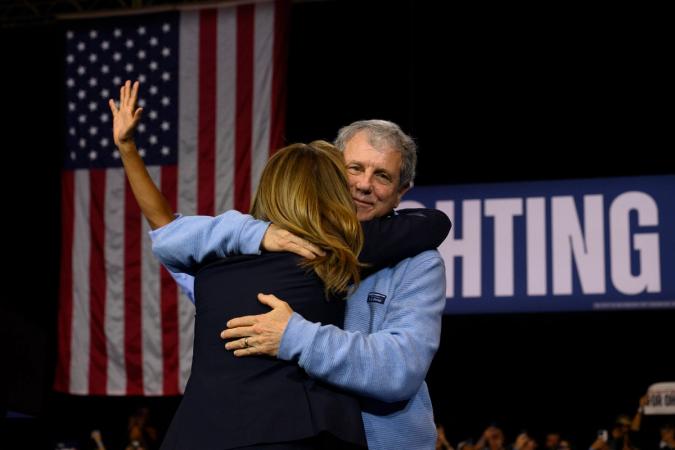
The crypto industry's massive election spending against former Senator Sherrod Brown in Ohio also failed to keep the Democrat from winning a return ticket to Washington, according to the latest tally that's expected to put a particularly energized crypto critic back into the Senate to potentially make things more difficult for digital assets causes.
Ohio wasn't the only place where Republicans took a beating as election night saw Democrats projected to pick up a majority of Senate seats, with more states to potentially factor in. The expected surge for Democrats on the wave of dissatisfaction with President Donald Trump's administration took its toll on the GOP across the board, lifting Democrats into seats that would have been longshots by traditional reckoning.
Many of those races were in red states where the president spent considerable time trying to raise a political defense in recent weeks. Texas went to Democrat James Talarico with 59% at last count. North Carolina went to Roy Cooper, also with nearly 59% of the vote. Kansas picked Democrat Adam Hamilton, while Iowa chose Democrat Josh Turek. And South Carolina favored Democrat Annie Andrews as the conservative state rejected Trump-backed Darline Graham, the sister of former Senator Lindsey Graham, a staunch Trump ally who died in July.
As this week's general election approached, the crypto industry's super PACs pumped a huge amount of money into supporting Republican candidates and opposing Democrats, even as polling and prediction markets suggested they were backing the losing party. The two biggest campaign investments were in Ohio, where the sector's deep pockets devoted an unprecedented $63 million in the hopes of defeating Brown, and Nebraska, where Fairshake spent almost $11 million on Pete Ricketts, who was trailing late Tuesday night at the halfway mark of that state's count.
Blue shift
The first two years of Trump's second administration seems to have shifted much of the electoral map blue. What that means for the crypto industry is that the people controlling the legislative agenda will no longer be under strong directives from the president to create a crypto-friendly regulatory regime. They'll also be free to conduct investigations that could pull in crypto interests.
The Democrats who sat in negotiations on the failed Digital Asset Market Clarity Act this year wanted more controls on illicit finance, more limits on government officials (namely, Trump) participating directly in the industry and more consumer protections — all of which are likely to become stronger positions now.
The chances are high that Senator Elizabeth Warren, who is widely considered by the industry to be its greatest enemy in Congress, will be in charge of the Senate Banking Committee that would need to sign off on crypto legislation. And Brown, who formerly held that gavel for years, could potentially be given a position of authority over crypto matters, though his seniority was erased by his election loss in 2024.
Still, insiders have high hopes that they'll be able to make progress on a crypto taxation bill and other targeted topics. The chances of another market structure effort don't carry high hopes from lobbyists and crypto's other Washington advocates.
Big House majority
The House of Representatives has always been the easiest road for digital asset legislative work, and the industry still has a strong, bipartisan well of support there. Tuesday's elections flipped more than a dozen seats toward Democrats in the first hours after polls closed, likely assuring they'll easily overrun their 218 majority target — and then some — though the goal hadn't been reached by press time.
Political analysts projected the party would enjoy a heavy margin over the Republicans, potentially more than 60 seats, which could give the incoming leadership an easier time passing legislation than the Republicans had with their scant majority of a handful of seats.
As in the Senate, a Democratic majority would mean Democrat committee chairs, potentially including Representative Maxine Waters returning to the helm of the House Financial Services Committee, though she's being challenged for the role.
Some Republican incumbents who are high-profile crypto supporters encountered tight races, including Representative French Hill, who was still battling it out with a narrow lead late in the Arkansas vote count. Hill, as chairman of the same committee Waters was eyeing to take over, was responsible for leading the crypto legislative charge that won victory for a stablecoin bill and neared the finish line for the Clarity Act.
And Representative Bryan Steil, the Republican crypto booster from Wisconsin who led the crypto subcommittee within Hill's committee, was losing in his race Tuesday, with a difficult-to-overcome 3% deficit looming as the state approached the tail end of that tally.
 NVDA
 BTC