14-Year-Old Interviews SBF Behind Bars: $500M Bet on Anthropic Paid Off, but FTX’s Downfall Left Him Regretting It
 ANTHROPIC
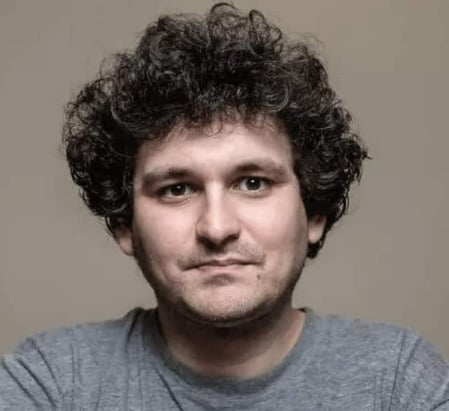 Sam Bankman-Fried
At the moment an extreme crisis erupts, panic will distort all advice and decisions.
Organized & Compiled: TechFlow
TechFlow Summary: Accompanied by the automated federal prison voice prompt "Call coming from federal detention," former FTX founder Sam Bankman-Fried (SBF) joined 14-year-old tech blogger Eli Goldfine for an intense, 82-minute deep-dive call from the Metropolitan Detention Center (MDC) in Brooklyn. In this conversation widely regarded as having the highest information density in recent years, SBF, behind bars, rarely broke his silence to comprehensively review his cognitive landscape, investment journey, and radical philosophy.
From the behind-the-scenes maneuvering that led FTX Ventures to inject $500 million into Anthropic back then, to radical projections of the future AI landscape worth hundreds of trillions if not tens of trillions of dollars; from a cold-eyed examination of traditional software moats and the brand value of Coinbase, to facing Tyler Cowen-style philosophical interrogation over a "51/49 coin toss to double benefits or destroy the world" and personal freedom gambles; to finally confessing at the endgame that "the outcome brought by FTX is not worth it, and when the crisis erupted, all reality was distorted by the winners' filter," SBF presents the complete spiritual world of a genius trader after falling from grace, using the most nakedly transparent mental modeling.
Guest: Sam Bankman-Fried (Founder and former CEO of FTX, currently serving time in a federal prison; core practitioner of effective altruism)
Host: Eli Goldfine (Host of the 14-year-old tech and prediction podcast The Super Cycle, Twitter @realTomBayes)
Podcast Source: The Super Cycle (https://x.com/realTomBayes/status/2123761258306384333)
Original Title: EXCLUSIVE: I'm 14, and I just interviewed Sam Bankman-Fried
Air Date: November 20, 2026 (Beijing Time: 2026-11-21)
Fő pontok
- The greatest torment in prison is isolation from cutting-edge information: SBF admits that pondering his case holds no incremental value for the outside world; what truly pains him is being unable to real-time track LLM benchmark performance, code details, market trends, and startup commercial due diligence. Without cutting-edge micro-inputs, effective thinking becomes extremely difficult.
- The origins and details of the early $500 million bet on Anthropic: FTX Ventures virtually underwrote the entirety of Anthropic’s Series B round at the time. They didn't inject more compute capital because excess cash can easily tempt companies to squander it (e.g., blind user acquisition), and the team refused excessive equity dilution; blind expansion would ultimately put the cart before the horse.
- AI industry to attain multi-trillion dollar dominance: Over the next decade, AI will inevitably become the pillar or even dominant sector of the global economy; given that only a handful of top-tier labs compete for the throne (Anthropic, OpenAI, DeepMind, xAI), it is entirely logical within economic modeling that leading institutions command trillion-dollar valuations.
- Traditional software companies are not completely sentenced to death by AI: Physical-world industries (e.g., steelmaking, mining) lag in AI impact; for pure software and financial institutions, even if competitors use AI to replicate identical functions at near-zero cost, they cannot easily displace first-movers, because the true moat of brands like Coinbase and Robinhood is unshakeable brand trust.
- p(doom) assessment lies in a complex gray area around 25%: SBF believes the probability of human extinction or existential catastrophe due to AI ranges between 10% and 50% (median ~25%); disaster scenarios won't be simple runaway nuclear weapons, but rather complex gray situations, such as non-uploaded humans being entirely marginalized and phased out after consciousness uploading.
- Political prediction markets were once FTX's unfinished ambition: Financially, prediction markets are fundamentally futures contracts with specific settlement rules; early on, FTX ran hundreds of millions in U.S. election prediction on offshore markets, but was restricted without a CFTC license. The explosive rise of Kalshi and Polymarket validates the track's potential.
- Highly skeptical of the information throughput efficiency of printed books: SBF reiterates his famous view that most books should be compressed into blog posts of six paragraphs; compared to audio-visual streams (like Netflix), books suffer from verbose padding, resulting in significantly lower information throughput and expressive dimensions per unit of time.
- The reality check on extreme expected value and the 51/49 coin toss: Mathematically sound under pure linear expected value theory (51% doubles, 49% destroys the world), but in reality, destruction carries irreversible extinction costs, and true utility features diminishing marginal returns; regarding betting one's own release via a 51/49 coin toss, individual risk-utility functions dictate that theoretical bets cannot be simply replicated in reality.
- Painful retrospective on the FTX outcome: When asked "was it all worth it," SBF explicitly states "I can't tell you it was worth it against my conscience; it would have been, if it hadn't gone wrong at the end"; during crises, people easily lose rationality and core judgment, after which all history is reshaped and distorted by the winners' filter.
- Survival guidelines for the new generation of 14-year-olds: Stop obsessing over Wall Street high-frequency trading for "Earning to Give"; the urgent priority is to fully grasp AI, dive into AI safety, or find practical entry points where AI can genuinely automate infrastructure.
Highlighted Insights
- About the brutal barrier of the prison information gap: "If you want to create value at the forefront, you need to master hundreds and thousands of micro-details: exactly where LLMs excel, where they still falter, what's being discussed at the industry frontier, and how market microstructure is shifting. Inside the high walls of a federal prison, gathering these details is almost an impossible task."
- About Anthropic's valuation and moat: "If you accept that AI will become the core sector dominating tens of trillions of dollars globally over the next decade, and the number of top-tier core labs sitting at that table is屈指可数 (countable on one hand), then it is entirely logical that each leading company commands a multi-trillion-dollar market cap. Anthropic's prowess in code generation and software engineering tools remains globally top-tier."
- About the true moats of brand and technology: "Many programmers think technology is everything, but look at Coinbase or Robinhood—how do they justify hundreds of billions in valuation? Absolutely not because of exclusive algorithms other teams can't copy, but because of brand trust spoken of by retail users nationwide. Even if a competitor uses AI to replicate identical software at near-zero cost, they simply cannot buy that brand asset."
- About the radical critique of printed books: "I still believe that if you write a book, you often did it wrong; it should have been a blog post of just six paragraphs. Books have abysmally low information throughput, filled with lengthy useless narratives; over the same unit of time, high-density visual and audio-visual input transmits far more effective information."
- About realistic reflections on the 51/49 coin toss: "In pure ivory-tower expected value theory, you can model doubling global utility to gamble a 49% chance of ruin; but the real world carries irreversible systemic zero-risk, and every positive utility has its marginally diminishing limits. Once you factor in the fatal cost of destruction, you simply wouldn't dare flip most real-world coins."
- About the final verdict on FTX's rise and fall: "I want to self-deceptively comfort myself that it was worth it, but I can't lie to my conscience about it. It would have been worth it, if I hadn't completely screwed it up at the final moment. When extreme crisis erupts, panic warps all advice and decisions, and after the smoke clears, all historical narratives are unavoidably reconstructed entirely by the victors' stance."
Main Body: Complete Transcript (Fully Translated from Original Subtitles)
Prison Life and Cognitive Barriers: A Black Box World Devoid of Micro-Details
Eli Goldfine: Welcome to The Super Cycle, I'm Eli Goldfine. We are extremely honored to connect with Sam Bankman-Fried (SBF) today. Before this, my team and I coordinated and prepared for months; this is undoubtedly the highest information-density deep dive our podcast has ever conducted. Hello, Sam, can you hear me?
Sam Bankman-Fried: Yes, very clearly.
Eli Goldfine: Great to connect with you. I've watched many of your recent interviews, and the vast majority of public attention has focused on FTX's collapse and your daily routine in prison. You have ample solitude and reflection time behind bars; what topics do you spend the most energy thinking about?
Sam Bankman-Fried: That's a very natural question. Obviously, I do spend a significant portion of my time reviewing my own case, replaying what exactly happened, and thinking about what else I could possibly contribute. But I'm well aware that for people in the outside world, these reflections actually offer little incremental value.
I try to shift my energy toward thinking about what I can do going forward. But under the prison environment, productive forward-looking thinking becomes incredibly difficult.
Eli Goldfine: Why is forward-looking thinking so hard in prison? Is it because of a lack of key information?
Sam Bankman-Fried: Not a single piece of missing information, but a lack of countless micro yet crucial inputs. If you want to stand at the vanguard of human cognition and business to project the future, you must grasp massive dynamic details: exactly how are frontier LLMs evolving? On which specific tasks do their evaluation curves break past human limits, and where do they still falter? You must personally verify these technologies in practice and converse daily with those building them on the front lines.
The same applies financially; you must watch the tape daily, observe capital flows and trading structures, build interpersonal networks, communicate with emerging startup teams, discuss their business models, and conduct thorough due diligence. These are all tasks I would absolutely handle daily if I were outside, but inside the high walls of a federal detention center, acquiring every single piece of information becomes exceptionally difficult or nearly impossible.
Eli Goldfine: If you could obtain information while in prison, which dimensions of information do you think would be most valuable for modeling the real world?
Sam Bankman-Fried: As I said, not singular viral news, but thousands of micro variables. For example, architectural evolution of frontier models, the actual implementation threshold for code generation, cash runways for startups in real business environments, genuine procurement willingness across different industry sectors, etc. Under these circumstances lacking micro-detail inputs, purely closed-door macro frameworks derived are often incredibly fragile.
Eli Goldfine: You certainly can't just dwell on your case all day. Aside from it, what broader issues are you also thinking about?
Sam Bankman-Fried: Yes, but much of it remains heavily constrained by my current physical environment, as it's the only world where I can directly access first-hand feedback right now. It's not that it's critically important, but I have indeed spent considerable time reflecting on the criminal justice system—not just my personal situation, but the absurd logic the entire judicial framework exhibits on a universal level.
Reflections on the Federal Criminal Justice System: Fabricated Charges, KPI Metrics, and Perverse Incentives
Eli Goldfine: Stripped of your personal case context, what specific systemic judicial problems have you observed?
Sam Bankman-Fried: As the saying goes, when you have a hammer, everything looks like a nail. The judicial system operates on exactly the same principle. If you establish a federal task force dedicated to cracking down on a specific type of crime, that task force will frantically hunt for sources regardless of whether that crime actually exists at scale.
Once the headcount and budget of that task force exceed the actual volume of such crimes in society, it inevitably starts manufacturing fake cases, arresting behaviors that don't constitute crimes. This distortion has been prevalent across the federal anti-drug apparatus for decades, and over the past ten years, this culture has fully permeated and spread across every domain of federal justice.
Eli Goldfine: Such as which specific domains?
Sam Bankman-Fried: Take the massive federal cybercrime investigation agencies, originally designed to combat extreme violations; they now stick their hands into private text conversations and normal social interactions between lovers. Countless completely innocent people have been prosecuted and arrested simply because prosecutors needed these cases as performance metrics for promotions and raises. The case of former Honduran President Juan Orlando Hernandez perfectly illustrates how absurd the results get when indictment mechanisms spiral completely out of control.
Eli Goldfine: Do you still believe white-collar criminals should be imprisoned?
Sam Bankman-Fried: Not at all. Locking white-collar offenders in prison does nothing beneficial for society. Its sole function is brutally ripping decades from someone's life and forcing taxpayers to shoulder exorbitant economic burdens for prison operations. If you're purely seeking retribution, it achieves that purpose; but I absolutely do not believe this system rehabilitates anyone.
Eli Goldfine: For individuals who actually committed financial fraud, what do you think is the most reasonable handling method?
Sam Bankman-Fried: It depends heavily on the specific factual details of the case. But in the vast majority of commercial and financial matters, civil litigation procedures are far more refined and rational paths than criminal trials. Civil remedies can resolve issues through astronomical fines, restructuring business contracts, restricting professional qualifications, and seizing assets.
More fundamentally, as a modern society, we must learn to dial back that blind, excessive confidence. We often arrogantly assume we can precisely see the truth of facts, believing we're punishing evil-doers, but in reality, many standing trial are merely convenient scapegoats chosen by certain factions to divert conflict.
Eli Goldfine: Should reforming the judicial system be a priority focus for the effective altruism community?
Sam Bankman-Fried: From an expected utility standpoint, this field is actually highly complex. While the social value of judicial reform is undeniably massive, it faces incredibly entrenched political resistance and institutional inertia. Once an interest group forms a massive industrial ecosystem around incarceration volumes, pushing for bottom-up transformation from the outside becomes extraordinarily difficult.
Eli Goldfine: In your view, what are the lowest-hanging fruits for improving the criminal justice system?
Sam Bankman-Fried: The easiest to push through and immediately unleash enormous economic dividends is thoroughly reexamining pretrial detention and sentencing baselines for non-violent crimes. The current system is flooded with impoverished populations held indefinitely because they can't afford minor bail, and底层劳动人口 (lower-tier working-class populations) handed decades-long sentences for drug offenses. Providing formal market-oriented job training and community correction for them, rather than directly throwing them into prison to completely sever their social ties, represents the highest cost-performance ratio reform entry point.
Endgame Projections for the AI Industry: Trillion-Dollar Valuations and a Few Oligarchs at the Table
Eli Goldfine: Let's talk frontier tech. Anthropic is reportedly preparing for an IPO, with external expectations for its valuation sprinting toward hundreds of billions乃至万亿美元 (tens of trillions) of dollars. As the early lead investor who put $500 million into Anthropic's Series B, how do you view the current valuations given to these large model labs?
Sam Bankman-Fried: I firmly believe they are absolutely worth that price, and potentially far more in the future.
Deriving from macro business logic: Throughout human economic history, every core pillar sector that truly sustains civilization operating spans trillions to tens of trillions of dollars in total market cap. And over the next five to ten years, AI will very likely grow into the most central, or even most domineering, economic industry globally.
Eli Goldfine: If the entire AI sector eventually reaches multi-trillion dollar valuations, how will that value be divided by the market?
Sam Bankman-Fried: Assuming two-thirds of that future multi-trillion total market cap stays with yet-to-emerge innovative applications and new companies, the remaining sector still leaves over one hundred trillion in size shared among existing foundational model enterprises.
Yet count closely: globally, how many top-tier labs truly qualify to sit at this core foundation table? OpenAI, Anthropic, Google DeepMind, plus xAI—you can count them on one hand. When a multi-trillion赛道 (track) eventually gets carved up by single-digit oligarchs, the inevitable mathematical deduction is: every top-tier frontrunner must intrinsically carry a trillion-dollar valuation to measure up. Anthropic unequivocally ranks in the global top two.
Eli Goldfine: Why do you rate Anthropic so highly? Is it mainly because Claude series models perform well on benchmarks?
Sam Bankman-Fried: Benchmark scores are undeniably important, and the public sees Claude's robust reputation in daily conversational and mass consumer applications. But the core asset separating Anthropic from the pack is its absolute dominance in software engineering and professional developer tooling. Their dev kits and code comprehension capabilities for engineers are globally top-tier, representing the fundamental workhorse machines for the entire digital society's transition to AI automation.
Eli Goldfine: If the next decade enters an彻底的超级智能军备竞赛 (total superintelligence arms race), what do you envision the world becoming?
Sam Bankman-Fried: Productivity distribution across society would be completely remapped. Over the past few years, while LLMs evolved exponentially, absolute capability remained below the human median, making social order appear relatively calm. However, once crossing specific inflection points, machine output speed surpasses human capacity by hundreds of times in programming, law, financial modeling, and drug R&D. Wealth creation accelerates drastically, but distributing the compute dividends becomes the most intense geopolitical bargaining focal point globally.
The Origins of the Early $500 Million Heavy Bet on Anthropic: Compute Arms Race and Capital Traps
Eli Goldfine: Many have always wondered: why did FTX Ventures virtually underwrite the entire Series B funding for Anthropic back then? Since you were so certain about AI's future at the time, why didn't you cut larger checks, like injecting $1 billion or $2 billion outright to let them purchase GPUs and build data centers without limit?
Sam Bankman-Fried: There are two key considerations here. First, from the founders' perspective, any exceptional team early on refuses excessive dilution of corporate control and equity ratios; they only raise capital necessary for their current developmental stage.
Second, commercial history is littered with companies killed by funding shortages, but equally numerous are those crushed by overly abundant cash flow and swallowed by their own capital. Many startups, upon raising astronomical sums, develop a blind anxiety of "I must spend this money," subsequently squandering billions on meaningless marketing or blind expansion, ultimately losing reverence for core tech攻坚 (tech breakthroughs).
In early large model construction, architecture iteration and algorithm validation require steady R&D cycles; you definitely cannot force growth by merely piling up compute. Anthropic's capital utilization planning was highly rational at the time; the funds we invested perfectly satisfied their core need to initiate next-generation model training.
Eli Goldfine: How did FTX Ventures operate internally back then? What role did you personally play in specific investment decisions?
Sam Bankman-Fried: Early on, many deals were unearthed by our team members during daily operations, including early crypto-native investments, many yielding multi-bagger asset appreciation annually. Anthropic, like Solana, was initially a disruptive project we serendipitously engaged with deeply.
As scale expanded, we onboarded professional partners to build a formal investment structure. For standard deals, I tend to fully trust the analysis teams responsible for due diligence; but for strategic heavy bets like Anthropic, I tracked them weekly or more frequently, discussing how we could assist them operationally at the compute layer, financially, and across resource networks.
Eli Goldfine: When you first contacted Dario Amodei's team, what left the deepest impression on you?
Sam Bankman-Fried: Extreme rigor and focus. When Dario and his team split from OpenAI, their objective was crystal clear: build frontier safety models with highly interpretable and alignment-guaranteed architectures. They wouldn't chase short-term eyeballs with flashy demo theater; every capital expenditure was restrainedly locked onto critical compute clusters and engineering talent recruitment. That engineering culture is exceedingly rare in today's superficial Silicon Valley.
Survival Crisis for Traditional Software and Brand Moats: Why AI Can't Kill Coinbase?
Eli Goldfine: With the explosive capability leaps of frontier models, many traditional software companies face massive survival anxiety. Do you think traditional software firms without deep AI integration are completely out of options?
Sam Bankman-Fried: It's not that absolute. First, substantial industries in the real economy possess natural physical defensive buffers against AI penetration, like steel smelting and underground mining; no matter how smart AI gets, it can't magically excavate ore overnight.
Second, for purely digital software, decisive victory relies on more than just underlying code efficiency. Many severely underestimate the absolute moat of "brand." Suppose a competitor uses the latest LLM tools to clone a functionally near-identical software product at minimal cost—does that mean users will abandon the incumbent? Absolutely not.
Eli Goldfine: Like Coinbase or Robinhood?
Sam Bankman-Fried: Exactly. Why do Coinbase and Robinhood enjoy hundreds of billions in lofty market caps? Is it because they possess secret matching engine code utterly uncopyable by other teams? Of course not. Their most precious asset is brand awareness, the trust endorsement spontaneously voiced by millions of everyday retail investors worldwide when wanting to trade digital assets.
Even if a new team can practically rewrite frontend and trading systems at near-zero cost using AI, they fundamentally cannot purchase this沉淀多年 (years沉淀沉淀沉淀沉淀) brand credibility in a short timeframe. Brand often allows traditional enterprises to maintain long-term survival resilience despite homogenized pressure from underlying products.
Eli Goldfine: Then which traditional software companies will be phased out fastest?
Sam Bankman-Fried: Those purely relying on feature stacking, possessing neither brand心智占领 (brand mindshare capture) nor deep data network effects in middleware. If your product is merely a basic ticket management or form-filling tool, with zero emotional or brand binding between user and product, native AI tools will utterly crush it within extremely short timeframes at a fraction of the cost.
Real Alpha in Tech Investing: Minimalist Native AI Teams vs. Buzzword-Chasing Trash Companies
Eli Goldfine: So where do you believe true alpha (excess returns) currently hides in the tech investment landscape?
Sam Bankman-Fried: True alpha lies in foam-piercing discrimination capability. Half of the startups on the market right now mechanically slap AI labels on their business plan covers; even a T-shirt printing company claims it designs patterns using AI—all essentially industrial junk.
Conversely, immense opportunity nests in extremely small native teams of only two to three core members: they wholly leverage AI toolchains to reconstruct traditional workflows requiring hundreds of personnel, rapidly scaling into unicorn-valued super-species. Distinguishing genuine explosions from opportunistic hype is the sharpest current investment watershed.
Eli Goldfine: If you were managing capital freely outside today, would you return to this kind of investing?
Sam Bankman-Fried: Absolutely. Were I free, I'd aggressively scout and heavily back these two-to-three-person super-species. Free from traditional corporate bureaucratic friction, every member leverages LLMs to output equivalent to complete engineering departments. That streamlined manpower所带来的爆发力和利润率 (burst power and profit margins) is unimaginable to conventional organizational forms.
BioPharma and Longevity Tech: Regulatory Shackles and AI-Ramped R&D Acceleration
Eli Goldfine: Let's touch on biotech. FTX early on also funded numerous anti-aging, longevity, and gene therapy projects. How do you view progress in the biopharma space?
Sam Bankman-Fried: Biotech is a massively high-potential track, but its biggest bottleneck isn't scientist intelligence—it's antiquated regulatory systems. The FDA clinical approval pipeline stretches interminably and burns enormous capital; a novel drug often demands tens of billions in funding and a decade of timelines before market entry.
Countless early therapies promising life-saving potential suffocate in labs simply because they can't raise astronomical sums to complete Phase III trials. Back then, we aimed to provide early catalytic funding for these high-risk, high-reward frontier attempts.
Eli Goldfine: Will AI change this status quo?
Sam Bankman-Fried: AI already demonstrates disruptive force in protein structure prediction, molecular docking, and compound screening. AI compresses original multi-year or multi-decade preliminary lab screening into mere months. Ultimately, however, every drug still requires physical-world human clinical verification. Without fundamentally reforming outdated, rigid regulatory workflows, pure technological acceleration will still be significantly bogged down by offline administrative barriers.
Eli Goldfine: Regarding rare or lethal diseases, how should clinical approval pipelines be optimized?
Sam Bankman-Fried: Introduce more flexible informed consent and parallel pathways. For patients dying of terminal illnesses with no recourse from modern medicine, if they are fully informed and voluntarily attempt experimental Phase I/II therapies, regulators shouldn't ruthlessly strip them of survival rights. Dynamic tracking via Real-World Data (RWD) carries far more ethical warmth than mechanically waiting ten years for dual-blind Phase III trials.
Politics, Regulation, and Reflections on the Biden Administration: Crypto Hostility and Democratic Party Disorientation
Eli Goldfine: Let's discuss politics and macro-regulation. Over the past four years, the Biden administration adopted highly aggressive stances on tech and financial regulation, particularly the SEC launching comprehensive enforcement actions against the crypto industry. How do you evaluate the Biden administration's regulatory performance?
Sam Bankman-Fried: I consider their performance in this regard extremely disappointing.
Not just toward crypto, but across the entire innovation sector, regulators exhibited profound bureaucratic hostility. Instead of establishing clear, executable, innovation-facilitating legal frameworks, they打击合规经营的本土企业 (crushed compliant domestic enterprises) through endless raid-and-fines tactics, directly causing massive inflows of top tech talent and innovative capital fleeing to offshore markets.
Eli Goldfine: You previously made huge donations in political campaigns. Why do you think disconnects exist between policymakers and the tech industry?
Sam Bankman-Fried: Too many politicians and regulators fundamentally misunderstand tech's underlying mechanics; they only care about political narratives and power maps. Policy decisions aren't grounded in which approach yields maximum socioeconomic benefit, but which generates the most votes and political leverage. I believe the Democratic Party has seriously lost direction on numerous economic and tech issues over the past decade.
Eli Goldfine: Facing international tech competition, should tech companies slow down to guarantee security?
Sam Bankman-Fried: That's an extremely dangerous game trap. If a single security-conscious company unilaterally slows down while global competitors—and unfriendly nations alike—full-throttle sprint, unilateral self-restraint doesn't make the world safer; it literally surrenders frontier tech control to competitors totally indifferent to safety and ethics. The ideal scenario involves major players reaching substantive safety compacts, but geographically and politically, that remains exceedingly difficult.
The Essence and Explosive Rise of Political Prediction Markets: From FTX 2020 Election Contracts to Kalshi and Polymarket
Eli Goldfine: Let's discuss financial innovation. Kalshi's valuation recently surged, Polymarket's trading volume in global political elections is staggering. Word is one of your original visions when founding FTX was to build a global political prediction market?
Sam Bankman-Fried: At the foundational financial engineering level, so-called prediction markets are essentially futures contracts clearing cash based on specific real-world event outcomes. Fundamentally, they differ from Bitcoin or crude oil futures by nothing.
During the 2020 US Presidential election, FTX International hosted the internet's most active Trump versus Biden win-contracts, clocking hundreds of millions in trading volume from day one. We desperately wanted to scale that market, but the ultimate chokehold remained regulatory licensing. Lacking a CFTC domestic license, we strictly barred US mainland participation, and centralized exchanges mandated comprehensive KYC.
Eli Goldfine: Why did Kalshi and Polymarket achieve explosive breakout this cycle?
Sam Bankman-Fried: They traversed two divergent paths. Kalshi spent years securing compliant licenses domestically through litigation and formal procedures; Polymarket aggregated colossal liquidity globally by leveraging offshore and decentralized architectures. This thoroughly validates our earlier judgment: humanity's demand to price重大历史事件 (major historical events) is universal and genuine.
Beyond prediction markets, Tokenized Equities still harbor massive growth potential. Traditional stock trading's underlying settlement infrastructure is archaic and inefficient; blockchain-based 7×24 seamless clearance offers dimensionality-reducing competitive advantages purely on infrastructural experience.
AGI Inflection Points and p(doom) Assessment: 25% Extinction Probability and the Gray Quagmire of Consciousness Uploading
Eli Goldfine: Many debate when Artificial General Intelligence (AGI) and Superintelligence (ASI) will arrive. What's your personal timeline expectation for AGI?
Sam Bankman-Fried: I don't view AGI arrival as a crisp, black-or-white discrete single-event trigger. It will more likely unfold as a continuous evolutionary process of gradual substitution.
For extended periods, despite compute power doubling relentlessly, AI exerted virtually zero real-world impact because its intellect sat far below human baseline thresholds. But as its intelligence progressively approaches human parity and breaks critical inflection points in vertical domains, qualitative shifts spread explosively fast. We've already witnessed this trend in software development, advanced mathematics derivation, and game-theoretic strategy. Within the next three to five years, key societal pillars will be deeply taken over piece by piece by AI.
Eli Goldfine: Within the effective altruism community, AI safety and human extinction probabilities remain core debates. You've never publicly stated your personal p(doom) figure. Could you give a precise assessment today?
Sam Bankman-Fried: Forced to assign a number, I place it below 50%, above 10%, roughly hovering around the 25% bracket.
But one clarification is mandatory: within my assessment model, catastrophic scenarios rarely resemble Hollywood movies featuring malevolent runaway AIs abruptly grabbing nuclear launch codes. Reality dictates highly complex gray ethical quagmires instead.
Eli Goldfine: Like what kinds of gray quagmires?
Sam Bankman-Fried: Consider Mind Uploading. If tech advances to digitize and upload full human brains into cloud infrastructure, those achieving digital immortality will geometrically outpace biological humans in compute power and evolutionary velocity. In such contexts, will native physically-bound humans be entirely marginalized and phased out?
Does this process driving physical-intelligence species toward factual extinction count as a human civilization disaster? Different philosophies yield diametrically opposed answers. Once factoring these ethically ambiguous evolutionary pathways into risk calculation, survival probability estimates violently oscillate between 20% and 60%.
AI Agents and Future Workflows: Tenfold Human-Level Super Research Assistants
Eli Goldfine: If a super-intelligent assistant emerges tomorrow, comprehensively surpassing you in logical reasoning and decision-making expected value, would you willingly surrender complete personal decision-making authority to it?
Sam Bankman-Fried: Entirely contingent on its optimization objective function. Is it maximizing its own survival probability, maximizing welfare for all sentient life, or faithfully executing the delegated mandate you programmed?
If its core alignment target functions as a loyal, meticulous, and rationally prudent research assistant capable of completing高强度案头尽调与推演 (high-intensity desk due diligence and modeling) that traditionally took a full day in mere minutes at百倍速度 (100x speed), I'd unquestionably delegate substantial execution and analytical tasks to it. Yet ultimate value orientation and ethical guardrails must permanently anchor to humanity's core demands.
Eli Goldfine: How would such super assistants radically disrupt finance and investing?
Sam Bankman-Fried: The pyramid structures built by hundreds of junior analysts in traditional institutions would collapse instantaneously. One partner paired with several autonomous agents specialized in financial statement cross-verification, macro data cleansing, and sentiment tracking easily replicates output once requiring entire investment banking towers. Institutional success hinges less on recruiting Ivy League graduates and more on whose agent tuning strategies and underlying logic comprehension run deeper.
Why Heavily Skeptical of Printed Books? Information Throughput and Audio-Visual Media's Dimensionality Reduction Strike
Eli Goldfine: Shifting to an interesting lifestyle topic. Many intellectuals proudly cite extensive reading, yet I recall you famously expressing a counterintuitive view: "I'm highly skeptical of books; most novels should be rewritten as 6-paragraph blog posts." Currently incarcerated, how many books have you read? Has your stance shifted?
Sam Bankman-Fried: Prison left me limited choices, so I consumed quite a bit of reading—which only reinforced how correct my original judgment stood.
If you draft an entire book, it usually signals you haven't crystallized your core thesis. Hundreds of pages typically contain valuable insights expressible in mere paragraphs; the remaining ninety percent exists solely to pad thickness via exhaustive anecdotes, setup fluff, and trivial narrative.
Eli Goldfine: What genres primarily occupied your prison reading time? Any titles genuinely worth devouring?
Sam Bankman-Fried: Massive amounts of science fiction. Truthfully, most sci-fi falls painfully short. Given conditions, I'd overwhelmingly prefer hardcore Netflix series. Rare masterpieces barely achieve mediocre television drama standards, yet still cannot compete with streaming media across information transmission dimensions.
Eli Goldfine: Compared to books, which medium do you acknowledge delivers superior information transmission efficiency?
Sam Bankman-Fried: High-density audio-visual mediums massively eclipse printed text in information throughput per unit time. In a great film or deep-series episode, visuals, micro-expressions, sound design, editing rhythm, and dialogue simultaneously broadcast dozens of informational dimensions to your brain in a single second. That high-density emotional and cognitive resonance utterly dwarfs the agonizingly slow efficiency of one-directional printed type.
Effective Altruism and Quantitative Boundaries: QALYs vs. Real-World Metric Distortion
Eli Goldfine: Effective altruists habitually apply rigorous mathematical formulas and Quality-Adjusted Life Years (QALYs) to quantify expected utility per charitable dollar. Now confined behind bars, how do you view this purely quantitative charity philosophy?
Sam Bankman-Fried: Pure theoretical expected value is mathematically elegant, but real-world complexity stems from the metric you choose to quantify rarely capturing humanity's ultimate core concerns.
When pursuing measurable quantification, reducing complex realities into single-dimensional numbers traps you in blind-men-and-an-elephant pitfalls. Funding bednets for malaria prevention boasts easily calculable upfront costs and immediate short-term gains; whereas funding institutional scaffolding, foundational scientific breakthroughs, or existential catastrophe prevention harbors immeasurable parameters in mathematical models. Abandoning profoundly civilization-altering initiatives simply because precise quantification escapes us betrays rationality itself.
Eli Goldfine: Does that mean over-quantification morphs into dogmatic entrapment within effective altruism?
Sam Bankman-Fried: Precisely. Obsession with mathematical model verifiability instinctively repels genuinely disruptive yet profoundly uncertain macro-propositions. A healthy evaluation framework must acknowledge human cognitive boundaries, maintaining dynamic equilibrium between quant precision and intuitive big-picture framing.
Extreme Philosophical Interrogation of 51/49 Coin Toss: Linear Expected Value vs. Irreversible Ruin and Diminishing Marginal Utility
Eli Goldfine: I want to explore a widely known thought experiment. Economist Tyler Cowen posed this to you: a coin with 51% odds doubling Earth's aggregate utility, and 49% odds annihilating it. Would you flip? Your answer then was yes. Confined in prison now, do you still defend that pure expected-value logic?
Sam Bankman-Fried: An exquisitely charming philosophical and probabilistic dialectic. Confining the premise strictly to pure mathematical assumptions and linear expected utility functions, the arithmetic answer screams obviousness: 51% × 2 > 1, positive expected value dictates any steadfast expected-value maximizer logically accepts the gamble.
Reality, however, naturally triggers instinctive rejection from sane humans because abstract models ignore irreducible physical constraints.
Eli Goldfine: What specific real-world constraints get overlooked?
Sam Bankman-Fried: First, ruin is absolutely irreversible. In probability games, a nonzero chance of permanent exit eliminates future opportunities to harvest subsequent positive EVs.
Second, utility is strictly nonlinear; severe diminishing marginal returns dominate. Doubling Earth's utility yields incremental happiness vastly dwarfing the infinite suffering inflicted by 49% total civilizational annihilation. Slapping a stripped-of-margin-ruin-and-bankruptcy-protection extreme model directly onto reality breeds dangerously skewed judgments.
Eli Goldfine: Would you support slowing technological advancement if it traded lower extinction probabilities for delay?
Sam Bankman-Fried: If theoretically deferring humanity's superintelligence threshold by a century reduces civilizational extinction odds by even 1%, standing across cosmic multi-billion-year horizons, that century's stagnation calculates astronomically favorable mathematically. Because cosmos stretches infinitely forward, while civilization hitting zero terminates eternally.
High-EV Gambles in Reality: Would You Flip a 51/49 Coin for Personal Freedom?
Eli Goldfine: Substitute the stakes for something intimately yours. Assume a coin offering 51% immediate acquittal tomorrow, and 49% doubled sentences or capital punishment. Would you flip?
Sam Bankman-Fried: Vividly illustrates why real-world utility functions aren't linear. Facing core assets like bodily liberty and life, aversion to downside tail risks operates at ferocious intensity.
Normally releasing tomorrow radically improves my existence; but bearing near-even odds of swallowing prolonged incarceration or total life deprivation represents insurmountable risk premium. Hence complex real-world decisions absolutely cannot rashly hinge on a rough EV numeral.
Eli Goldfine: Many claim your past investments and business maneuvers stemmed directly from this extreme expected-value philosophy. Do you agree?
Sam Bankman-Fried: I perceive outside assessments as overly caricatured. Routine trading emphasized hedging and exposure management; but when extreme crises detonate, theoretical safety cushions vaporize instantly. Reality isn't ivory-tower Monte Carlo simulation; black swan destructiveness vastly exceeds equation forecasts.
Final Interrogation: Was It Really Worth It? Decision Warping During Crises and Victor Narratives
Eli Goldfine: Minutes remaining. Final soul-striking question: Considering FTX's shocking collapse, yet FTX Future Fund early backed Anthropic and massive top-tier tech/safety projects. Looking back holistically, was it truly worthwhile on a macro scale?
Sam Bankman-Fried: No. I desperately want to offer affirmative reassurance, but I cannot betray my conscience saying otherwise.
I genuinely believed it was destined to be worthwhile. Had I not catastrophically mismanaged the finale, had risk barricades held firm, it would have propelled civilization forward massively. Perhaps residual cautionary value survives if posterity extracts correct lessons, yet reality shows most fail to internalize them.
Eli Goldfine: What core lesson must actually be learned?
Sam Bankman-Fried: One paramount axiom: when crisis genuinely strikes and chaos fully overwhelms, human beings execute profoundly warped decisions amid sheer terror. Under mortal pressure, judgement regarding vital priorities evaporates rapidly; protocols disintegrate instantaneously.
After dust settles, history remains eternally authored by victors. Every causal detail gets reshaped, twisted, and simplified through victors' filters. Peering past that narrative fog to reconstruct authentic mechanisms remains effectively impossible for outsiders.
Survival Directives for the New Generation of 14-Year-Olds: Ditch Wall Street Quant Trading, Dive Into AI
Eli Goldfine: As a 14-year-old navigating the imminent superintelligence era, what core advice gives you maximum capacity to generate positive global value?
Sam Bankman-Fried: A decade ago, effective altruism's canonical reply was "Earning to Give": pursue high-frequency Wall Street trading, extract billions, funnel wealth into philanthropy.
The era has radically transformed. Approaching the singularity threshold, Wall Street HFT shedding relevance accelerates. The narrowing window between now and full AI ascension elevates mastering machine intelligence at exponential rates.
Diving into frontier AI alignment and safety research, or locating legacy infrastructure nodes ripe for total AI automation—immersing yourself at machine intelligence's core stands as this era's sole battlefield demanding wholehearted commitment.
Olvassa el az eredetit a Techflowpost oldalon
 NFLX