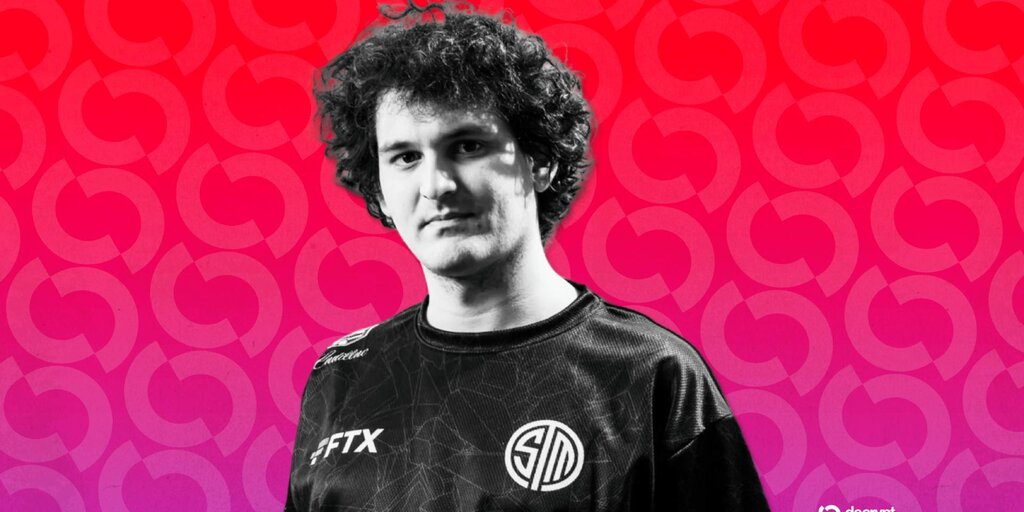
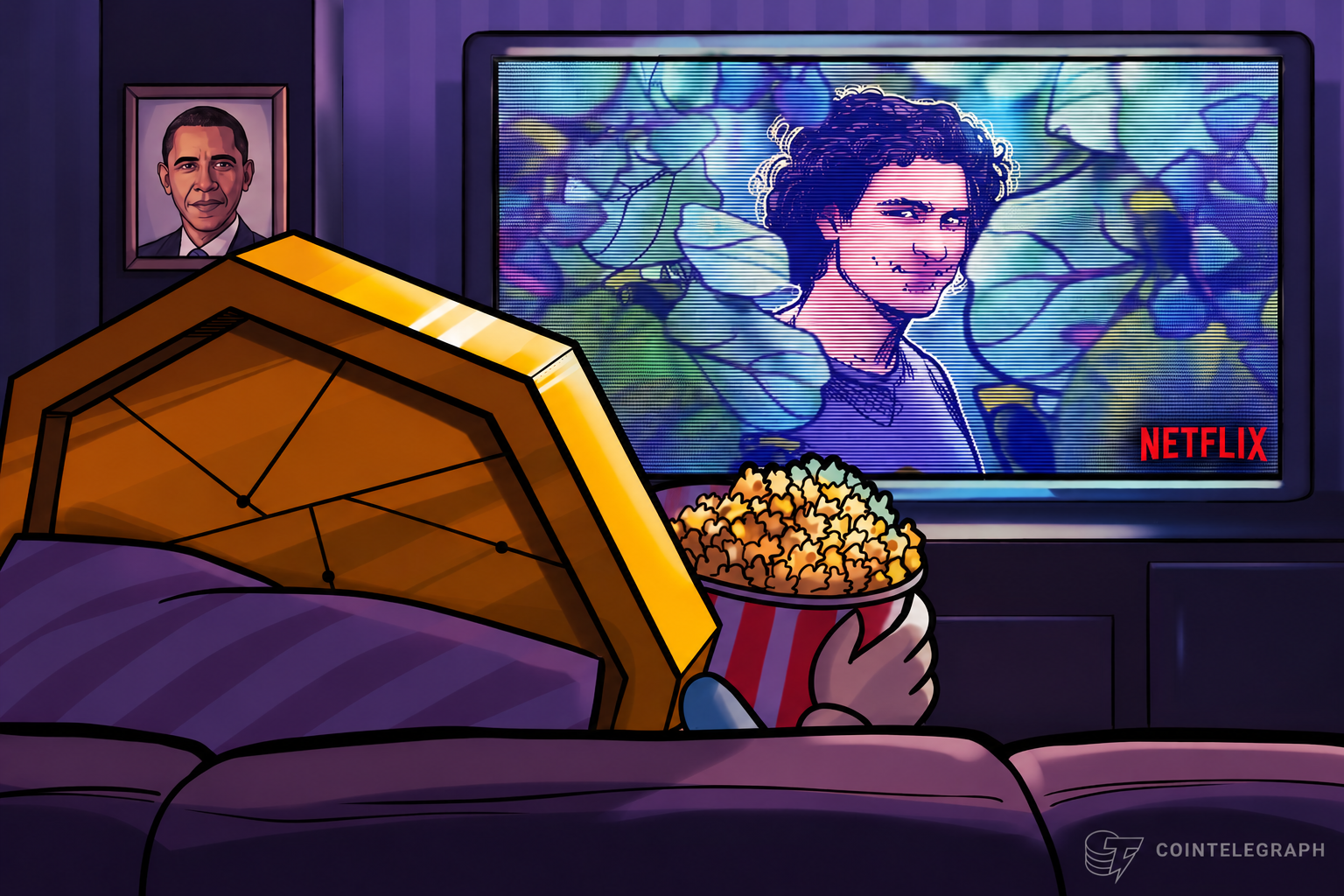
Netflix's SBF series tells a different story.
 NFLX
 Sam Bankman-Fried
The core of The Altruists is the love story between SBF and Caroline Ellison.
Author: Luffy, Foresight News
Original author: Ben Weiss, Bloomberg
One of the most striking episodes in the entire FTX story is a romance. Crypto tycoon Sam Bankman-Fried (SBF) stole $8 billion from customer deposits, and during an early relationship with his deputy, their massive exchange of private messages was used as trial evidence. This relationship is not at the core of the case; aside from Caroline Ellison, other key witnesses also testified.
However, in Netflix's series *The Altruists*, this emotional entanglement is placed center stage. Over eight episodes, it condenses a complex financial crime story into a love story, crafting a polished retelling. This reinterpretation seems aimed at shifting blame away from SBF, who was sentenced to 25 years in prison.
The series premiered on November 19, making it the latest in a recent wave of Hollywood works "targeting the tech industry." In October alone, there was Aaron Sorkin's *The Social Reckoning* about a Facebook whistleblower; a four-hour documentary criticizing Elon Musk; and Nathan Fielder and Lance Oppenheim's *You Can See Everything*, focusing on Theranos founder Elizabeth Holmes, who was sentenced to 11 years for defrauding investors.
Among these works, Netflix's trailer released last month for *The Altruists* packages one of the largest frauds in financial history into a "Bonnie and Clyde"-style duo tale. "The collapse of FTX ruined so many lives, including our own, and Netflix decided to turn it into a love story," wrote Constance Wang, former COO of the FTX crypto exchange, on X.
Fig.: The series appears to try to shift blame away from SBF
I too am skeptical. I've covered crypto for several years; during the SBF trial, I woke up early every day to grab courtroom seats and file reports. After reviewing the evidence and listening to hours of testimony, I found FTX's implosion less like a tragic romance and more like a fable about money coming too fast and too much.
*The Altruists* was created by Graham Moore, who won an Oscar for Best Adapted Screenplay in 2015 for *The Imitation Game*, a biographical film about mathematician Alan Turing. Moore collaborated with writers Kevin T. Dugan and Jen Wieczner, who both penned a series of well-researched reports for *The New Yorker* following the FTX collapse. Moore told me he also conducted extensive research, carefully studying court records, text messages, and other documents. "Especially, I developed my own sources, right inside and around FTX," he said, but declined to name them specifically.
The series takes its name from SBF's stated life philosophy: effective altruism, a charitable creed that encourages adherents to quantitatively consider "how to maximize one's positive impact on the world." Many effective altruists hold high-paying jobs and donate their income to charities.
The show's SBF does just that, played by Anthony Boyle. After graduating from MIT, this math prodigy joined the prominent trading firm Jane Street. There he met his love interest Ellison (played by Julia Garner), and the two "fell in love over a math problem." SBF hosts a training session where she must bet chips on whether "she can solve a string of brain teasers"; they share nervous smiles across the table. Ellison pushes all her chips forward. "All-in every time is the mathematically optimal strategy," she says, a line that foreshadows what's to come.
Fig.: The relationship between Ellison and SBF is the core of *The Altruists*
Ellison begins an on-again, off-again relationship with SBF as the series follows his career trajectory. He leaves Jane Street to launch crypto hedge fund Alameda Research, recruiting Ellison and eventually making her co-CEO. He then founds FTX, building a crypto exchange that rapidly grows large enough to compete with the market's biggest players. In 2022, a wave of customer withdrawals exposes an $8 billion hole on the balance sheet, causing his empire to suddenly collapse. Facing indictment, Ellison flips and cooperates with the U.S. government.
*The Altruists* attempts to simplify the jargon-heavy crypto world, and to some extent, it succeeds. The company's core crime is theft: customer funds are not where they should be, and FTX does not have enough money on hand to cover client withdrawals. That's it.
But certain scenes expose blind spots among the actors and writers. An FTX employee imprisoned for campaign finance fraud mispronounces Ethereum's code (it should be pronounced with a long "e"). In another instance, Ellison claims the "mathematically optimal solution" in the prisoner's dilemma is not to confess; in reality, for a single-shot prisoner's dilemma, the optimal move is to confess, as the expected sentence for confessing is always shorter than remaining silent.
Moore took creative liberties with the material. In one pivotal scene, Ellison tells FTX employees that Alameda Research has been siphoning customer funds from the exchange. Court records show she actually said this to Alameda employees, not exchange staff. There are other deviations, such as portraying FTX CTO Gary Wang as a foul-mouthed, outspoken programmer; court documents reveal Wang was actually a quiet coder.
The series also casts Binance co-founder and early FTX investor Changpeng Zhao (Terry Chen) as the primary villain. In the show, Zhao pressures SBF into funneling non-public information about upcoming FTX trades to Alameda, after which Zhao sells his shares. This setup implies SBF could engage in insider trading-like maneuvers through this "front-running," which is illegal in most jurisdictions. There is no evidence Zhao ever pressured SBF to do so, but in reality, the Binance co-founder did indeed sell his shares back to SBF.
The show strays most aggressively from the public narrative by portraying Ellison as nearly SBF's equal partner in draining customer funds from FTX. "It's like the two of them were feeding each other's fire in some kind of manic psychological euphoria," Alameda Research former co-CEO Trabucco (played by Alex Lawther) says aboard his yacht (which he named "*Soak My Deck*"). (As an unfortunate footnote: Trabucco later surrendered the yacht during the FTX bankruptcy proceedings.)
Fig.: The series portrays Ellison as nearly SBF's equal partner
In a near-final scene, a spreadsheet listing FTX's major shareholders includes Ellison, who is allegedly plotting a "coup" to oust SBF. Court records, however, show SBF, Gary Wang, and the exchange's engineering head held vastly larger stakes than hers. Former FTX executive Wang told me in an interview that the typical "ultimate decision-maker" was SBF, not Ellison. A PR firm founder and CEO, whose company worked closely with FTX and SBF for nearly two years until the collapse, put it similarly: "He was everything."
Changpeng Zhao has yet to watch the series and doesn't expect much. "It's not going to be an accurate depiction of what really happened," he told me. "I think Sam is a very smart person, just too aggressive and desperate for success."
Yet the writers seem sympathetic to SBF's explanation for why FTX fell. Prosecutors alleged the CEO conspired with Ellison and a small group of colleagues to funnel customer funds into a wide array of investments, political donations, sponsorships, and real estate, creating FTX's $8 billion shortfall. SBF's defense, however, argued the money was simply locked up in illiquid assets that would eventually be sold. The largest of these was his investment in AI firm Anthropic. In the final episode of *The Altruists*, SBF frantically but futilely tries to sell off these shares. Just before the end credits roll, a title card informs viewers of the current value of his Anthropic stake: $100 billion. (Analysis of FTX bankruptcy filings and Anthropic's IPO pricing suggests its actual value is closer to $37 billion.)
The presiding judge ultimately dismissed this argument. "It's like saying, I broke into the Federal Reserve, stole a million dollars, bought lottery tickets with it, and coincidentally hit the jackpot, so it's somehow okay," he said in court.
*The Altruists* is fictional. Moore stated he set a rule for himself: omit any moments already documented in the record. He wanted the series to possess an intimate quality, allowing audiences to glimpse SBF and Ellison's inner worlds like never before. "When Sam and Caroline lay their heads on their pillows at night, half in light and half in shadow, talking softly to each other—what were those whispers?" Moore imagined.
A few days before watching an advance screening of this series, I saw *You Can See Everything* at a theater. Actress Amanda Seyfried appears in it, having previously played Holmes in a Hulu limited series about Theranos. In the film, Holmes complains that Seyfried's portrayal lacks authenticity; Seyfried reacts strongly, replying, "This isn't a lie. It's television."
No dramatized adaptation can achieve photographic accuracy, but *The Altruists* offers an alternative interpretation of the case. Despite lingering questions about the fraudsters' true motives and ongoing appeals to the Supreme Court, the case is largely settled in the public eye. I'm unsure if *The Altruists* counts as a lie, but it certainly is television.
Olvassa el az eredetit a Techflowpost oldalon
 ANTHROPIC