Weekly Project Updates: Ripple Approved for U.S. National Trust Bank, Pump Fun Adds Hyperliquid Perpetuals, ENSv2 Goes Live, etc
 XRP
 RLUSD
 HYPE
 BNB
 UNI
 PUMP
 OP
 ENS
 OSMO
 COIN
 HOOD
 Brad Garlinghouse
 CZ

1. OCC Approves Ripple National Trust Bank link
Brad Garlinghouse, CEO of Ripple, stated that the Office of the Comptroller of the Currency (OCC) has formally approved Ripple National Trust Bank, enabling Ripple to support its stablecoin RLUSD through a federally regulated banking platform and provide digital asset custody services for enterprises.
Ripple announced a partnership with Coinbase. RLUSD is now live on Coinbase Prime, Coinbase Exchange and retail applications. It supports the 1:1 conversion of US dollars and other supported US dollar-denominated stablecoins into RLUSD. It will later be available on Coinbase Global Exchange, including support for RLUSD as collateral. Deposits and withdrawals of RLUSD on XRP Ledger, Base and Ethereum are also supported, and Ripple will provide liquidity on Base.
2. Kraken Parent to Deploy First CFTC-Regulated HIP-3 on Hyperliquid link
Hyperliquid announced that Payward, the parent company of Kraken, plans to become the first CFTC-regulated deployer of HIP-3 markets, leveraging Hyperliquid infrastructure to offer perpetual contract trading to U.S. customers. Pending regulatory approval, Bitnomial, the CFTC-regulated entity under Payward, will create and administer the markets as well as handle contract clearing and settlement, while NinjaTrader Clearing, a registered futures commission merchant, will manage customer accounts. Hyperliquid intends to launch HIP-3 via an upcoming network upgrade, allowing deployers to set up permissioned markets through on-chain whitelisting. This feature is optional and will not affect existing HIP-3 markets. HIP-3* is currently live on testnet, and its specifications remain subject to change.
3. CZ: Multiple Chains, One Coin for BNB Chain link
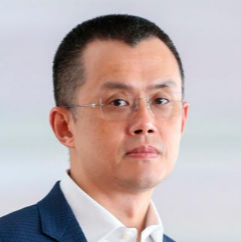
CZ quoted a tweet about BNB Chain’s new L1 plan and stated: “Multiple chains, one token.” According to BNB Chain’s official documentation cited in the tweet, the new L1 will coexist with BSC and be connected via a native cross-chain bridge. No separate token will be issued, and BNB will continue to be used for transaction fee payments, staking and governance. The new chain’s name is yet to be determined. It targets a block time of 200 milliseconds and approximately 20 milliseconds for transaction pre-confirmation. An internal multi-validator devnet is already running, with a testnet launch planned for the end of 2026 and mainnet launch in early 2027.
4. Scroll Reaffirms Permissioned Network Plan link
Scroll, an Ethereum Layer 2 network, released the summary of its DAO monthly meeting on October 30, elaborating further on its plan to shift toward a permissioned network and the arrangement to migrate SCR and USX to the Ethereum mainnet. Scroll stated that a detailed proposal will be submitted later and the network transition will go through the governance process for review. It is also preparing to launch positions.scroll.io to help users check their existing positions and safely transfer or withdraw assets during the transition. In addition, Compass, the AI application under Scroll, has rolled out paid subscription services on iOS. The Android version and more fiat payment methods are still under development, and the Compass API is expanding support for different AI models.
5. Pump fun Integrates Hyperliquid Perpetuals link
Pump fun announced the official integration of Hyperliquid perpetual contract trading. No cross-chain transfer is required for users, and the coverage includes cryptocurrencies, US stocks and commodities. Among them, Bitcoin supports up to 40x leverage, Ethereum 25x, and US stock contracts such as Tesla and NVIDIA 20x. The regular trading fee on the platform is 0.05% per trade, and users also need to pay Hyperliquid’s standard fees.
6. ENSv2 Launches on Ethereum Mainnet link
The Ethereum Name Service (ENS) announced that ENSv2 has launched on the Ethereum mainnet, rolled out alongside the updated ENS App and ENS Explorer. ENSv2 allows each name to create a separate registry for its subnames and offers more granular permission settings, enabling multiple parties to co-manage the same namespace. Over 40 teams have completed v2 integration, including 1inch, Aragon, Arbitrum, Jumper, Lighter, MetaMask and Safe. Existing ENS names remain valid with no re-registration required; eligible .eth names may opt to upgrade to v2. ENS has also released an ENSv2 commemorative NFT.
7. Osmosis Proposes Burning 100M OSMO link
According to the Osmosis governance forum, community member JohnnyWyles has submitted a governance proposal to transfer 100 million OSMO from the community pool to a burn address, accounting for approximately 12.6% of the current total supply of 794 million tokens, valued at around 5.8 million US dollars at the prevailing price. Under the proposal, some previously minted OSMO tokens were directed into the community pool in a “soft-burn” state, where they could be reactivated via governance. The proposed permanent burn of these 100 million tokens will eliminate the risk of them re-entering circulation in the future. After execution, the community pool is expected to retain roughly 19.3 million OSMO together with other assets. The proposal is currently under discussion, with an intended on-chain submission date of October 30.
8. Optimism Proposes Sequencer Fee Rebates link
The Optimism Foundation has launched a new governance proposal to offer sequencer and priority queue fee rebates to key partners that bring incremental real business volume to OP Mainnet. Rebates are funded entirely from new network fees generated by the partners themselves, denominated in ETH. The mechanism consumes no OP tokens and does not expand circulating supply, while contributing net incremental revenue to the Superchain OP buyback program. It includes milestone thresholds, caps and a fixed term. Individual agreement details will remain undisclosed; only an overall percentage range will be published in the annual budget report.
9. Uniswap Opens Token Jar; Robinhood First link
Uniswap Labs announced the opening of Token Jar fee conversion tool TJAR to other applications, with Robinhood as the first integration partner. TJAR allows teams to select the token in which they receive fee revenue. Token Jar was originally built for Uniswap protocol fees and processed over $15.3 million in conversions in September; it is now available to other apps via TJAR. Apps deposit fees into Token Jar, searchers compete for conversions, and the app automatically receives fees in its chosen token. Robinhood has deployed TJAR via the Uniswap API on supported chains to receive fees in USDC and USDG. TJAR is live on seven chains, with its code and audit reports publicly released.
10. Sky Protocol Posts $99.29M Q3 Revenue link
Sky Frontier Foundation released its Q3 2026 report. Sky Protocol recorded total revenue of $99.29 million, up 14.2% year-on-year; net revenue stood at $37.19 million, a 11.8% quarter-on-quarter increase, marking the sixth consecutive quarter of positive net revenue. Total expenses for the period fell 16% quarter-on-quarter to $62.10 million, and the protocol’s collateralized asset size reached $11.41 billion. Sky spent $5.6 million on SKY buybacks in the third quarter, bringing protocol reserves to $85.08 million at quarter-end.
Leia o original em Wu Blockchain
Mais Notícias