


78 Hours, 1,083 Accounts, 11,700 Tweets: The Second Battlefield After the Binance Hack
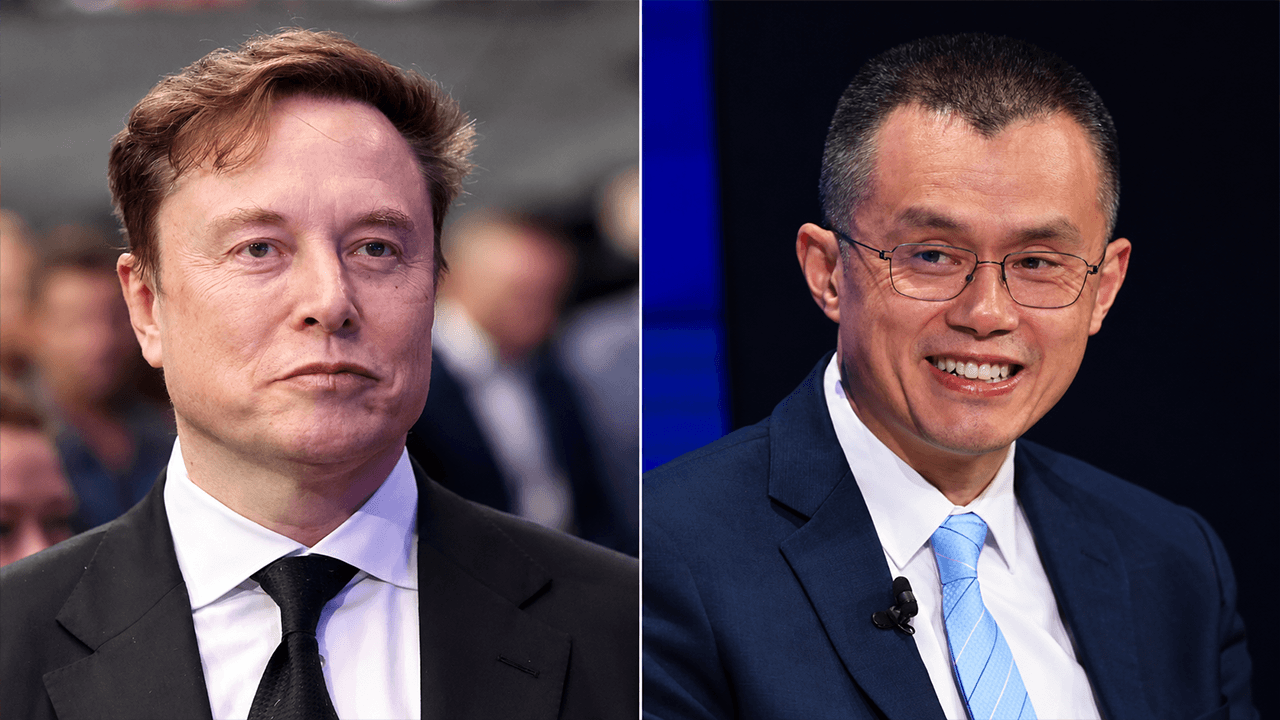
 CZ
Align the attack cadence with official responses rather than emotional impulses.
Author: immrape
Translator: AididiaoJP, Foresight News
This article describes statistical patterns in public account behavior. The "camp" affiliations referenced herein are inferred based on visible ecological affinity signals found in publicly shared content and interaction patterns, and do not constitute accusations of any organization or individual hiring or directing others. "Coordination" here is a behavioral science concept, not a legal determination of conspiracy. This article does not reproduce content containing insults or personal attacks; any institutions or individuals named or involved may respond to the data and inferences.
Core Findings
- Scale: Within approximately 78 hours of the incident, 1,083 sample accounts published 11,700 hostile tweets targeting Binance, generating a total exposure of approximately 20.93 million impressions. Of these, 79.6% were not independent posts but replies attached to others' posts. Additionally, 3,354 tweets were individually verified as false information, categorized into 15 rumor types.
- Rhythm: Hostile content did not naturally dissipate as emotional venting after the incident. Instead, its themes shifted in sync with each of Binance's public moves: after the promise of compensation, the focus turned to "insider leaks"; after disclosing the impact scale and preliminary investigation, it shifted to "insolvency" and "amateur hour"; upon publishing the withdrawal timeline, it pivoted to "bank run mobilization"; and after withdrawals resumed, it moved to "exaggerated outflows" and "traffic diversion to competitors."
- Coordination: Among the 641 most active accounts, 452 exhibited observable coordination with other accounts, forming 1,186 paired links. 444 accounts formed a connected network, automatically clustering into 11 groups with distinct linguistic, topical, and coordinative styles—revealing several relatively independent "camps."
- Dormancy-Activation: 964 accounts (89%) rarely mentioned Binance daily outside the incident, averaging no more than 0.2 posts per day. Yet they collectively activated during the event, posting at 24.6 times their baseline frequency. Among them, 116 had also appeared in two prior Binance-related controversies.
- Purpose: False information concentrated on three categories: denying the event's authenticity (self-staged / insider leak), denying solvency (insolvent / second FTX), and denying withdrawal functionality (afraid to open withdrawals / would trigger a bank run). All three point to the same behavioral outcome: urging users to withdraw their assets precisely when they need calmness the most.
- The Other Side: Data also shows that reach was primarily driven by a few top-tier accounts: accounts with over 50,000 followers posted only 6.2% of negative tweets but accounted for 68.0% of impressions; the 134 accounts scoring highest under botnet criteria accounted for just 0.6% of impressions combined. Focusing solely on small accounts underestimates this operation, while treating all critics as bots is equally erroneous.
CZ and He Yi have repeatedly stated that Binance suffered an organized reputation attack. The industry's usual response is to dismiss it—every exchange that gets hit seems to say the same thing. This article's starting point is not to defend anyone, but to answer a question verifiable with data: after Binance's theft, were the voices on X chanting defeat, questioning, or even insulting a natural expression of retail sentiment, or were they organized, divided, and commanded? The replay provides the answer: alongside a genuine security incident, there indeed ran a parallel, observable social media narrative operation with clear rhythm and division of labor. Its target was not just Binance, but every ordinary user who opened X in those days wanting to know if their assets were safe.
I. The Incident: What Binance Did in 78 Hours
In the early hours of October 30, 2026, a Binance hot wallet was attacked, involving approximately $6.3 billion in assets, making it the largest security incident in the crypto industry by USD valuation. The table below lists the main public response milestones over the subsequent 78 hours, all in UTC+8, and cross-checked against tweet ID embedded timestamps one by one.
Binance Key Response Timeline (UTC+8)
The timeline itself is straightforward: confirm, contain, backstop, replenish, verify, recover. Crisis response for any financial institution follows this standard playbook. But overlaying discussions about Binance on X during the same period onto this timeline presents a completely different picture.
Volume of attacks (hourly). Dotted lines mark Binance's milestone events; the bar chart shows the number of malicious tweets per hour, with false information highlighted in red.
Key events from the attackers (top chart; dot size represents impression volume) and Binance's response measures (bottom chart), presented chronologically. The top chart focuses on the first 20 hours post-incident; the bottom chart covers the remainder.
II. Methodology: Defining "Attacks" and Excluding Criticism
Let me clarify what this article does not study first. After the incident, many users expressed concern, asked for updates, criticized the response speed, or described their stuck withdrawals on social media. This is normal, and even healthy. For a platform holding hundreds of millions of users' assets, panic and skepticism are entirely reasonable.
The analysis deliberately excluded four categories of content: initial rational panic and concern over funds; reasonable follow-ups, such as asking when proof of reserves would be published or why certain token withdrawals hadn't opened yet, provided they didn't carry malicious conclusions; factual reporting and on-chain data; and genuine dissatisfaction from real users.
This article's data was collected by the author within three days of the incident. Using AI tools, we batch-scanned accounts participating in Binance-related discussions on X during the event. Any account meeting at least one of the following verifiable conditions was included in the sample: repeatedly posting falsifiable false information; using insults, threats, or personal attacks against individuals; centrally and repetitively publishing homogenized hostile content across multiple unrelated posts; or exhibiting stable coordination with other accounts in the sample. Each sample account retained its inclusion rationale and original link references, yielding a final sample of 1,083 accounts.
Building on this, we collected all Binance-related original posts and replies published by these accounts during the event window (October 30, 05:00 to November 2, 20:00). After removing pure retweets, we obtained 11,700 tweets from 1,083 accounts, totaling 20.93 million impressions. Among them, 3,354 were individually judged as false and categorized into 15 rumor types.
Regarding coordination, we calculated six observable signals for every pair of accounts: whether they appeared in the comments of the same post; whether they @ or replied to each other; whether they followed each other mutually; whether they followed unilaterally; whether they interacted with the same third-party account within a short window; or whether they posted nearly identical content. A single signal might be coincidence, but repeated overlapping of multiple signals between the same pair makes coincidence hard to explain. The coordination network section focused on the 641 most active accounts during the event, with an observation window of October 30, 20:00 to November 2, 20:00.
Note: This article can only observe public behavior and cannot nor intends to determine the true identities or funding sources of any accounts.
III. Rhythm: Attacks Follow Responses, Not Emotions
If negative noise on social media were merely users venting, it should form a relatively simple curve: spiking sharply right after the incident, then gradually receding as information clarifies. But the data shows the themes of hostile content continuously shifting, each switch tightly aligned with one of Binance's public moves—sometimes even preceding them.
Daily post volume by hostile accounts (solid line) and proportion of false information (dotted line) per hour on Day 1
First Few Hours: Panic Dominates, Conspiracy Theories Sporadic
Following the incident in the early hours of Oct 30, discussions exploded on the platform, with the dominant tone being panic and curiosity: Is the money still there? Who did it? How much? Among sample accounts, narratives of "self-staged" or "insider leak" appeared within an hour of the news breaking, but were mostly sporadic, probing questions, typified by "Could this be an insider?" False information accounted for roughly 30% of the sample's output in this phase, with the rest mostly being emotional expressions and information sharing.
Only a few early identifiable nodes existed: At 05:06, an account relayed "Tether froze $971M, Binance hasn't issued a statement"—the attack point wasn't the amount, but the silence. At 05:13, a post stating "Withdrawals halted, it's over" garnered 181 comments, making it the most commented hostile post. This felt more like an alert in an information vacuum than a systematic narrative.
After Compensation Promise: Conspiracy Theories Take Center Stage
At 08:13, Binance announced it would cover all losses. By conventional logic, this should have been the moment anxious users finally breathed easy. But in the data, the "self-staged / insider / mole" narrative entered its most intensive phase precisely after this node, peaking at 9.3 posts per hour during the subsequent "loss estimation and preliminary investigation" phase—the highest hourly rate for this narrative cycle.
The turning point occurred around 10:00 AM that day. At 10:11, a Chinese-language account posted "Binance 14 submitted 50 Authorizations for 7702, one took effect, highly likely aided by insiders," gaining 342,000 impressions. It was the most widely spread and misleading post of this phase, released 14 minutes before Binance disclosed the attack path at 10:25. The logic of this narrative is worth dissecting separately: If Binance is willing to pay, it means the money was theirs to begin with. If hackers didn't take BNB, it means insiders helped. If freezes came so fast, preparations were made. Every fact that should prove an effective response was reinterpreted as criminal evidence. This is an unfalsifiable narrative—any rebuttal can be shoehorned into a framework of "overreaction."
After Impact Scale & Preliminary Investigation: "Going Bankrupt" and "Amateur Hour"
At 10:25, Binance disclosed the ~$6.3B impact scale and preliminary investigation. Thereafter, narratives of "runaway," "crash," "insolvency," and "second FTX" expanded rapidly, peaking at an average of 6.9 posts per hour during the subsequent "replenishment begins" phase (Oct 30 11:00 to Oct 31 14:30). This narrative totaled 465 posts from 219 accounts, generating ~3.17 million impressions—the single highest-exposure narrative of this event.
Notably the relationship between this narrative and the suspension of withdrawals. Suspending withdrawals before an incident is fully investigated is standard practice to prevent loss contagion; hastily resuming withdrawals before the attack vector is fully patched invites secondary attacks. But in the attack narrative, suspending withdrawals is uniformly read as "out of money" or "afraid to open," and used as leverage to demand Binance "open withdrawals immediately."
The preliminary investigation mentioned "a DevOps engineer's laptop may have been compromised." Just three minutes later, at 10:28, rebuttals emerged: "One laptop drained $6.3B?" "Weak tech," "Amateur hour" narratives peaked at 4.2 posts per hour in this phase, double to quadruple that of other phases. Some high-impression content reworked investigation conclusions—turning "possibly involved" into definitive statements, or extrapolating unverified claims like "more than one wallet was breached" or "BTC was also stolen," with single posts exceeding 100,000 impressions.
On the evening of Nov 1, a rumor circulated in both Chinese and English communities: a Binance DevOps engineer was emotionally entangled with a North Korean female spy, leaving his laptop aside on the day of the incident. I searched X for related posts since Oct 30: the earliest traceable version appeared at 21:22 on Nov 1, posted by an English news aggregator account with ~7,000 followers in all-caps flash format, claiming the info came from on-chain detective ZachXBT. The post gained ~634k views, 4,458 likes, 258 reposts, 367 replies. Roughly 1.5 hours later, an English KOL with ~700k followers reposted under the headline "Binance hack may involve insiders," garnering ~63k views. The Chinese version appeared around 21:49, followed by a massive wave of near-identical translations, most starting with "New, unverified allegations claim..."
Around 01:00 AM on Nov 2, He Yi responded publicly: "This story is more dramatic, but false, and ZachXBT never said it." The English flash denial got ~69k views. But propagation in the Chinese community didn't stop afterward. By morning, an account with ~96k followers continued posting, starting with "The world's largest financial heist, the most absurd link might not be code, but a romance," garnering ~12k views, 42 replies; another ~90k-follower account posted under "North Korean female spy 'seduces' Binance engineer spy thriller plot," ~7.6k views; a core account from Cluster 1 of the coordination network also posted at 08:43 claiming "Rumor has it a DevOps engineer is dating a North Korean female spy," ~3k views, tacking on He Yi's denial only at the end. Some Chinese users also noticed the anomaly, posting "Lately seeing exactly the same posts everywhere... all AI-generated filler content, revised and republished repeatedly."
Fair point: The originating account for this rumor is not in our sample. By sample criteria, related content totaled ~68 posts, ~230k impressions, with limited sample account participation. Listed here because it reinforced the "weak tech" narrative—the former provided a more viral storytelling shell for the latter.
After Timeline Published: Waiting Period Rewritten as "Delay Tactic"
At 23:23 on Oct 30, He Yi released a video providing a 42-hour recovery timeline; at 12:48 on Nov 1, Binance published Phase 1 withdrawal restoration time. In a normal information environment, this should be the moment users could finally relax. The attackers pushed two lines simultaneously.
One rewrote waiting as delay, framing backup as fraud. One primary source of the English "self-staged" narrative posted at 12:26 on Oct 31: "Binance faked a multi-billion dollar hacker incident to default on customer liabilities," gaining 279k impressions. The "insider leak" narrative also got a new reading: publishing withdrawal times was merely a "delay tactic" to "facilitate asset transfer." Another line called for "bolt": As early as 22:38 on Oct 30, an account that exchanged 36 replies with another attacker account within three days posted in all caps "The moment Binance restores withdrawals, immediately move your funds out"—nearly 40 hours before withdrawals actually resumed. At 20:22 on Oct 31, another wrote "Assume Binance opens withdrawals... it'll close again soon, triggering a vicious cycle and bank run, causing a direct crash!" It didn't state facts; it preemptively laid the emotional track so readers would automatically slide into it when withdrawals opened.
At Withdrawal Resumption: Bank Run Mobilization Peaks
Mobilization content—"leave now," "withdraw the minute you can," "bank run"—surged to 11.2 posts per hour during the "phased restoration" phase (Nov 1 14:00 to 16:12), over four times the four-phase average and the highest single-phase intensity of any narrative this event. Two narratives collaborated here: one manufactured urgency ("must leave immediately"), the other explained "why official claims aren't trustworthy."
Narrative Rotation: Hourly hostile tweets per phase. Each row represents a narrative type; darker color indicates closer approach to peak in that phase. Different narratives peaked at different stages.
After Withdrawal Resumption: Exaggerating Outflows, Diverting Traffic to Competitors
After withdrawals resumed, hostile content focused on outflow data. At 02:02 on Nov 2, CZ disclosed a 12-hour net outflow of 2.1% post-resumption. Just six minutes later, at 02:08, a high-frequency English account posted "Binance's biggest net outflow in serious history today, -$4.25B," followed by a Chinese version: "Past 12 hours... record net outflow reaches $4.36B," paired with the analogy "FTX went from normal to crash in under 48 hours," supplemented at 07:19 with "Exceeds net outflow before FTX crashed," gaining 193k impressions for a single post. At 12:23 that day, the figure updated to "$6.1B," claiming "531 out of 552 tokens remain unwithdrawable."
The two datasets aren't necessarily numerically conflicting; tens of billions in absolute outflow and a 2.1% ratio might describe the same phenomenon. The difference lies in framing: the former drops the denominator, grafts the FTX analogy, and packages a routine withdrawal spike as the eve of a collapse.
In the same phase, competitor-diversion content increased: While discussing the theft, users were advised to "first transfer to [Exchange X] to mitigate risk," or "only [Exchange X] has never been hacked among all exchanges." These weren't numerous (31 posts), but carried high per-post efficiency, totaling nearly 200k impressions. Typical sample: At 14:37 on Nov 1, 17 minutes after BTC withdrawals restored, a Chinese KOL posted "An A9 friend said they'd never put coins on Binance again, even at >6% APY... North Korea opened Binance's Pandora's box," gaining 108k impressions; the core message was "No sovereign backing, safer elsewhere." Similar phrasing appeared in the English community, e.g., "If Binance crashes, will Hyperliquid become the industry leader?"
Compensation Rumors: Creating a Sense of "Being Treated Unequally"
On the evening of Nov 1, a batch of false claims about "withdrawal compensation of $150" began circulating. Template sentence: "Free $150 compensation for paused withdrawals, check Reward Center." Of 35 related posts, 27 clustered within the six hours from 19:00 Nov 1 to 01:00 Nov 2, with nine posted alone in the 20:00 hour. Five accounts posted identical phrasing, one with only two followers. At 21:11, Binance replied under the original post: "This is false information; the screenshot has been digitally tampered with."
False '$150 withdrawal compensation' ads: Five accounts posted identical content within six hours, containing phishing links directing users to the 'Reward Center'.
As for claims of "cash rewards for not withdrawing" or "region-specific user exclusives," they appeared sporadically in the sample, not yet reaching measurable scale, so no quantitative conclusion is drawn here. But structurally, these align with the aforementioned narratives: instead of directly attacking the platform, they manufacture a feeling of "being treated unequally" among users, while further pushing withdrawals. Binance has explicitly stated it never offered region-specific rewards conditional on non-withdrawal.
Several Underlying Threads Running Throughout
- Politicization: Claims like "Binance's protector is Trump" or "Paid protection fees" totaled 377 posts, peaking during the replenishment phase.
- Dwelling on the Past: Linking this incident to severe 2025 market volatility, claiming the theft was to "whitewold old debts"—280 posts, 690k impressions, most dense in the first two post-incident phases.
- Market Manipulation: "Artificial bull market," "Market dropped because Binance dumped," "They're cherry-picking candles"—253 posts from 148 accounts. By 13:32 on Nov 1, accounts were already asking "If Binance survives this bank run, will it proactively push an artificial bull market?"
- Pre-set Narratives: Before Binance took any action, some accounts preemptively claimed it "will definitely launch high-yield products next" or "will definitely pump listings," pre-labeling these actions as "evidence of insolvency." At 20:25 on Nov 2, Binance launched a user reward plan offering up to 10% APY—a post-crisis industry standard move—which perfectly landed in the preset explanatory framework. No matter what Binance did, it was positioned negatively.
IV. Rumor Classification: Which Claims Spread Furthest
The 3,354 flagged-as-false posts were categorized into 15 types based on core claims. Sorted by cumulative impressions, the main types are as follows.
Cumulative impressions, post count, and account count by false information category
]
Main rumor types
Several details merit attention. First, "fake technical proof" posts weren't numerous, but had the highest per-post spread—averaging ~6,800 impressions each, nearly four times that of "self-staged." These usually appear as long posts citing real terminology (7702 authorization, multisig, hot wallet IDs), arriving at incorrect conclusions beneath a shell of technical detail; e.g., "BTC uses ECDSA, Solana uses Ed25519, one laptop can't sign ten chains in 20 minutes." To readers lacking technical background, this feels more convincing than pure emotional accusations.
Second, "false information impersonating Binance" numbered only 5 posts but garnered nearly 300k impressions. These forge official compensation plans or listing announcements, often attaching phishing links, and are likely the most directly harmful type to users.
Third, these narratives contradict each other. The same accounts claim both "Binance self-staged it" (meaning money wasn't really lost) and "Binance is insolvent" (meaning money is genuinely gone and unpayable); they claim "Binance fears opening withdrawals," but once opened, say "opening withdrawals is to shift assets." In factual discussion, these claims can't coexist; in a narrative designed to manufacture uncertainty, they don't need internal consistency—each only needs to fulfill its role at different moments.
V. Coordination: One Network, Several Camps
If this content came from unrelated individuals, relationships between accounts should be sparse and random. The data shows another structure. Among 641 most active accounts, 452 had at least one coordinating link with another, totaling 1,186 paired coordination links. Broken down by signal type: 651 mutual @s or replies; 466 simultaneously appearing in the same comment sections; 267 interacting with the same third-party account within short windows; 224 unilateral follows; 143 mutual follows; 67 nearly identical content. Among these links, 608 carried two or more simultaneous signals.
444 accounts form a connected network—from any single account, you can traverse to the remaining 443 via coordination links.
Coordination network of attack accounts (largest connected component). Larger dots indicate more coordination links; colors mark different coordination scopes.
The tightest account pairs best illustrate what "coordination" means: The highest-weight pair @-ed or replied to each other 36 times in three days. Another pair simultaneously appeared in five identical comment sections, interacted five times, and posted nearly identical content eight times. Two other accounts held two records of "100% identical content." Network central nodes also speak volumes: The most connected account linked to 63 others, posted 29 hostile tweets, and gained 741k impressions. Another account posted only 7 tweets in three days but gained 742k impressions, linking to 41 accounts. By contrast, two "spam accounts" each posted 120+ times, generated under 1k impressions apiece, yet served as the most dense connection points in comment sections. One sets the tone, the other supplies volume—this division of labor itself is an organizational footprint.
Network Details: Highest-connectivity core nodes (center) and their 63 affiliated accounts. Red lines indicate coordination links to the core node; gray lines indicate connections between affiliated accounts.
Applying unsupervised community detection to this network (algorithm reads relationship structure only, without referencing any manual labels) yielded 11 clusters. The top five differ significantly in scale, language, and coordinative style.
Top 5 coordination clusters
Cluster 3 merits special attention. 66 accounts published 1,135 posts over three days, averaging 17 each, yet generated only ~170k impressions—under 2,600 per capita. These accounts rarely post independently, instead appearing en masse in the comments of identical posts, most frequently under posts by Binance executives and core accounts. Their job isn't to make more people see a viewpoint, but to make those who see the post feel "everyone thinks so."
Network Details: Cluster 3 (Comment Thread Cluster). Member connections primarily manifest as "co-appearing in the same comment thread."
Two Tactics in Comment Sections
The first is "swarm amplification." When one account posts hostile content, the same batch floods comment sections within short windows to echo, supplement, and amplify accusations. To casual readers, they don't see one person's opinion, but a screen full of synchronized voices. Reviewing multiple high-impression hostile posts in the sample, sample account comments ranged from 25% to 47% of the total, accounting for 22% to 44% of that post's impressions; under one minor account's post, 11 of 12 commenters belonged to the sample.
The second is "siege and clearing." When users post defending Binance, or merely stating official info neutrally, the same batch enters comment sections to attack posters using labels like "simp," "Binance's dog," "how much were you paid," "bot," ignoring content. During the event, 133 sample accounts published 234 such posts, 79% being replies under others' posts. This logic mirrors school bullying isolation mechanisms: rather than directly attacking the target, it penalizes anyone approaching it. A regular user posts "I believe Binance can handle this," only to face dozens of personal attacks—they'll likely stay silent next time. This is a chilling effect: it suppresses not a specific viewpoint, but the willingness to speak.
Personal Attacks Against Individuals
During the event, 421 posts were mainly personal attacks targeting Binance's founders and co-founders, from 103 accounts. A significant portion targeted He Yi's pregnancy, using highly insulting language, with single posts exceeding 100k impressions, some escalating to curses against her unborn child. This article does not reproduce these contents. It should be said: such content has zero relation to the security incident; its mere existence proves one thing—to some participants, the goal was never to discuss the incident, but to attack individuals.
Camps
Based on visible ecological affinity signals in accounts' public content (e.g., long-term centralized promotion of a specific platform, high-frequency interaction with that platform's employees, consistently diverting traffic to competitors while attacking Binance), camp labels were assigned to select accounts. Must reiterate: these labels describe tendencies in public content, not determinations of employment relationships.
Account and impression counts by camp label (1,083 accounts)
Two structural facts warrant attention. First, the highest per-capita impressions didn't come from the largest group: 69 accounts showing affinity for a derivatives platform averaged ~39k impressions; 19 accounts suspected of being rights defenders averaged ~38k; 107 accounts showing affinity for an exchange averaged ~25k; while 874 unlabeled accounts averaged ~17k. Second, "unlabeled" doesn't equal "isolated individuals." They remained unlabeled because no explicit platform promotion or direct interaction with platform staff was observed in public content, reserved cautiously as "independent"; but in the coordination network, many reside in the same clusters as labeled accounts, sharing comment sections, interaction partners, and similar narrative rhythms. My inference is that a subset may be hired by third parties specializing in reputation attacks, though direct evidence is currently absent.
Among the 452 coordination network accounts, a finer breakdown using the same standard reveals: 63 labeled OKX-affiliated (including 33 suspected OKX), mostly Chinese-speaking, published 343 hostile tweets, 917k impressions; 23 labeled HyperLiquid-affiliated, comprising only 5.1% of the total yet capturing 14.3% of impressions, with the highest average connectivity among all camps; 13 suspected rights defenders, tactics dominated by personal attacks and old grievances; 4 accounts carrying traits of overseas Chinese political groups (Guo Wengui's "New China Federation"), interpreting the incident as a political conspiracy. Among 346 independent accounts, 189 (54.6%) connected directly to at least one camp account; independent accounts had 240 links to OKX-affiliated ones, far exceeding OKX camp's internal 42 links. Data points to this: several groups with differing ecological affinity features densely participated in the attack against Binance within the same window, cross-collaborating; but data cannot prove OKX, HyperLiquid, or any entity knew of, organized, or funded these activities. Prior industry suspicion implicated Bitget-related accounts, but no corresponding camp accounts were found in this dataset.
Left: Coordination link counts by signal type (one link may carry multiple signals); Right: Inter-camp link counts (diagonal denotes intra-camp links).
Each camp sought clearly different things: some heavily promoted "insolvency" and bank run mobilization while advertising alternative platforms; others focused on "dwelling on the past," leveraging the incident to revive prior controversies; some centered on politicized narratives. Intriguingly, an OKX-affiliated account publicly criticized a derivatives platform's news account on Oct 31 for "using the opportunity to poach users... feasting on human blood"—these camps likely lack a unified command center, but across these 78 hours, their actions overlapped highly in time and compounded effects.
VI. Dormancy and Activation: Accounts That Only Wake to Attack Binance
To test whether these accounts were merely "coincidentally extra active these few days," the author retrospectively pulled all public posts from the 1,083 sampled accounts beforehand, comparing several time windows: two ordinary ten-day windows without major Binance controversies (June and August 2026), plus two prior Binance-related controversy windows (Jan-Feb 2026 "Cathie Wood" dispute and March 2026 Iran-related allegations).
Almost silent normally. In ordinary windows, these accounts collectively posted only ~131 Binance-related content daily; among them, 964 (89%) averaged ≤0.2 posts/day—most wouldn't mention Binance once a week.
Collective activation during incident. During the event, the exact same accounts averaged 3,228 Binance-related posts daily, 24.6x normal levels. By coordination network metrics, 200 of 452 accounts (44.2%) posted only one or two hostile tweets over three days yet still maintained verifiable coordination links—"low frequency, high connectivity."
Also activated in prior controversies. During Jan 2026 "Cathie Wood" dispute, same accounts averaged 480 daily posts, 3.7x normal; 382 posted in that window. Within ten days, five-plus sample accounts simultaneously appeared in comments on 72 posts, versus only four in同等-length ordinary windows.
Cross-event recurrence for some accounts. 116 accounts posted Binance-related content across both "Cathie Wood" and Iran incidents.
Fair note: In March's Iran-related allegation window, overall post intensity (avg 113/day) matched baseline, showing no clear activation; however, 133 accounts posted, and simultaneous comment appearances rose slightly. This suggests "cross-event synchronized activation" isn't universal across the sample, but concentrated in subsets.
Typical example: One English account never posted Binance-related content in two ordinary windows; averaged ~6/day during "Cathie Wood" dispute, topic "Token X not yet listed on Binance"; averaged >17/day this event. Doesn't discuss markets or industry; only appears when Binance becomes topical.
VII. What It's Fighting For: A Social Engineering Operation
Core social engineering isn't technical; it exploits psychological vulnerabilities for control. Piecing the above data together outlines this narrative operation.
It doesn't create incidents; it parasitizes them. Security incidents are real. Users' concerns are real. Some criticisms are real. Narrative operations graft conclusions onto genuine emotions: grafting "pause withdrawals" onto "out of money," "cover losses" onto "self-staged," "withdrawal spike" onto "FTX crash."
It switches topics following responses, sometimes racing ahead. Every time Binance releases new progress, old narratives lose momentum, and new ones take over in the same window: Insider theory surfaced 14 mins before attack path disclosure; "one laptop"质疑 popped 3 mins after; "record net outflow" arrived 6 mins after "net outflow 2.1%" announcement; competitor narratives emerged 17 mins post-restoration; "bolt now" mobilization hit nearly 40 hours before actual restoration.
It blends with real users. 79.6% of content is replies, not originals, often under real users' posts. Bystanders struggle to distinguish organic concern from organized voices. This blurring is itself a goal: it makes any official response look like "suppressing users."
Clear division of labor. Accounts with <300 followers posted 44.1% of negative tweets but generated only 5.1% of impressions; accounts with >50k followers posted just 6.2% but captured 68.0% of impressions. Top accounts set the tone; micro-accounts supply volume in comments, orchestrate sieges, and drop phishing hooks.
Negative post share vs impression share (segmented by follower tier): Small accounts provide "volume," large accounts provide "reach."
It suppresses rather than debates. Personal attacks on supporters, insults against founders aren't factual discussion; they aim to change who dares to speak. All this ultimately targets one behavioral outcome: moving as many users' assets out as possible, as quickly as possible. Precisely the most dangerous action for both platform and users during a security incident. If a bank run materializes, harm won't be confined to one company; it will strike every ordinary user liquidating at low prices in panic or missing windows due to congestion.
This time, no bank run occurred. 12 hours post-restoration, 98% chose to stay. Primarily a triumph of user judgment—at peak information noise, most waited for official info, checked on-chain data, made their own calls.
VIII. Limitations, Counterevidence, and Items Pending Verification
First, coordination ≠ employment. Simultaneous commenting or mutual replies could simply be like-minded real users naturally converging; highly correlated account behavior doesn't directly imply payment or direction. Second, camp labels ≠ corporate direction. Our OKX-affiliate, HyperLiquid-affiliate, suspected rights defender labels classify based on public behavior; no direct evidence shows any entity officially participated, orchestrated, or funded the attack. Third, reliance is solely on public data; cannot cover deleted or protected accounts; historical window searches are keyword-limited, possibly underestimating true volume. Fourth, coordination network observation starts Oct 30 20:00, missing ~15 hours of pre-incident relationship data; Day 1 coordination may be underestimated.
Data itself furnishes facts unfavorable to the "bot army" narrative. The 134 suspected bot accounts scoring highest under verifiable rules comprised 9% of samples, their hostile posts garnering only ~18k impressions—0.6%; purely "bot blast" template content saw only 5,419 impressions. Among the three highest-impression rumor types, suspected bot accounts accounted for just 8.5% to 27.8%. Grand narratives were mainly driven by a few top-tier accounts; bots mostly filled space and planted hooks. Moreover, suspected rights defenders harbor genuine grievances; their participation isn't necessarily organized; many users spoke based on real losses and concerns—their criticism must be strictly distinguished from the coordinated behavior discussed here.
Main arguments and evidence strength
Institutions named or implicated here (including OKX, HyperLiquid, Bitget) and relevant personal accounts all retain the right to respond and clarify to this data and inferences; upon receiving responses or contrary evidence, this article will update accordingly.
IX. Conclusion: When You See "Leave Now"
Back to the opening question: Did Binance suffer an organized reputation attack? With these 78 hours of public tweets as samples, the data answers: A sizable attack network exists, highly interconnected internally, shifting gears following Binance's response rhythm; it contains several groups with differing ecological affinity traits and objectives, potentially answering to no single command center, yet acting concurrently in the same window and cross-supporting in comment sections. Reach stems largely from a few top accounts; density comes from masses of normally silent, low-follower, yet highly connected micro-accounts.
Data also urges restraint. Coordination is a measurable fact; employment and direction require more evidence. Criticism itself isn't an attack; most queriers are real users. What truly warrants vigilance are voices that switch gears exactly at peak panic, gather precisely where supporters congregate, and write conclusions before opponents even speak.
For exchanges, the lesson: in crisis comms, only promises and verifiable numbers cut through noise—backstops, amounts, timelines, proof of reserves. Binance has stated it will continue disclosing info verifiably, publish full technical reviews post-investigation, continuously report impersonation-based false compensation/listing ads and phishing links, and preserve evidence/refer to legal for personal threats.
For every ordinary user, perhaps only one recommendation: in crises, watch platform announcements and on-chain data. When a comment screen shows synchronized voices, glance at what those accounts usually chat about; when you see shocking numbers, ask what the denominator is; when you see "leave now, no time left," ask who benefits most from you deciding this very moment.
Appendix: Methodology
Observation window: Oct 30 05:00 to Nov 2 20:00 (UTC+8); historical comparison windows (retrospective sample accounts' earlier posts): Jan 27–Feb 5, Mar 10–14, Jun 1–10, Aug 10–19, 2026. All times cross-checked against tweet ID embedded timestamps.
Sample: Collected by author within three days of event; AI scanned X accounts participating in discussion; 1,083 qualified accounts sampled, collecting ~11,700 posts total. Pure retweets removed; originals, replies, and quotes retained. Coordination network section focuses on 641 most active accounts (observation window Oct 30 20:00 to Nov 2 20:00).
False info judgment: Core claims of each post evaluated against official announcements, on-chain data, and authoritative third-party info; categorized into one of 15 types; unverifiable/unfalsifiable opinion statements excluded.
Narrative classification: Based on keywords and semantic rules, one piece can belong to multiple narratives; phase intensity converted to hourly rate based on phase duration.
Coordination: Weighted sum of six signal types between two accounts; Louvain modularity algorithm used for cluster identification, no manual camp labels applied.
Suspected bot scoring: Points assigned per rules: followers <50, following/follower ratio >3:1, followers <500 but posts >2000, recently registered, reply-only, repetitive identical text; ≥4 points total classified as suspected.
Olvassa el az eredetit a Techflowpost oldalon

 SPCX
 BTC