New York judge declines to block Kalshi from operating in the state for now
Kalshi can keep operating under a temporary court reprieve in which a judge put off New York’s attempt to halt the prediction market platform’s operations in the state, at least for now.
In a hearing Monday, Judge Melissa Crane of the New York State Supreme Court said she preferred to let both the New York Attorney General's office and Kalshi's attorneys flesh out their respective arguments rather than grant a temporary restraining order immediately. New York sought to block Kalshi from offering any sports-related prediction markets in New York, raising concerns that — because the company is headquartered in the state — Kalshi might be blocked from offering its products anywhere in the U.S. if the motion was granted. The Commodity Futures Trading Commission, Kalshi's federal regulator, even warned of the possibility last week in an unsuccessful, last-ditch effort to get a federal judge to intervene.
The judge expressed concerns about how any ruling might be appealed, according to attorney Daniel Wallach, while noting the current status quo is Kalshi continuing to operate as it has been for the past year. While Kalshi won its reprieve on Monday, the broader dispute will continue, and may have major consequences for the popular platform's future, as courts throughout the country continue to debate whether prediction markets are derivatives or gambling products.
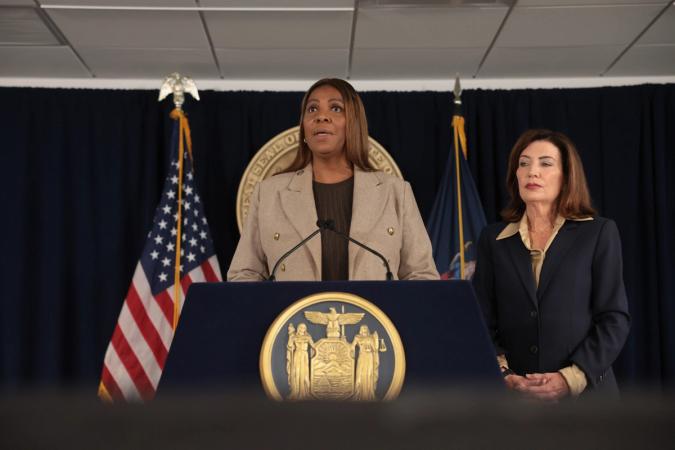
Judge Crane heard arguments from lawyers with Attorney General Letitia James' office and Kalshi over whether Kalshi had the right to offer sports and other prediction markets in New York, where the firm is headquartered. Kalshi has contended that its licensing as a federally regulated designated contract market allows it to offer events contracts — the technical term for prediction markets — nationally, while New York — alongside numerous other states — has argued that these products violate state gambling regulations.
The judge was concerned about the scope of the potential restraining order, noting that federal courts are also involved, leading to her preference for an expedited briefing schedule on a preliminary injunction. That schedule has not yet been set.
In the interim, the judge asked the parties to sort out "safeguards" for people between the ages of 18 and 21 who can access Kalshi, given New York bars gambling to under-21-year-olds. She scheduled a tentative hearing for next Monday if this remains an outstanding issue.
The case is one of many that states around the U.S. have brought against prediction market providers in mostly state courts. Kalshi and other providers have fought back, including by trying to file preemptive strikes in federal courts, with mixed results.
CFTC Chair Mike Selig has stated numerous times that prediction markets fall under his agency's exclusive jurisdiction, and that states were intruding by trying to enforce their gambling regulations.
The U.S. Supreme Court is likely to take up the issue, after three appellate courts ruled in favor of states and a fourth ruled in favor of Kalshi this year. Kalshi has until Dec. 7, 2026 to file a response to the state of New Jersey in arguing over whether the court should take up the case at all. The Supreme Court is expected to announce whether it will hear arguments early next year.
अधिक समाचार

 BTC

 ETH