Bitcoin, Ether ETFs post $530M outflows as election gains evaporate
 BTC
 ETH

US spot Bitcoin and Ether exchange-traded funds (ETFs) posted about $530 million in net outflows Thursday as cryptocurrency markets fell sharply.
Bitcoin (BTC) ETFs recorded $430 million in net outflows while Ether (ETH) funds lost around $100 million, according to SoSoValue data.
The reversal followed $128 million in combined inflows Wednesday, when Bitcoin briefly climbed above $80,000 after Democrats’ victories in the US midterm elections.
Bitcoin fell back below $76,000 and the tech-heavy Nasdaq Composite plunged 5.5% on Thursday, which was its biggest single-day decline since April 2025, according to Reuters.
Fidelity leads Bitcoin ETF outflows
Fidelity’s Wise Origin Bitcoin Fund (FBTC) led Thursday’s withdrawals with roughly $200 million in outflows after attracting around $237 million on Wednesday, according to Farside Investors data.
BlackRock’s iShares Bitcoin Trust (IBIT) recorded another $105 million in net outflows. The latest withdrawals extended IBIT’s outflow streak to five consecutive sessions, with more than $1 billion withdrawn since Oct. 30.
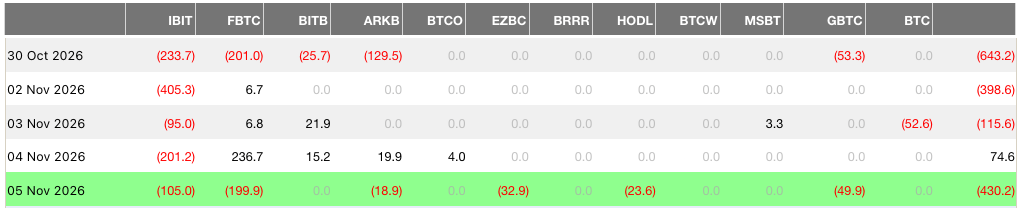
Daily spot Bitcoin ETF flows by issuer since Oct. 30. Source: Farside Investors
Bitcoin ETFs’ year-to-date net outflows stood at around $510 million following Thursday’s closing bell.
Analysts weigh outlook after market sell-off
Crypto analyst Michaël van de Poppe said on X Thursday that Bitcoin could find a near-term bottom Friday, potentially after dipping below $75,000, pointing to the severity of the Nasdaq’s decline.
“I expect Nasdaq to bottom tomorrow. The same for Bitcoin, potentially after sweeping $75,000,” he wrote.
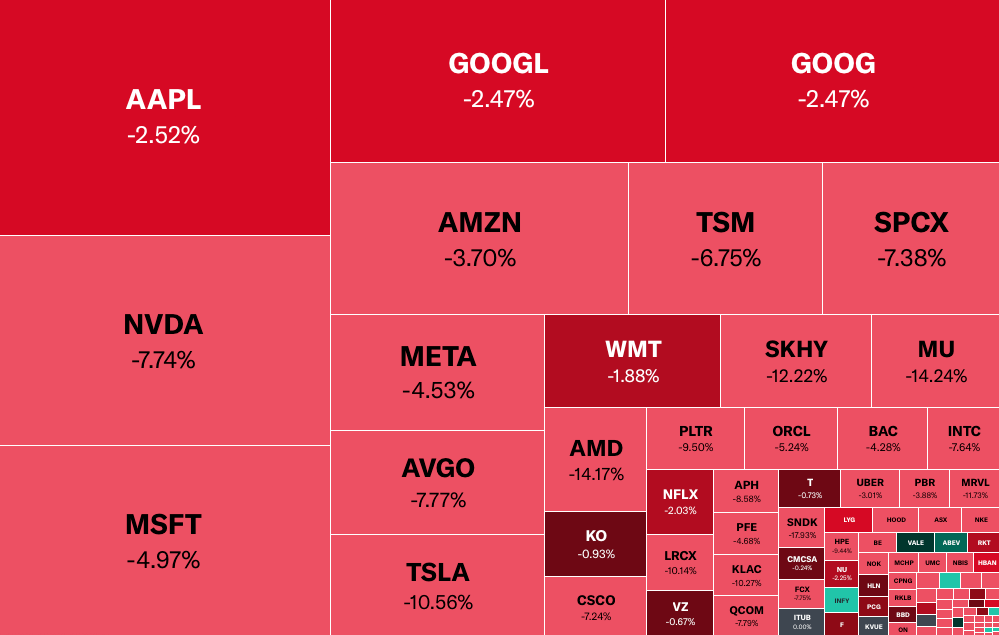
US stock market heat map. Source: Yahoo Finance
Dean Lyulkin, CEO of Cardiff and founder of investment publication The Dean’s List, said the current market environment differs from the period leading up to the 2008 financial crisis.
“The global financial crisis wasn’t caused by Democrats taking Congress,” Lyulkin said in comments shared with Cointelegraph, noting that the Federal Reserve had already raised interest rates substantially and the housing market was weakening before the crisis.
While acknowledging vulnerabilities in commercial real estate, private credit and potentially excessive artificial intelligence spending, Lyulkin argued that household balance sheets and the banking system are considerably stronger today.
*Magazine:* *Wall Street killed Bitcoin’s wild rallies: 10x’s Markus Thielen*
मूल लेख Cointelegraph पर पढ़ें