Stablecoin market faces the largest capital outflow since the Terra-Luna collapse, shrinking by $12 billion over 30 days.
 BTC
 USDC
 USDT
Over the past 30 days, the stablecoin market cap has evaporated by approximately $12 billion, with USDT and USDC exchange reserves sharply declining as capital accelerates its exit from the crypto ecosystem.
Author: Olga Kharif, Bloomberg
Translated by: TechFlow
TechFlow Guide: Stablecoins have historically served as a safe haven for cryptocurrency traders looking to weather broader market downturns. However, over the past 30 days, as Bitcoin has continued its steady decline and broken through short-term support levels, the total market capitalization of stablecoins has contracted by approximately $12 billion, setting the fastest withdrawal pace since the 2022 Terra-Luna collapse. On-chain data reveals that this outflow does not represent fund rotation across different tokens, but rather a comprehensive redemption of stablecoins into US dollars by holders exiting the space.
The rapid draining of liquidity has amplified downward volatility in weekend trading sessions, while cumulative outflows of USDT and USDC deposits in centralized exchanges now exceed $26 billion compared to April highs. In addition to the post-election shift in the macroeconomic environment and a crisis of confidence triggered by Binance's hacking incident, Wall Street capital appears to be selling crypto assets to raise ammunition for Anthropic's highly anticipated upcoming IPO, forming another underlying current behind this wave of liquidity hemorrhage.
$12 Billion Evaporated in 30 Days: Capital Is Exiting Completely, Not Rotating Across Tokens
In previous market cycles, stablecoins have consistently provided traders with a safe haven to weather sharp sell-offs without withdrawing funds from the cryptocurrency industry. However, this dollar-pegged token market is now undergoing the most rapid contraction since the collapse of the 2022 Terra-Luna algorithmic stablecoin.
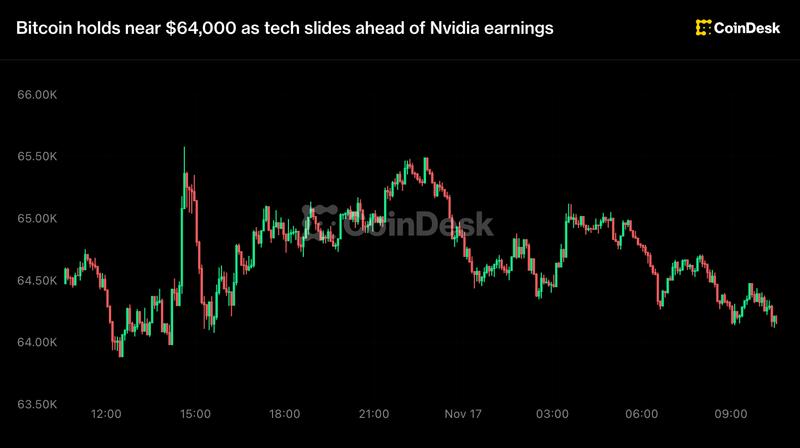
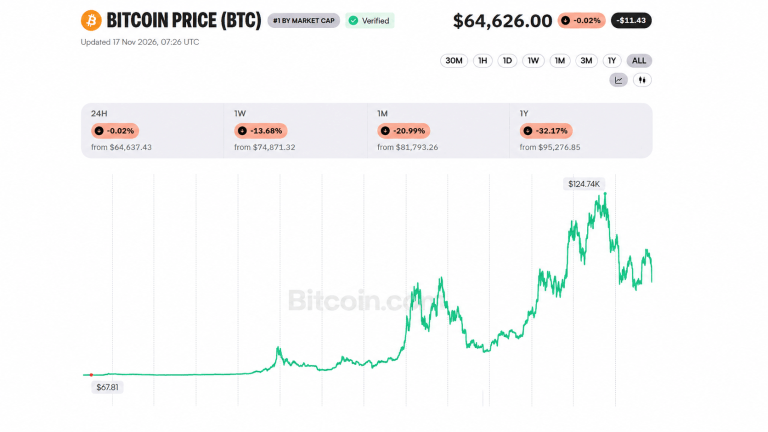
According to the latest data compiled by crypto research firm Kaiko, over the past 30 days, as the crypto market bellwether Bitcoin plummeted to its lowest point in nearly four months, the total market capitalization of the entire stablecoin sector has contracted by approximately $12 billion. Among these, the two largest fiat-collateralized stablecoins by market cap—USDT issued by Tether and USDC issued by Circle Internet Group—accounted for 90% of this recent valuation decline combined.
Looking back at history, these dollar-pegged tokens gained rapid adoption because early cryptocurrency exchanges widely used them as substitutes for traditional fiat US dollars for daily trade matching. At that time, most traditional commercial banks avoided crypto platforms and refused to provide account-opening services. Traders could sell high-volatility tokens in exchange for stablecoins, temporarily park their trading profits within them to quickly seize the next buying opportunity, or rapidly transfer funds directly between different exchanges. Now, however, a large number of holders are accelerating the redemption of stablecoins into traditional fiat currencies like the US dollar, opting to cash out and exit.
"Capital appears to be completely exiting the crypto industry, and certainly not just rotating for rebalancing across different tokens," said Anastasia Melachrinos, head of research at Kaiko. "USDT and USDC have shrunk in near-perfect sync at almost identical rates, each dropping by approximately 4%, with no decoupling events occurring during the period. This indicates that holders are comprehensively cashing out in exchange for real dollars, rather than experiencing a bank-run-style migration due to panic over the credit risk of specific issuers."
$26 Billion Drained from Exchange Deposits: Thin Weekend Liquidity Amplifies Market Panic Selling
The recently concluded weekend trading session vividly demonstrated how a lack of underlying liquidity can trigger amplified shocks to asset prices in a 24/7 global market. During New York trading hours last Saturday, Bitcoin experienced a cascading flash crash within just a few hours, plunging as much as 8%. Automated margin calls and passive liquidation orders drove the price down to its lowest level since July of this year.
Kaiko's on-chain data further reveals that the primary location of the stablecoin market cap decline is the Ethereum blockchain, which serves as the core incubator for both deposits in most centralized exchanges and decentralized finance (DeFi) liquidity. This means that the vast majority of the fleeing capital this round consists of highly active trading funds, rather than small-scale daily on-chain payment capital.
"This capital drain is highly concentrated within centralized exchanges. Since April of this year, the combined net outflow of USDT and USDC balances across major exchanges has reached approximately $26.7 billion," emphasized Sean Rose, a researcher at blockchain analytics firm Glassnode. "This directly indicates that stablecoin ammunition for speculation and market-making retained within trading venues is significantly diminishing."
Raising Ammunition for an Anthropic IPO? Multiple Macro Drivers Behind Capital Outflows
Facing such extraordinary capital outflows, some market observers have begun speculating that certain institutional investors may be proactively reallocating capital, preparing to inject it into the upcoming initial public offering (IPO) of super AI unicorn Anthropic PBC, which is set to officially list this week.
A report from crypto hedge fund Tagus Capital last week stated: "Weekly capital flow data for US spot Bitcoin ETFs is replaying the same pattern seen when institutions dumped assets to raise cash ahead of SpaceX's first foray into public capital markets. Now, facing Anthropic's century-defining IPO kicking off next week, the Hyperliquid perpetual futures market is pricing valuations close to $1.8 trillion (over 25% above the upper bound of its public filing range of $1.4 trillion), with roadshow responses suggesting potential fundraising of up to $100 billion. It is precisely under the accumulation pressure of this super-trend that Bitcoin ETFs have suffered heavy net outflows for a third consecutive week."
In the past month, Bitcoin's price has accumulated a decline of over 20%, showing an accelerating downward trend in recent days. Unlike the sharp, cliff-like liquidation crashes commonly seen in past cryptocurrency bear markets, this recent downturn mostly played out as a slow bleed amid relatively low trading volumes until on-chain liquidations suddenly intensified over the past few days.
This prolonged, grinding decline has plunged market sentiment, already battered by a series of negative catalysts, into deep exhaustion. The current cryptocurrency industry is enduring a succession of external blows: from Binance suffering a record-breaking hack, to policy and regulatory uncertainty stemming from the Democratic Party's resurgence following the US midterm elections, coupled with rising US Treasury yields and the sustained strength of the US Dollar Index. These multiple macro headwinds are converging.
Among these, the Binance hack incident has once again prompted strict external scrutiny of mainstream trading platforms' underlying security at a sensitive juncture where the entire industry is struggling to rebuild investor trust. Meanwhile, Bitcoin's sustained slump has left investors who previously bet on "mainstream institutional entry building a solid foundation for crypto prices" feeling deeply frustrated and helpless.
Dual Oligarchs Under Pressure Simultaneously: How This Contraction Differs Fundamentally from 2022
According to Glassnode monitoring, the global stablecoin total market cap had hit a historical peak of $312.6 billion on April 17 of this year, but this figure has since retreated to approximately $284 billion today.
"For reference, during the 2022 to 2023 crypto winter, the overall stablecoin market contracted by approximately 35%, but that crisis was primarily driven by mid-to-small algorithmic stablecoins going to zero or suspending operations, alongside one-way capital outflows from USDC. At that time, USDT's market cap actually continued to expand against the trend," analyzed Rose in comparison. "But the situation this time is completely different; the two industry giants, USDT and USDC, are experiencing simultaneous market cap contractions."
Lire l'article original sur Techflowpost
Plus d'actualités