Crypto's Washington hopes fade, but Grayscale and BlackRock see growth ahead
 BTC
 ETH
 BLK
Grayscale is brushing off Democrats' sweeping victory in the U.S. midterm elections, arguing that crypto's future depends less on Washington than on growing demand overseas and adoption by major financial institutions.
The crypto asset manager told CoinDesk after Tuesday's vote that the industry's progress extends beyond any single administration or Congress, even as Democrats' victories in the House and Senate threaten to complicate President Donald Trump's crypto legislative agenda.
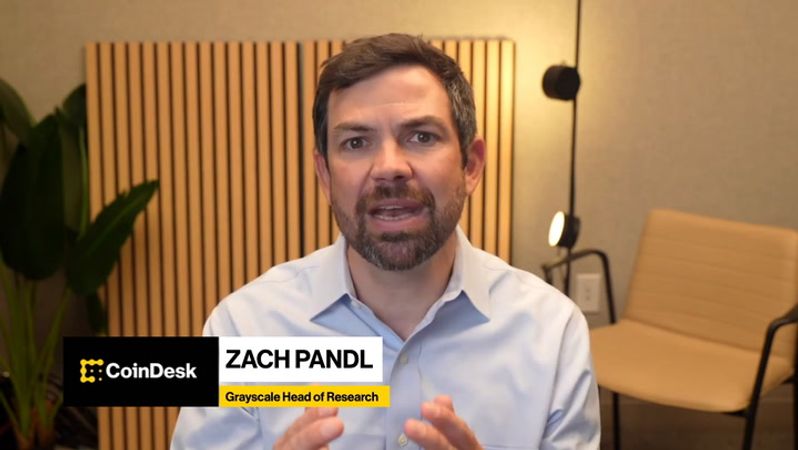
“The GENIUS Act was a major step forward for stablecoins, but the movement toward greater regulatory clarity and institutional adoption of digital assets has much deeper foundations than the efforts of the last Congress,” the firm’s head of research, Zach Pandl, told CoinDesk in emailed comments.
The response followed a pre-election research note from Pandl, who estimated that 80% to 85% of global cryptocurrency activity takes place outside the U.S. Grayscale cited growing use of dollar-pegged stablecoins in South America and Southeast Asia as evidence of demand beyond U.S. borders.
BlackRock, the world's largest asset manager, also played down the potential impact of the election on its crypto business.
Asked Tuesday at the ETF Investor Forum in New York whether the results could affect BlackRock's product launches or investment flows, Robert Mitchnick, the firm's head of digital assets, said, “Not really, to be honest.” His comments came before the election results were known.
Mitchnick argued that bitcoin and ether already have much of the regulatory clarity needed for investment products, even as broader crypto legislation remains stalled in Congress.
“The more you drive adoption, the more you drive real value-add use cases, the more it becomes a bipartisan issue,” he said.
That optimism contrasts with the industry's deteriorating prospects in Washington. The CLARITY Act, a sweeping proposal to establish federal rules for digital assets, failed to advance in September even when Republicans controlled both chambers of Congress. With Democrats set to take control in January, some industry executives now believe the bill has little chance of passing in its current form.
Others see an opening for a revised bipartisan agreement. More than 70 House Democrats previously supported the legislation, though disputes over stablecoin rewards, consumer protections and President Donald Trump's cryptocurrency interests remain obstacles
A global industry
Grayscale, however, argues that U.S. legislation is only one factor driving the industry's expansion.
“Elections can affect crypto on the margin, just like other asset classes. But the digital assets industry is bipartisan, global, and increasingly institutional, so we believe it will continue to move forward regardless of the outcome of the US midterms,” Pandl wrote in his Oct. 28 research note.
Demand for alternatives to government currencies and better payment systems will persist worldwide, he argued, while foreign regulators continue developing rules for digital assets.
His estimate of the U.S. share of global crypto activity combines 14 indicators, including trading volume, mining and ownership. They produce an average U.S. share of 19% and a median of 16%, although some measures cover North America rather than the United States alone. Grayscale describes the calculation as illustrative.
Pandl also argued that crypto’s appeal crosses party lines, noting that the GENIUS Act stablecoin law passed Congress with bipartisan support.
A February 2024 Pew Research Center survey found that 18% of Republicans and Republican-leaning independents had invested in, traded or used cryptocurrency, compared with 17% of Democrats and Democratic-leaning independents, shares Pew describes as statistically equal.
Federal debt is also likely to keep growing whichever party controls Congress, he wrote, pushing investors toward alternative stores of value such as crypto.
Pandl also pointed to the expansion of stablecoin services by Visa, Mastercard, Fiserv and Stripe, as well as tokenized investment funds offered by BlackRock, Franklin Templeton and JPMorgan, as signs that digital assets are becoming more embedded in mainstream finance.
Growing adoption, however, can still leave token prices exposed to wider market conditions.
“Digital assets beyond Bitcoin are also sensitive to changes in the macro markets backdrop,” Pandl told CoinDesk in emailed comments earlier this year, describing that sensitivity as a sign of integration into the broader financial system.
Lire l'article original sur CoinDesk