Mina combines Bitcoin’s transaction handling with Ethereum’s account-based model. Whereas Bitcoin tracks unspent coins, Ethereum tracks account balances; Mina adopts the latter approach. To commit each block to the state, Mina uses a prover, also called a snarker, which functions similarly to a miner. The network relies on Ouroboros Samasika, a Proof-of-Stake (PoS) mechanism built for succinct decentralized networks that enables bootstrapping from a genesis block. Succinct blockchains perform two key tasks: verification, which involves consensus and blockchain summaries, and updating, which interacts with consensus and chain summaries. Additionally, Mina optimizes speed via a parallel scan state that groups unproven blocks and assigns them to parallel provers.
The protocol redefines participation by assigning specific roles rather than relying solely on miners or stakers acting as third-party verifiers. The three primary participants are:
- Verifiers
- Block producers
- Snarkers
Verifiers use zk-SNARKs to certify consensus data. Any user whose device can process a 22 KB chain within a few milliseconds serves as a verifier.
Block producers, who act as stakers or miners, receive block rewards and transaction fees. The protocol does not slash these incentives. Users may delegate coins to block producers. Beyond bundling transactions, producers must SNARK an equivalent number of previously committed trades; failing to do so results in incomplete blocks that other nodes reject. For instance, if a producer includes 10 transactions, they must also SNARK trades from the queue’s front. They can generate these SNARKs themselves or purchase them from snarkers.
Snarkers, or provers, create the zk-SNARKs required for transaction verification. Block producers pay snarkers from collected transaction fees, but snarkers must post bids to qualify. A snarker only earns fees if their zk-SNARK is included in a block, with the producing block responsible for the incentive. This creates a market where snarkers bid on transactions, and profit-seeking block producers select the lowest-priced bids, encouraging snarkers to offer low-cost SNARKs.
Transactions begin when a user submits a trade to the mempool, which holds valid but unconfirmed transactions. Snarkers then generate proofs. A block producer selects profitable transactions from the mempool and chooses a SNARK based on consensus rules, specifically scanning for the lowest bid. The updated SNARK order book reflects recently added transactions. The producer incorporates the SNARKs into a block, adds it to the chain, and updates the network. Snarked transactions are removed to maintain a constant protocol size. Finally, the block producer upgrades the protocol’s zk-SNARKs, and the new block becomes an immutable part of the chain.





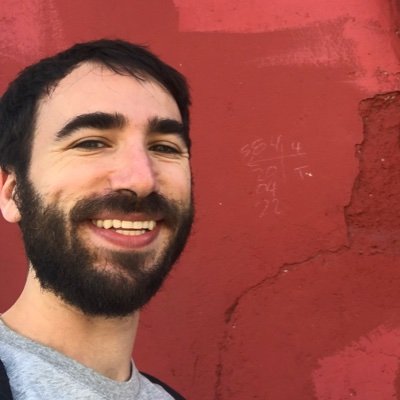 Izaak Meckler
 Will Cove
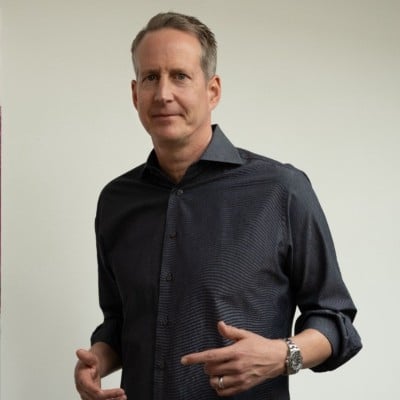 Daniel Schoenberger