


ASEAN, Japan, China and South Korea Launch Cross-Border Payments Task Force
The organization of Southeast Asian countries plus Japan, China, and South Korea will form a working group to implement an integrated policy to deal with these problems and simplify the expansion of domestic payment methods to an international level. Details will be revealed next year at the Nagoya ASEAN+3 gathering.
Kernaussagen
- ASEAN+3 officials agreed to form a working group to make domestic payment systems work across borders.
- Expanding local payment methods drives regional de-dollarization and lowers cross-border transaction costs.
- The push could integrate CBDCs like China’s digital yuan, expanding Beijing’s leverage in regional trade.
ASEAN+3 Group Forms Working Group To Organize Digital Payments Initiatives
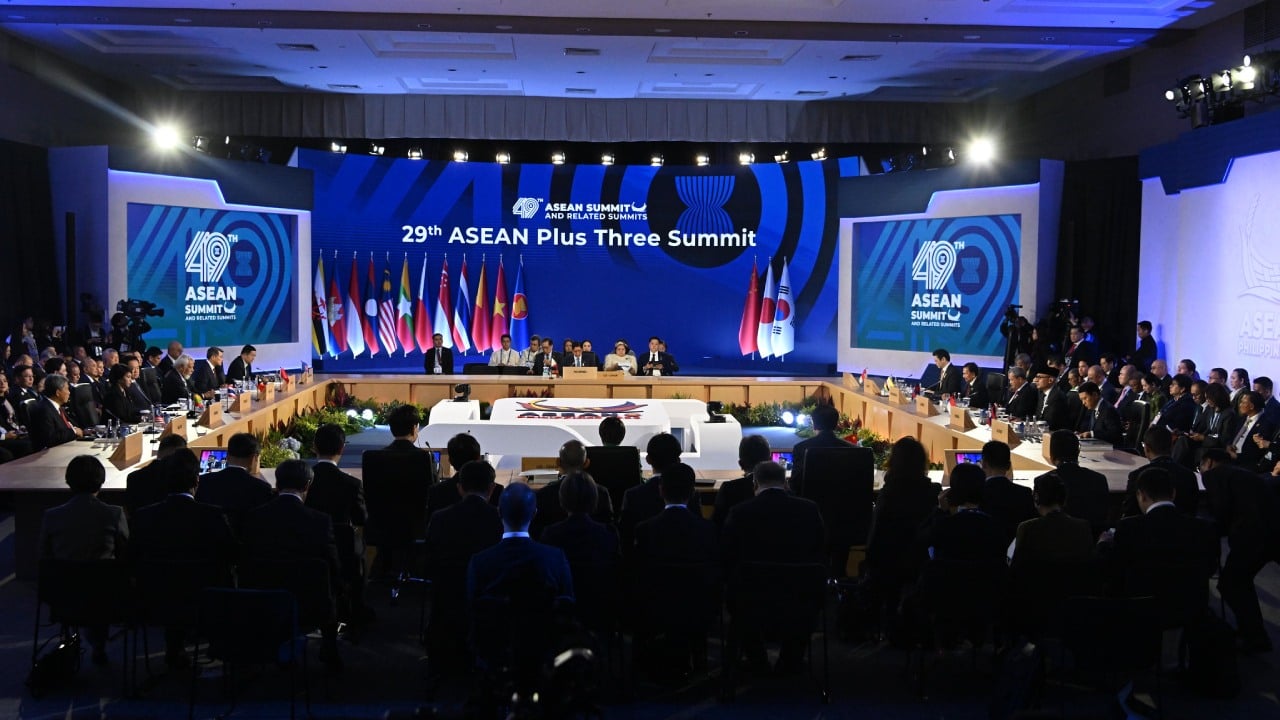
The Association of Southeast Asian Nations plus three (ASEAN+3), a regional group that brings together Southeast Asian nations with Japan, China, and South Korea, has given a hint to its upcoming digital payments strategy.
According to Reuters, at a meeting in Kyoto, deputies to finance ministers and central bank governors from the organization agreed to coordinate a working group to develop a joint payment policy ensuring the interoperability of existing payment methods across the region.
The working group that will be formed aims to expand payment methods originally designed for domestic operations to work internationally, highlighting the need to overhaul current international settlement methods.
A mechanism to allow access to emergency funds to tackle pandemic and emergency-disaster-derived shocks was discussed as part of a $240 billion currency swap known as the Chiang Mai Initiative, launched in May 2000 for member countries to leverage during liquidity crunch periods. More details will be revealed at the next ASEAN+3 Finance Ministers and Central Bank Governors Meeting in May 2027.
Focusing on domestic payment methods ensures payment policies will involve local currencies, supporting the group’s de-dollarization push outlined since 2023 and accelerated by the surge of unilateral U.S. sanctions against Russia.
In 2025, Brunei, Cambodia, Indonesia, Laos, Malaysia, Myanmar, the Philippines, Singapore, Thailand, and Vietnamoutlined their currency sovereignty strategy in the Economic Community Strategic Plan 2026–2030, released on May 26 during the 46th ASEAN Summit.
In the document, the organization states it will “promote the use of local currencies to reduce the region’s vulnerability to exchange rate fluctuations and external economic and financial shocks, and to lower transaction costs associated with cross-border payments.”
A February International Monetary Fund (IMF) paper found that cross-border digital payments can promote local currency usage and facilitate regional trade and financial integration among ASEAN countries, with Thailand leading the transition to digital cross-border payments.
Digital payments can also take advantage of central bank digital currencies, such as the digital yuan, providing China with some leverage across the region given the size and scope of its economy.
In 2023, the Chinese Region of Guanxi highlighted the possibilities of integrating the digital yuan for trade settlements across ASEAN, aiming to internationalize the digital currency that was in its initial stages at the time.
Original lesen auf Bitcoin.com
Weitere Nachrichten

 Vitalik Buterin
 INJ

 ETH

 HYPE