
Bitcoin Price Taps $61K on Thanksgiving as Short Sellers Take a Beating
 BTC
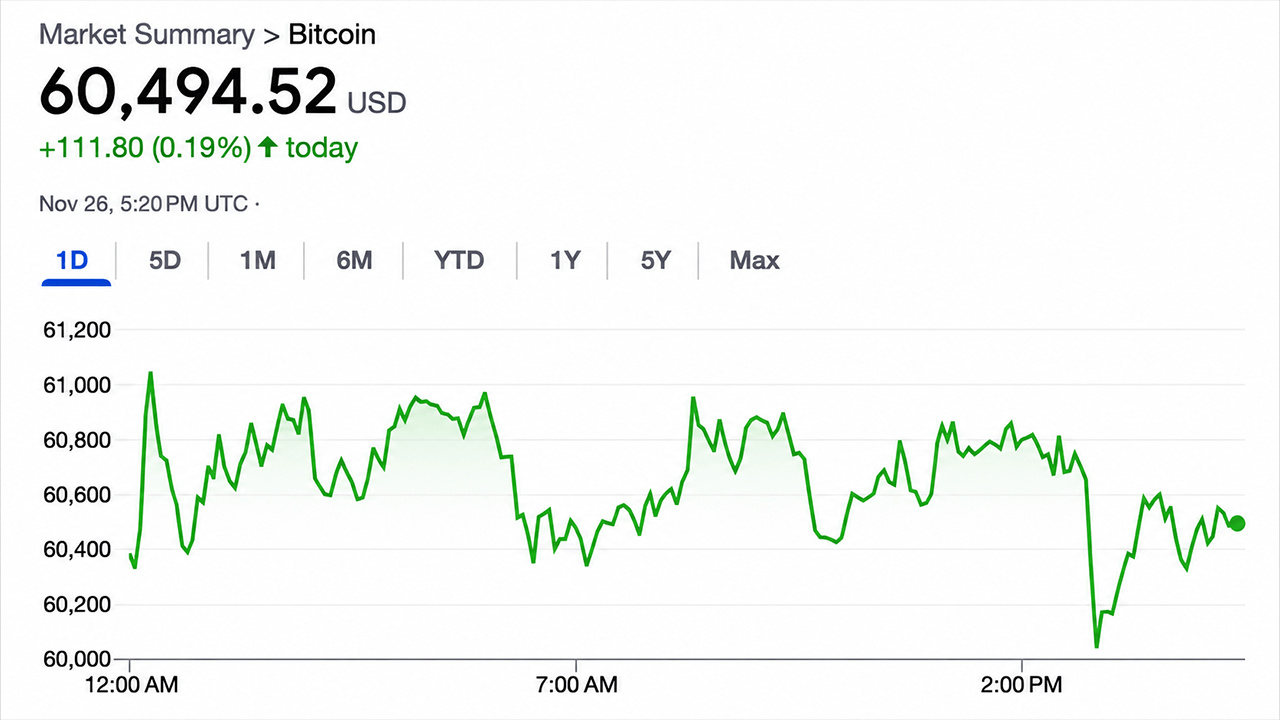
Bitcoin briefly reclaimed $61,000 on Thanksgiving, gaining approximately 4%in 24 hours and lifting its market capitalization above $1.2 trillion.
Kernaussagen
- Bitcoin gained 4% on Thanksgiving, lifting its market capitalization above $1.2 trillion.
- Coinglass data showed bitcoin short liquidations exceeded $100 million amid the recovery.
- An analyst warned that proposed U.S. tariffs targeting 14 economies could fuel inflation and strain liquidity.
Bitcoin Rebounds as U.S. Markets Close for Thanksgiving
Bitcoin briefly reclaimed $61,000 on Thursday, a day after sliding toward $57,000. The rebound came as U.S. financial markets were closed for the Thanksgiving holiday.
According to Bitstamp data, bitcoin surged from the previous day’s low of $57,209 to an intraday peak of $61,509 before retreating to consolidate between $60,000 and $61,000. While $61,000 acted as resistance, the cryptocurrency maintained support above $60,000 from 9 p.m. on Nov. 25 through midday Thursday.
The rally pushed bitcoin’s daily gains to approximately 4% and lifted its market capitalization back above $1.2 trillion. However, the rebound failed to erase weekly losses of nearly 4% or significantly narrow month-to-date losses, which remained above 20%.
With prices largely trending upward, short sellers bore the brunt of market liquidations. Coinglass data show that bitcoin short liquidations surpassed $100 million, while long liquidations totaled just over $22 million, down sharply from the $138 million recorded 24 hours earlier. Total liquidations across the broader cryptocurrency market remained below $313 million, with short positions accounting for 75%, or $237 million, of the total.
U.S. and Japanese Monetary Tightening Threatens Crypto Liquidity
Despite the recovery, analysts warned that bitcoin remains vulnerable to renewed liquidity constraints and heightened inflation uncertainty stemming from the Trump administration’s latest tariff threats. With the Office of the U.S. Trade Representative weighing new Section 301 tariffs on imports from 14 economies, market participants fear higher import costs could fuel inflation and complicate the Federal Reserve’s upcoming interest rate decisions.
In a market note, a Bitunix analyst said global markets face a combination of persistent inflation and tightening monetary policy across major economies. With U.S. core personal consumption expenditures (PCE) inflation reaching a three-year high amid resilient economic growth and low jobless claims, expectations for anotherFed rate hike in December have strengthened. Meanwhile, the Bank of Japan is signaling a faster pace of monetary policy normalization.
“The combination of U.S. and Japanese monetary tightening could reshape global funding conditions, increase pressure on yen carry trades, and create additional liquidity challenges for Bitcoin and other risk assets,” the Bitunix analyst noted.
The analyst added that U.S. trade policy is injecting fresh uncertainty into the inflation outlook. Although the proposed tariffs remain subject to consultation rather than immediate implementation, companies may already need to reassess sourcing strategies, supply chain allocations, pricing plans and capital commitments.
“The inflation implications will depend on whether the proposed tariffs are finalized and how businesses respond,” the analyst explained. “If additional costs are passed on to consumers, tariffs could make it harder for inflation to return to the Fed’s target. If companies absorb some of the costs, profit margins could face pressure instead.”
The prospect of retaliatory tariffs further clouds the outlook for international trade and corporate investment.
“For financial markets, the key issue is whether trade-related cost increases become another source of persistent inflation at a time when monetary policy is already restrictive,” the Bitunix analyst concluded.
Original lesen auf Bitcoin.com
Weitere Nachrichten