


Crypto Morning Brief: US Storage Sector Decline Accelerates, SanDisk Drops Over 11%, Kraken Parent Payward and Clients Buy AAVE
 AAVE
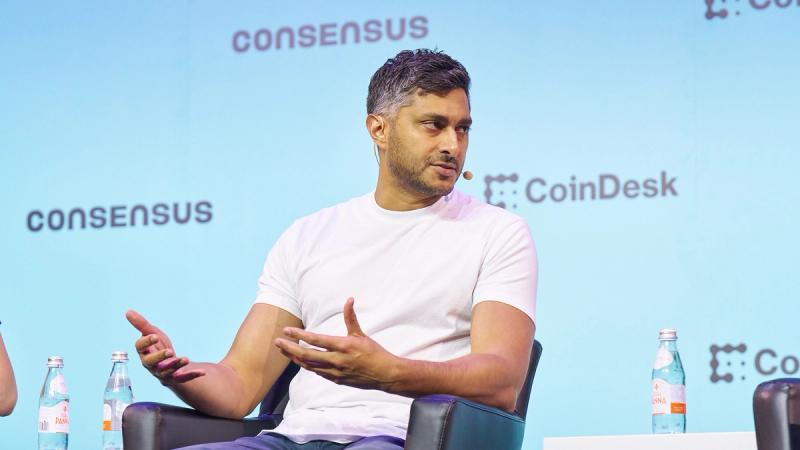
 Stani Kulechov
Loopscale suspends protocol operations due to a security attack; affected vaults have been fully replenished.
Author: TechFlow
Yesterday's Market Highlights
Kraken Parent Company Payward and Its Clients Purchase AAVE, Exploring Partnerships in DeFi and Asset Management
According to CoinDesk, cryptocurrency exchange Kraken's parent company Payward and its asset management clients purchased an undisclosed amount of AAVE tokens on the secondary market through an affiliated investment fund, Digital Asset Special Investments I, LP. Payward stated it may continue to increase its AAVE holdings and is exploring further collaboration opportunities with Aave.
This investment is part of Payward's expansion into asset management, with a focus on digital assets, structured yields, and tokenized investments. Stani Kulechov, founder and CEO of Aave Labs, stated that the partnership with Payward is expected to help Aave reach more retail and institutional users. According to the announcement, the current net deposit size on the Aave network is approximately $33 billion, with an active lending volume of around $11 billion.
GoPlus: iOS Self-Custody Wallet Users Suspected of Being Targeted, Reporting Approximately $561,000 in Asset Losses
According to a warning from GoPlus Security, multiple iOS self-custody wallet users have recently reported stolen assets, including several Trust Wallet users and one Uniswap Wallet user, with reported losses totaling approximately $561,000. The SEAL security team under GoPlus initially suspects these incidents may be linked to recent cyberattacks targeting the iOS system. Attackers allegedly exploited unpatched vulnerabilities in older iOS versions to steal user privacy data and gain unauthorized access, subsequently stealing and transferring encrypted assets. GoPlus advises iPhone users to upgrade to the latest iOS version as soon as possible and check their devices for malicious applications.
Trump: Willing to Cooperate with Democrats, I Have Friends within the Democratic Party
According to ABC News, Trump stated that he has not yet spoken with Schumer or Jeffries since the election concluded, but added: “I think we can work together. If we can do this, it’s good for America. America has had enough.” Trump said: “After the midterm elections, I spoke with other Democrats, not those two, but other Democrats; they’ve been calling me constantly. I also have friends inside the Democratic Party.”
US Stock Storage Sector Sell-Off Intensifies, SanDisk Drops Over 11%
According to Bitget market data, the US stock storage sector continues to face sell-offs, with the Philadelphia Semiconductor Index falling 5.82%. In individual stocks, SanDisk's decline widened to 11.00%, Western Digital fell 9.44%, Seagate Technology dropped 9.99%, SK Hynix fell 7.93%, and Micron Technology decreased 7.03%. Major storage sector stocks saw declines nearing or exceeding 7%.
Ukrainian Central Bank Opposes Cryptocurrency Legalization Bill, Citing Threats to Monetary Sovereignty
According to CoinDesk, the National Bank of Ukraine (NBU) refused to support the current version of the cryptocurrency legalization and regulation bill (No. 10225-d), citing insufficient regulatory safeguards that could threaten national monetary sovereignty, financial stability, and economic security. The central bank is particularly concerned that foreign tokens lacking oversight from their issuing countries could enter the Ukrainian market and be used to circumvent local electronic currency regulations.
Additionally, the central bank raised objections to the market access mechanism, arguing that the final draft leaves the number of operating crypto trading platforms allowed during the first five years to the decision of securities regulators, which could lead to market concentration and corruption risks. The bill proposes that the National Securities and Stock Market Commission of Ukraine serve as the primary regulator for the crypto market, introducing a 5% transitional tax rate on outstanding crypto assets until the end of 2028. The central bank urges lawmakers to further amend the bill before the final vote.
Backpack Founder: Wall Street's API-fication Gives Small Teams a Chance to Build Next-Gen Financial Apps
Backpack founder and CEO Armani Ferrante stated in the interview program Rollup that once the entire Wall Street infrastructure becomes APIs callable by developers, programmable finance will drive numerous experiments, giving small teams the opportunity to build next-generation financial applications.
Ferrante noted that establishing a broker-dealer in the US has historically been a 'Herculean' challenge, making it difficult for a dorm room of five people to create the next Robinhood; however, the API-fication of Wall Street significantly lowers this barrier.
He cited examples where individuals have attempted to split SpaceX equity into exposure to revenue streams like Starlink or space data centers, allowing individuals to easily assemble custom ETFs. He also mentioned that traditional ETFs like SPY charge management fees of approximately 7 to 9 basis points; after being automated and rebuilt using smart contracts on-chain, fees could potentially be compressed to 1 basis point or even zero.
Bank of England Raises Rates for First Time in Three Years
The Bank of England raised interest rates by 25 basis points to 4.00%, marking its first hike since August 2023, aligning with market expectations.
Bank of England Governor Bailey stated that unless the Iran conflict is resolved, this is unlikely to be the last rate hike.
Loopscale Suspends Protocol Operations Due to Security Attacks, Affected Vaults Fully Restored
Loopscale announced that it has been targeted by sophisticated attackers over the past week, receiving over 30,000 malicious requests daily on its protocol API. After its security systems detected a significant escalation in attack activity, the team halted protocol operations to contain the impact. This attack primarily targeted SOL and USDC Genesis Vaults; affected vaults have been fully replenished, and no user deposits were lost.
Loopscale stated that the protocol will not resume normal operations until the full scope of the attack is determined and security measures are further strengthened. The protocol interface is expected to be reinstated shortly, and the team is working to restore repayment functionality as quickly as possible to reduce the risk of unintended liquidations. The team has collaborated with federal law enforcement and security experts, and has published four implicated addresses.
Binance Removes All API Keys Associated with SignalPlus
According to an official Binance announcement, following reports of potential security issues by third-party platform SignalPlus, Binance has proactively removed all API keys associated with SignalPlus. Binance clarified that its own systems were unaffected and user funds remain secure.
Binance recommends users who have utilized SignalPlus directly log into their Binance accounts to check holdings and open orders. API keys should only be re-linked after SignalPlus confirms the issue is fully resolved, and IP whitelisting should be enabled.
Today's Market Highlights
Recommended Reading
Podcast Notes | Vitalik Buterin Mumbai Interview: Lean Ethereum Roadmap, Exchange Bunker Mode, and Reflections on Regulatory Misalignment
https://www.techflowpost.com/article/35132
During his interview in Mumbai, Vitalik Buterin outlined Ethereum's core direction for the coming years: Lean Ethereum, focusing on pushing full-stack zero-knowledge (ZK) proofs and AI-assisted formal verification to reduce node burdens and enhance protocol security. Facing potential cryptographic threats from AI, Ethereum L1 will continue to adhere to a conservative hash-based cryptography approach. Discussing industry security, Vitalik warned that exchanges and custody institutions must enter "bunker mode," assuming frontends, APIs, employee devices, and cloud servers could be compromised, protecting core assets through multi-signature requirements, time locks, and physical segregation. He also discussed India's Web3 shift from speculation to real-world applications, the legal engineering of RWA, and the misalignment in US crypto regulation between builders and meme coin projects. His core message: Ethereum must become technically leaner and more secure, while crypto institutions must prioritize security over operational efficiency.
After the Midterm Elections, the Trump Family's Crypto Assets Begin to Be Repriced
https://www.techflowpost.com/article/35128
This article analyzes the political and financial risks facing the Trump family's crypto assets following the US midterm elections. With the Democrats taking control of both houses of Congress, the new legislative body is expected to launch investigations starting January, potentially wielding subpoena powers to review the Trump family's crypto businesses and related UAE investments. Markets promptly repriced politically linked assets: the official TRUMP token dipped roughly 21% within the election window, WLFI fell over 7%, while Bitcoin and most crypto assets rose concurrently. Meanwhile, wallets linked to Trump Media transferred approximately 4,259 BTC worth roughly $344 million to Crypto.com, coinciding with an imminent cash repayment window for nearly $1 billion in convertible note holders. However, the transfer lacks an official explanation and cannot be directly classified as a dump. The article's core conclusion: the crypto asset premiums the Trump family once gained through political influence are gradually transforming into political risk discounts amid rising congressional scrutiny pressure.
Zcash Upgrade Countdown: Block Generation Speed Triplies, $16 Million in ZEC May Be Permanently Frozen
https://www.techflowpost.com/article/35125
Zcash is set to activate the NU 7 network upgrade, featuring two core changes: first, reducing the target block time from 75 seconds to 25 seconds, tripling block generation speed and shortening wait times for private transactions; second, completely dropping support for the legacy v4 transaction format, rendering outgoing channels inaccessible for approximately 12,226 ZEC valued at roughly $16 million locked in the initial Sprout privacy pool. One week before the upgrade, about 10,037 ZEC were urgently migrated out, but the transfer pace for remaining assets has noticeably slowed. Although ZIP 2003 reserves an interface for future withdrawal restoration, developers warn these assets will likely be permanently inaccessible. This upgrade represents a step forward for Zcash in clearing early technical debt and improving network efficiency, but also means some older users may pay the permanent cost of losing assets due to protocol iteration.
Hackers Refuse to Surrender Private Keys, So Polygon Directly Alters Balances? Proposal to Recover 70.49 Million POL Tokens Sparks Governance Controversy
https://www.techflowpost.com/article/35110
The Polygon community has proposed a highly controversial asset recovery plan: targeting five hacker addresses involved in the Polymarket and Binance security incidents, the proposal calls for a coordinated chain-wide hard fork to forcibly zero out their holdings of approximately 70.49 million POL tokens, redirecting the equivalent assets to designated recovery addresses assigned by victims. Among them, four addresses linked to Polymarket involve about 23.86 million POL, while the address linked to Binance involves roughly 46.63 million POL.
Previously, Polygon validators attempted to restrict transfers from the implicated addresses via client blacklists, but this could not strip hackers of private key control nor directly recover the assets. The new proposal therefore opts to modify balances directly at the protocol state layer without altering the total POL supply. If approved, the development team estimates completing client patches within approximately two weeks, initially validating on the Amoy testnet.
The core of this controversy lies in: when a public chain directly modifies account balances to recover stolen assets, how should the boundary be drawn between blockchain's immutability and community governance power? This places Polygon under a critical test: will asset relief in exceptional circumstances set a precedent for future interventions into on-chain assets?
Přečtěte si původní článek na Techflowpost
 ETH