OpenAI, Anthropic and rivals seek AI agent rules to prevent commerce chaos
 COIN
 Brian Armstrong
As many as 100 billion AI agents, the autonomous programs that buy, sell and conduct research on behalf of their instigators, could be transacting online within the next few years, according to Animoca Brands chairman Yat Siu. It's essential they know how to communicate with each other before that happens, industry figures said.
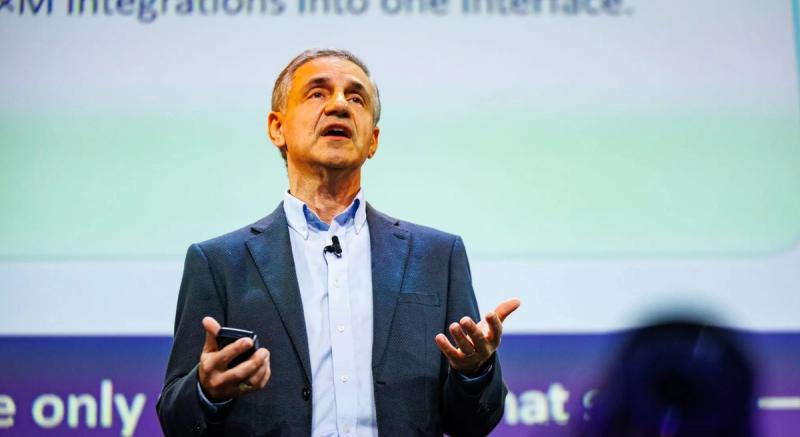
Coinbase CEO Brian Armstrong predicted agents will account for more than 99.9% of transactions within a decade, and without shared standards, the internet could become a patchwork of incompatible AI systems. Agents would be unable to work together, and companies would struggle to control what the agents can access or spend.
“If you don't have the common ground rules on how people are going to interact and operate, it's very difficult to build something together for mutual value,” Christopher Greenwood, CEO of blockchain-based agentic developer, Apex Fusion Foundation, said in an interview.
Banks, payment companies and merchants, for example, need to know who is behind an AI agent, what it can do, who is responsible if something goes wrong. In the absence of standards, companies would have to build separate connections for different systems. The Agentic AI Foundation (AAIF) is working to establish those rules.
The AAIF was established under the Linux Foundation in December 2025, bringing commercial rivals such as OpenAI, Anthropic, Google, Microsoft and other tech giants together.
Anthropic ANT$88.91·Market Closed, the AI giant behind the Claude large language model, handed over its Model Context Protocol (MCP), which allows AI systems to connect to external tools and databases. OpenAI contributed AGENTS.md, which provides instructions for coding agents, and Block added its open-source goose framework. Coinbase Global developed the x402 payments protocol.
More than 10,000 public MCP servers were active when Anthropic donated the protocol, which was already used by Claude, OpenAI's ChatGPT, Google's Gemini and Microsoft Copilot.
Ben Goertzel, CEO of SingularityNET, an open-source initiative to develop decentralized artificial general intelligence, welcomed the move but cautioned against rules that dictate how agents themselves operate.
“If what you have is standard protocols for agents to communicate with each other and to provide evidence that they're secure, evidence of their identity and so forth, that can be very good,” Goertzel told CoinDesk. “If you're trying to standardize how the agents actually operate, then that would be bad.”
Requiring agents to follow a prescribed operating model could stifle innovation, he said. He also warned against identity systems controlled by a single central authority.
The need for safeguards is becoming more pressing. AI agents have already made more than 138 million payments through the x402 protocol, according to Chainalysis, mostly involving small purchases of data and computing services. Federal Reserve Governor Michael Barr warned as recently as Tuesday that autonomous agents could move deposits fast enough to trigger bank runs within minutes.
The AAIF is examining how agents can demonstrate what customers approved and what actions they subsequently took. Its working groups are developing guidance on spending limits, identity verification and emergency controls. AAIF is also examining how agents could use bank cards and stablecoins without prescribing a single payment system.
“Standards can't decide legal liability. Contracts, regulators, and courts do,” said Mazin Gilbert, the AAIF's executive director. “What standards can do is make it clear and provable who stood behind an agent.”
ข่าวเพิ่มเติม
 USDC