Saylor Links Republican and Democratic Wins to Bitcoin Reserves
 BTC
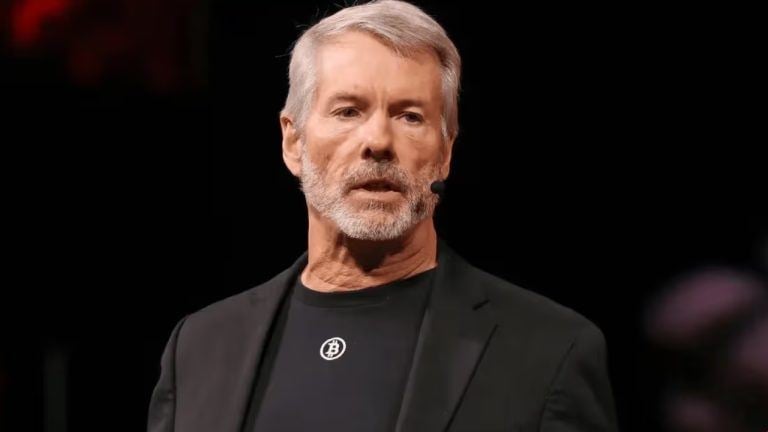
Michael Saylor cited victories by Republican Byron Donalds in Florida and Democrat James Talarico in Texas as evidence of bipartisan support for government bitcoin holdings. Their legislative records connected the election results to federal and state reserve initiatives.
Kluczowe wnioski
- Donalds introduced a bill to put the U.S. bitcoin reserve into law.
- Talarico supported Texas’ bitcoin reserve before winning a Senate seat.
- The Texas House approved the measure 101-42 in May 2025.
Saylor Cites Republican and Democratic Election Winners
Michael Saylor, executive chairman of Strategy Inc. (Nasdaq: MSTR), stated Nov. 4 on X that bitcoin reserve support crossed party lines. His assessment followed Republican U.S. Rep. Byron Donalds’ victory in Florida’s gubernatorial election and Democrat James Talarico’s win in the Texas U.S. Senate race.
In his bitcoin reserve statement, Saylor stated:
“Florida elected a Republican governor who backed a U.S. bitcoin reserve. Texas elected a Democratic senator who voted to create one for his state. The case for holding bitcoin crosses party lines.”
Talarico, a Texas state representative, defeated Republican Ken Paxton in the Senate contest. He will replace Republican U.S. Sen. John Cornyn, who lost to Paxton in the primary runoff. The Democrat’s bitcoin reserve vote came during his service in the Texas House, before his election to federal office.
Texas House lawmakers passed Senate Bill 21 on third reading on May 21, 2025. The Texas House voting record lists Talarico among its supporters and records a 101-42 result, with two members present but not voting. The measure subsequently became law, taking effect June 20, 2025.
Texas’ legislation established its Strategic Bitcoin Reserve as a special fund outside the state treasury, administered by the comptroller of public accounts, the state’s chief financial officer. It permits legislative appropriations and imposes eligibility requirements on cryptocurrency purchases. Assets purchased for the reserve must have an average market capitalization of at least $500 billion over the preceding 24 months.
Donalds Pursued Federal Legislation and a Florida Reserve
Donalds introduced legislation to codify the federal bitcoin reserve in March 2025. Codifying the executive initiative would put it into federal law, limiting a future administration’s ability to reverse the policy. His proposal, the Reserve and Stockpile Act, also addressed the government’s holdings of other digital assets.
President Donald Trump had established the Strategic Bitcoin Reserve by executive order on March 6, 2025. The order designated government-owned bitcoin obtained through forfeitures as its initial funding source. It also authorized officials to develop budget-neutral strategies for acquiring more bitcoin without adding costs to taxpayers.
During an Oct. 17 interview, Donalds supported governments assembling bitcoin reserves and referenced proposals for a Florida reserve. He described bitcoin as a potential hedge against monetary policy, meaning protection against risks from central bank decisions, and compared its properties with gold. His argument extended to state governments and included hedging against interest rate exposure.
Bitcoin’s protocol limits on issuance distinguish its supply from currencies issued by central banks. Issuance means the creation of new coins. Current consensus rules, the shared standards participants use to validate transactions and blocks, constrain the total supply to approximately 21 million BTC.
Czytaj oryginał na Bitcoin.com
Więcej wiadomości