



Cryptopedia - Lagrange
Lagrange positions itself as a leader in generating zero-knowledge proofs to ensure AI remains safe and private. Its primary offering, DeepProve, is described as the fastest zkML system currently available, allowing for AI verification via zero-knowledge proofs. Beyond this, Lagrange develops a decentralized ZK Prover Network and an SQL-based ZK Coprocessor. The Prover Network facilitates secure and low-cost proof generation for ZK rollups, with operations managed by major validators such as Coinbase Cloud and Kraken. Meanwhile, the ZK Coprocessor permits smart contracts to outsource complex, data-intensive computations and verify the results onchain.
The project’s standing at the crossroads of zero-knowledge technology and AI verification is highlighted by its partnerships with industry figures including Nvidia, Intel, Matter Labs (ZKsync), Mira Network, Lit Protocol, Caldera, AltLayer, Arbitrum, OpenGradient, Polygon, LayerZero, and EigenLayer.
Lagrange constructs three main products:
- DeepProve: This is a zero-knowledge machine learning (zkML) inference framework that uses cryptographic proofs to validate neural network inferences. It enables users to demonstrate that “the output Y came from running the model on input X” while keeping the model’s weights confidential, thereby introducing verifiability and privacy to AI models globally.
- Lagrange ZK Prover Network: This network supports proof generation for both ZK rollups and Lagrange’s ZK Coprocessor. Lagrange states it launched the industry’s first production-ready ZK prover network, which is run by top operators like Coinbase, Kraken, and OKX. The network is currently expanding to tackle key challenges for rollups and promote ZK utility and adoption. By decentralizing proving, the rollup ecosystem can achieve greater security, higher liveness guarantees, and reduced costs.
- Lagrange’s SQL-based ZK Coprocessor: This infrastructure allows DeFi protocols to perform verifiable computations on historical onchain storage, receipt, and transaction state. Smart contracts are no longer limited by gas constraints; instead, they can request proofs for complex, data-heavy calculations and verify the outcomes asynchronously onchain. Use cases built with this coprocessor include complex liquidity-mining incentive programs, volume-based trading discounts on DEXs, and funding rate calculations for options or perps protocols.
LA Token Utility
The $LA token serves as the fuel for Lagrange’s cryptographic engine. It is a utility token designed to align the interests of token holders, provers, and clients engaged in decentralized proving activities within the Lagrange Prover Network, which are vital for applications like DeepProve. Clients primarily use $LA to pay fees for proof generation, but the token also helps subsidize prover costs and allows holders to stake and delegate. The tokenomics follow a straightforward principle: proof demand equals token demand.
Users can stake $LA into the Lagrange Prover Network to establish prover eligibility for generating proofs. Provers in the network bid independently in auctions to create proofs within a set timeframe and stake $LA tokens as collateral to ensure liveness. If a Prover does not deliver a proof on time, they incur penalties, which encourages them to honor their commitments and maintains network reliability.
Consequently, every Prover is incentivized to act honestly and faces penalties for malicious behavior or failure to guarantee liveness. Fees from proof generation are distributed back to Provers and $LA token stakers. Thus, as the volume of generated proofs on the network rises, the rewards for staking $LA increase.
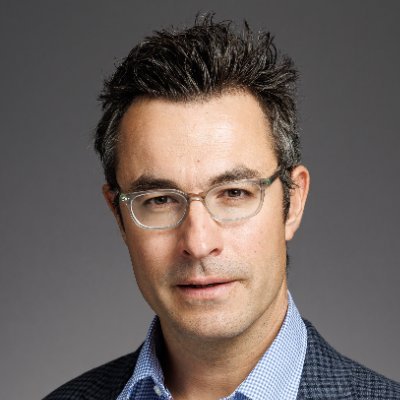
 Ismael Hishon-Rezaizadeh
 Charalampos (Babis) Papamanthou
 Omar Y.